
Fifteenth Sunday in Ordinary Time (C), July 13, 2025
The Word Made Flesh, the Cosmic Christ, and the Mercy That Saves
Deut 30:10-14; Psalm: 68; Col 1:15-20; Lk 10:25-37
Dear Sisters and Brothers in Christ, today, we will reflect on the essence of the Word made flesh, the Cosmic Christ, and the mercy that saves us all. These aren’t just theological concepts; they are living realities that shape our understanding of God, ourselves, and our call to action in a world desperate for healing.
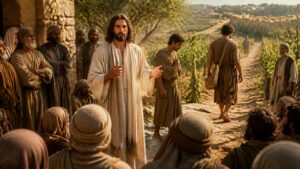
Let us begin with Deuteronomy 30:10-14, where we hear the words of Moses reminding the Israelites of God’s accessible Word. The Lord says, “For this commandment that I command you today is not too hard for you, neither is it far off.” Here we see divine proximity. God is near to us. He speaks not from a distant throne but walks alongside us, inviting us into a covenant relationship. This is a reminder that God desires fidelity from us, not as a burden but as a loving partnership. We are given the chance to know Him, to live by His Word, and to experience the depth of His love.
Now, let us turn our hearts to Colossians 1:15-20, where we encounter the Cosmic Christ. Here, Paul paints a picture of Christ as the image of the invisible God, the firstborn of all creation, and the head of the Church. This passage reminds us that Christ is not just a figure in history. He is the Creator and reconciler of all things. Through Him, all things were made. And through His blood on the cross, reconciliation is achieved. Imagine that cosmic scale of reconciliation. The universe itself is held together by His love. In a world filled with division and despair, we are reminded that there is hope through Christ, who offers us peace and reconciliation.
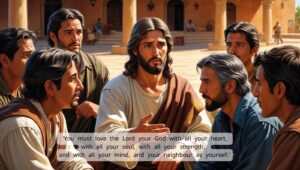
As we consider the mercy that saves us, we turn to Luke 10:25-37. Here, we encounter a lawyer who tests Jesus, seeking to trap Him with questions about eternal life and the greatest commandment. Jesus answers beautifully, reminding us to love the Lord with all our heart, soul, strength, and mind and to love our neighbor as ourselves. But the lawyer, wanting to justify himself, asks, “And who is my neighbor?” In response, Jesus tells the parable of the Good Samaritan. This story transcends time and speaks to the heart of mercy as the law is fulfilled. In this parable, we see a man who is beaten and left for dead. The priest and the Levite, representatives of the religious elite, pass by on the other side.
But a Samaritan, someone from a group despised by the Jews, stops and shows compassion. He sees the wounded man, feels compassion, and acts. Jesus uses this story to challenge our understanding of neighborly love and mercy. He commands us to go and do likewise. In a world that can often feel chaotic and divided, the call to mercy is a pressing one. The Word made near in Christ is not just a theological concept but a call to action. We are invited to incarnate mercy in our daily lives. In our own chaos, we can make God’s Word near. It begins with seeing Christ in the wounded, the marginalized, and those suffering in our communities. It requires us to look beyond our comfort zones and recognize the humanity in every person we encounter. The act of mercy is not merely a passive acknowledgment of suffering. It demands action.
Like the Good Samaritan, we must take the three steps from Luke 10:33-35. First, we see. We open our eyes to the needs around us. Second, we feel compassion. We allow our hearts to be moved by the plight of others. And third, we act. We take tangible steps to bring healing and support where it is needed most. This is how we live out the cosmic reconciliation that Paul speaks of in Colossians.
In our daily lives, this might look like reaching out to a neighbor in need, volunteering our time to support those less fortunate, or standing against injustice. It may also mean caring for our planet, for in a world that is suffering ecological degradation, our call to stewardship is urgent. As St. Francis of Assisi wisely said, “Preach the Gospel always; use words if necessary.” Our lives lived in mercy can speak volumes about the love of Christ.
Dear friends, as we reflect on the Word made flesh, the Cosmic Christ, and the mercy that saves, let us remember that we are called to embody these truths. We are not merely passive recipients of grace; we are active participants in God’s transformative work in the world. Let us go forth from this place, inspired to see, feel compassion, and act. May we be vessels of mercy, reflecting the face of God to all we meet. Amen.
St. John Chrysostom on Luke 10:
“The road from Jerusalem to Jericho is every path where someone lies beaten by sin. Do not pass by!”
St. Teresa of Calcutta:
“In the poor, we meet Christ in distressing disguise. When we touch them, we touch His wounds.”
Pope Benedict XVI on Colossians:
“Christ is not one star among many—He is the sun that illumines all creation.” (Homily, 2006)
St. Thérèse of Lisieux on mercy:
“I will spend my heaven doing good on earth. My little way is love—throwing flowers of small sacrifices.”