Sixteenth Sunday in Ordinary Time (C), July 20, 2025
Divine Encounters in Chaos—Hospitality, Suffering, and the One Thing Needed
Gen 18:1-10a; Psalm: 14; Col 1:24-28; Lk 10:38-42
Dear Sisters and Brothers in Christ, today we gather in the sacred space of our community, a space where chaos often meets the divine. We live in a world filled with turmoil, a world where natural disasters and manmade tragedies can shake our very foundations. Yet in the midst of this chaos, we can encounter God in profound ways. Today, I want us to explore Divine Encounters in Chaos through the lens of hospitality, suffering, and the one thing that is truly needed in our lives. Let us first turn to the story in Genesis 18, where we find Abraham at Mamre. Here, we see God appearing in the form of three visitors. Abraham, recognizing the divine presence, rushes to offer them hospitality. He prepares a feast and stands by as they eat, embodying the essence of hospitality. The Catechism of the Catholic Church reminds us that God thirsts for us, that He desires us to thirst for Him. In our moments of chaos, we too are called to practice this sacred hospitality, to create spaces where the divine can enter our lives.
Now, let us consider the theme of redemptive suffering as outlined in Colossians 1. The Apostle Paul speaks of his sufferings for the sake of the Church, showing us that suffering can be transformative. In our own lives, we may experience pain, loss, and grief. Yet, like Paul, we can find meaning in our suffering. We can allow it to bring us closer to God and to others. This is not an easy path; it requires courage and faith. But as we embrace our suffering, we discover that it can become a bridge to divine encounters.
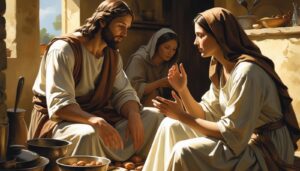
As we reflect on the story of Martha and Mary in Luke 10, we see two sisters who respond to Jesus’ presence in different ways. Martha is busy with the tasks of hospitality, while Mary sits at Jesus’ feet, soaking in every word. St. Ambrose reminds us that Martha chose service while Mary chose salvation. In our own lives, we often find ourselves caught in the whirlwind of responsibilities and anxieties. We may feel like Martha, burdened by the relentless demands of life. But Jesus gently reminds us that one thing is necessary, and that is His presence.
In today’s world, we are surrounded by chaos. Natural disasters like famine and floods wreak havoc, and manmade tragedies such as war and injustice leave us feeling desolate. In these moments, we must be cautious of Martha’s temptation to burn out from relentless activism. It is easy to get swept up in the urgency of the world’s needs. We must remember Mary’s wisdom to first sit with the victims in silent solidarity. In doing so, we create space for divine encounters that can heal and restore.
On a personal level, we each carry burdens of anxiety and grief. Just as Sarah learned that God fulfills promises even in barrenness, we too can hold on to the hope that God is present in our struggles. We must trust in Christ’s promise that the one thing necessary is His presence. In the midst of our trials, we can find refuge in Him.
So, how do we make God’s presence tangible in our lives? First, we must practice Abrahamic hospitality. This means opening our hearts and homes to others, creating environments where people feel seen and valued. It is in these simple acts of kindness that we often encounter God. Second, we must learn to transform suffering like Paul. This involves shifting our perspective from viewing suffering as merely a burden to seeing it as an opportunity for growth. When we embrace our suffering, we allow it to draw us closer to God and deepen our compassion for others. Third, we need to find balance in our lives, much like Martha and Mary. For those of us who are activists, let us remember to stop for a Mary pause. Take a moment to breathe and ask the Lord what He needs from us in that moment. For those who find themselves caught in contemplation, let us not forget the call to action. We are called to engage with the world around us, but we must do so with a heart that is rooted in prayer and reflection.
In conclusion, dear friends, let us remember that even in the chaos of our lives, divine encounters are possible. Through hospitality, we can welcome God into our midst. Through suffering, we can find redemption and purpose. And by choosing the one necessary thing, we can encounter Christ in ways that transform us and those around us. May we be inspired to create spaces of hospitality, to embrace suffering with grace, and to seek the presence of God in all we do. Amen.
St. John Chrysostom: “In suffering, we carry Christ’s Cross. In hospitality, we wash His feet. Both are worship.”
St. Teresa of Calcutta: “When surrounded by darkness, be the burning bush: alight with love, unconsumed by despair.”
Pope Benedict XVI: “The ‘better part’ is the Lord Himself. Without Him, even the greatest deeds are empty.”
St. Teresa of Calcutta on hospitality:
“In the poor, we meet Christ ‘in distressing disguise.’ Like Abraham, we serve Him in chaos.”
St. Thérèse of Lisieux on Mary’s “better part”:
“When the world screams for action, Jesus whispers: ‘Give Me your heart. That is enough.’”
Pope Francis on balance:
“Martha and Mary teach us: prayer and service are inseparable. Without prayer, service becomes activism; without service, prayer becomes escapism.” (Angelus, 2016)