Tuesday of the Eighteenth Week in Ordinary Time, August 5, 2025
Faith Amidst Storms and Scandal
Num 12:1-13, Psalm: 50, Mt 14:22-36
Dear Sisters and Brothers in Christ, today’s Scriptures plunge us into the turbulence of human weakness and divine power. In the desert and on the stormy sea, God reveals a piercing truth: Our crises become holy ground when we surrender to His authority and cry out for His mercy.
In today’s first reading, Miriam and Aaron challenge Moses’ authority, cloaking jealousy in racial prejudice (“Has the Lord spoken only through Moses? … He married a Cushite woman!”). God summons them, defends Moses as uniquely chosen (“With him I speak face to face”), and strikes Miriam with leprosy—a visible sign of spiritual corruption. Aaron’s plea (“Do not hold this sin against us!”) and Moses’ intercession (“O God, please heal her!”) reveal the path back to communion.
This isn’t merely about leadership disputes but the grave evil of sowing division against God-appointed authority (CCC 813, 1448). Miriam’s leprosy symbolizes how sin disfigures our souls and fractures the Body of Christ. Yet God’s discipline is medicinal—to awaken repentance. As Pope St. Gregory the Great warns: “Envy of another’s grace is a pestilence in the heart” (Pastoral Rule, 2.5). When we criticize leaders or undermine the Church (like Miriam), we mirror Satan’s “non serviam!”
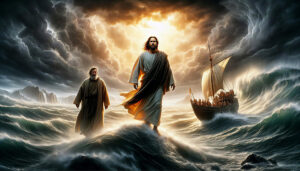
In today’s Gospel, after feeding the 5,000, Jesus sends disciples into a storm-tossed boat. At dawn, He walks on water toward them. Peter’s bold request—“Lord, if it is You, command me to come!”—becomes a lesson in fragility. He walks, then falters; sinks, then cries: “Lord, save me!” Jesus grasps him, saying: “O you of little faith, why did you doubt?” The storm calms, and the disciples worship: “Truly, You are the Son of God!”
The boat symbolizes the Church battered by trials. Christ comes “in the fourth watch” (3-6 AM)—at humanity’s darkest hour. Jesus’ rebuke (“little faith”) isn’t condemnation but an invitation to deeper trust. As St. John Chrysostom notes: “Peter began to sink not due to the waves, but because his faith grew weak” (Homily 50 on Matthew). Yet his desperate cry became the Church’s shortest, most powerful prayer. St. Augustine adds: “He sank so he might learn to keep his eyes on Christ alone” (Sermon 76). The storm’s purpose? To reveal Christ’s divinity (“Truly, You are the Son of God!”).
In our daily life, we should
- Repent of Miriam’s Sin:
Examine your speech about Church leaders. Do you criticize priests, bishops, or the Pope’s decisions with contempt? Replace gossip with intercession. “Pray for those in authority” (1 Tim 2:2). - Imitate Moses’ Intercession:
Moses prayed for Miriam even after her betrayal. Follow St. Faustina’s counsel: “When you recognize a sinner, pray for him instead of condemning” (Diary, 1686). Mercy triumphs over judgment (Jas 2:13). - Cry Out with Peter:
In your storms (anxiety, addiction, despair), don’t rely on willpower. Cry “Lord, save me!” daily. St. Padre Pio assures: “The cry of a trembling heart is the voice God never ignores.” - Worship Amidst Waves:
Like the disciples, worship Christ before the storm fully calms (Mt 14:33). St. Paul VI taught: “Prayer turns even suffering into love” (Gaudete in Domino, III).
Miriam’s leprosy and Peter’s sinking could have been their end—but became encounters with mercy. Miriam was healed after seven days (Num 12:15); Peter was pulled from the waves. Why? Because God permits crises not to drown us, but to detach us from self-reliance and cling to Him.
Dear Sisters and Brothers in Christ, when storms rage or scandal wounds, fix your eyes on Christ walking toward you on the waters. Cry out. Grasp His hand. Then—with healed hearts and rescued faith—worship the Son of God. Amen.