
Twenty-third Sunday in Ordinary Time (C), September 7, 2025
The Uncalculating Love of Discipleship
Wis 9:13-18, Psalm: 89, Phlm 9b-10.12-17, Lk 14:25-33
My dear Sisters and Brothers in Christ,
The path of discipleship is beautifully simple, yet profoundly demanding. It is a journey that requires not just initial enthusiasm, but deep, sober commitment. Today, the Word of God presents us with a stark and challenging portrait of what it means to follow Christ, but it does not leave us without the comfort and strength we need to answer the call.
The Book of Wisdom begins by humbling us. It reveals the fundamental limitation of our human condition: “For the deliberations of mortals are timid, and unsure are our plans.” We are earthbound, our vision limited by the horizon of this world. We can make our calculations and plans, but without divine wisdom, we are like sailors trying to navigate a vast ocean without a chart or the stars. “Who can know God’s counsel?” the author asks. The answer is that we cannot, on our own. But there is hope: “Whoever knew your counsel, except you had given wisdom and sent your holy spirit from on high?” Our first step in discipleship is this humble admission that we do not have all the answers and that we desperately need the gift of God’s wisdom and His Holy Spirit to guide our path.
This heavenly wisdom is not an abstract idea. It is made flesh in the person of Jesus Christ and is lived out in the concrete realities of our daily relationships. We see this beautifully in Paul’s letter to Philemon. Here, we have a practical example of the Gospel breaking into a very human, complicated situation. Onesimus, a runaway slave, has become a Christian through Paul’s ministry. According to the world’s “unsure plans” and “timid deliberations,” Philemon had every legal right to punish him. But Paul appeals to a higher law, the law of love and reconciliation in Christ. He sends Onesimus back, no longer as a mere slave, but as a beloved brother. “Welcome him as you would me.” Paul’s request shatters the worldly categories of master and slave, replacing them with the new reality of brotherhood in the Lord. This is the wisdom from on high in action: it transforms human relationships, making them avenues of grace and mercy.
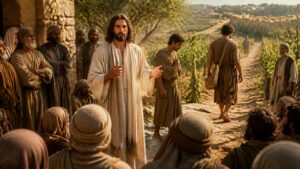
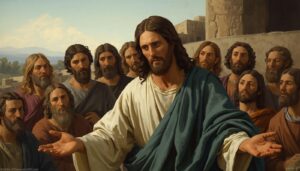
This radical transformation leads us directly to the hard words of the Gospel. Jesus turns to the large crowds following Him and issues a sobering challenge. To be His disciple requires a supreme love that relativizes every other attachment, even the deepest bonds of family and one’s own life. He uses the strong Semitic idiom of “hating” father and mother to mean loving them less than we love Him. He is not preaching literal hatred, but establishing the proper order of love. He must be the absolute priority. Nothing can come before Him.
Then, He gives two parables: a man building a tower and a king going to war. Both parables are about counting the cost. This is the crucial balance to His earlier demanding words. Christian discipleship is not a blind, impulsive leap. It is a conscious, sober, and willing choice to accept the full cost of following Him. It is a commitment made with eyes wide open to the reality of the Cross. We are called to “renounce all his possessions,” which means to detach our hearts from anything that we would cling to instead of God.
This is where we find our comfort and strength. The cost seems high, impossible even. But we do not calculate it with our own “timid deliberations.” We are given the “wisdom from on high” and the “holy spirit” that the Book of Wisdom speaks of. The same Spirit that empowered Paul to seek reconciliation empowers us to let go of what we cling to. We do not make this journey alone or by our own power.
As Pope Benedict XVI taught, “The saints are the true interpreters of Holy Scripture.” St. Teresa of Calcutta shows us this costly love in action, renouncing all to serve Christ in the poorest of the poor. She could do this because her love for Christ was so total that it ordered everything else. She often said, “Give yourself fully to God. He will use you to accomplish great things on the condition that you believe much more in His love than in your own weakness.”
So what is the application for us?
- Seek Heavenly Wisdom: In your decisions, big and small, pray for the gift of the Holy Spirit to guide you, especially when the world’s logic conflicts with the Gospel’s call.
- Transform Your Relationships: Where are the relationships in your life that need the healing touch of Christian brotherhood? Can you see others not for their utility or past faults, but as Paul did, as “beloved brothers and sisters” in the Lord?
- Calculate the Cost with Faith: Honestly examine what attachments—to comfort, reputation, wealth, or even certain relationships—hold you back from a total commitment to Christ. Then, in prayer, offer them to Him, trusting that His grace is sufficient.
The journey of discipleship is demanding, but Christ does not ask us to give up anything without promising infinitely more in return: Himself. Let us, then, renounce our timid plans and embrace the liberating cost of following Him, our greatest treasure. Amen.