
Tuesday of the Thirty-first Week in Ordinary Time, November 4, 2025
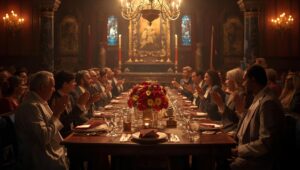
The Living Banquet of the Body
Voice over by Esther Han
Rom 12:5-16a; Psalm: 130; Lk 14:15-24
Memorial of Saint Charles Borromeo, Bishop
Dear Sisters and Brothers in Christ, on this Memorial of the great reformer Saint Charles Borromeo, the Word of God presents us with a powerful and urgent image: the Kingdom of God as a magnificent banquet to which all are invited, and our Christian life as the living, breathing response to that invitation.
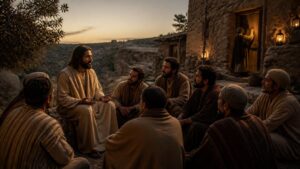
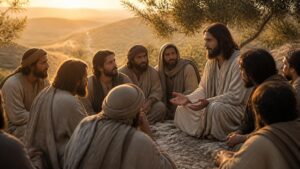
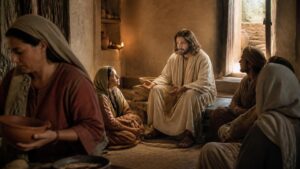
In the Gospel of Luke, a guest at a meal proclaims, “Blessed is the one who will dine in the Kingdom of God.” It is a pious sentiment, but Jesus responds with a parable that reveals a startling truth: the invitation to the banquet is not enough. The initial guests, representing the complacent and self-sufficient, all make excuses. One has bought a field, another oxen, and another has a new wife. Their excuses are not inherently evil; they are simply the ordinary preoccupations of life. But they reveal a heart that prioritizes the created thing over the Creator’s summons. They prefer their own small tables to the King’s great feast. The master’s response is one of decisive action: the invitation is extended to “the poor and the crippled, the blind and the lame”—those who know their need and will respond with joyful gratitude. The house must be filled.
This filled house is precisely what Saint Paul describes in his letter to the Romans. He paints a magnificent portrait of the Church as the Body of Christ. “We, though many, are one body in Christ,” he writes, “and individually parts of one another.” This is not a vague spiritual concept. It is a concrete reality. We belong to each other. Our gifts are given for the building up of the whole. Paul then provides the practical blueprint for life in this body: “Let love be sincere… exercise hospitality… do not grow slack in zeal… do not be haughty but associate with the lowly.” This is the ethic of the banquet hall—a community where every member, especially the poor and the lowly, is essential and honored.
The Church is the foretaste of the heavenly banquet, and our unity within her is our primary witness to the world. Saint Charles Borromeo is a towering example of this truth. As the Archbishop of Milan following the Council of Trent, he found a Church in disarray—clergy were lax, and the faithful were ignorant. He could have remained in comfortable complacency, like the first guests in the parable. Instead, he dedicated his life to ensuring that the Lord’s house would be filled with well-instructed and sanctified souls. He reformed the clergy, established seminaries, taught catechism to children, and tirelessly visited his vast diocese, personally caring for the sick and the poor during the plague. He took Paul’s words literally, “associating with the lowly” and serving the one Body of Christ with incredible zeal.
The comfort and challenge for us is this: we have accepted the invitation. We are here at the table of the Word and soon, the Eucharist. The question is, how do we live as members of one another? Do we make excuses, prioritizing our personal affairs over the needs of the parish community or the poor at our door? Or do we, like Saint Charles, use our unique gifts—whether teaching, serving, encouraging, or giving—to build up the Body?
As Saint Charles Borromeo himself said, “We must be like the merchant man, seeking goodly pearls, who, when he had found one pearl of great price, went his way and sold all that he had and bought it.” The pearl is the Kingdom. Let us cast aside our excuses, embrace our place in the one Body, and with sincere love and fervent zeal, work to fill the Lord’s house. Amen.
May the souls of the faithful departed, through the mercy of God, rest in peace. Amen.