
Fourth Sunday of Advent (A), December 21, 2025
The Obedience of the Just
Voice over by Gracie Aye Chan May
Isa 7:10-14; Psalm: 23; Rom 1:1-7; Mt 1:18-24
Dear Sisters and Brothers in Christ, on this Fourth Sunday of Advent, as the world’s anticipation reaches its peak, the Church directs our gaze to a quiet, pivotal moment in the history of salvation. The Scriptures today reveal a divine plan unfolding across centuries, a plan that hinges not on royal power, but on the faithful obedience of a humble carpenter.
The Prophet Isaiah sets the stage. King Ahaz, faced with a political crisis, feigns piety by refusing to ask God for a sign. Yet God, in His determined mercy, gives one anyway: “The virgin shall conceive, and bear a son, and shall name him Emmanuel.” This prophecy, given to a faithless king, transcends the immediate political turmoil. It is God’s ultimate promise to a weary world: “God is with us.” For centuries, Israel held onto this hope, waiting for the sign that would shatter their isolation.
Saint Paul, in the opening of his letter to the Romans, proclaims the fulfillment. He speaks of the Gospel of God, “promised through his prophets in the holy scriptures.” This is not a new idea, but the culmination of the old. The subject of this Gospel is Jesus Christ, a descendant of David according to the flesh, but definitively “established as Son of God in power.” In Him, the promise of Emmanuel finds its full meaning. Through Him, Paul says, “we have received the grace of apostleship,” a calling that now extends to all nations.
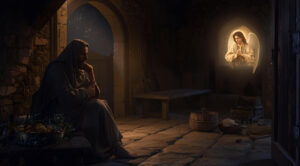
But how does this cosmic promise to become a flesh-and-blood reality? The Gospel of Matthew shows us. We are brought into the heart-wrenching personal crisis of Joseph, a “righteous man.” He discovers his betrothed is with child, and his righteousness moves him to seek a merciful, quiet solution. In his turmoil, the angel of the Lord appears to him in a dream, revealing the impossible truth: the child is “from the Holy Spirit.” This is the moment of intersection. The ancient prophecy of Isaiah crashes into Joseph’s personal dilemma. The child is to be named Jesus, for “he will save his people from their sins,” and He is the very Emmanuel foretold.
God’s eternal plan for the salvation of the world depended on the free “yes” of a humble man. Joseph’s righteousness was now tested. Would it be a rigid, legalistic righteousness that could not accommodate mystery? Or would it be a living, obedient faith that trusts God’s word even when it upends all his plans? “When Joseph awoke, he did as the angel of the Lord had commanded him.” His obedience, his fiat, provided the human, legal, and protective framework for the Incarnation. As Pope Francis teaches, “Joseph reminds us that faith in God includes believing that He can work even through our fears, our frailties, and our weaknesses.”
The comfort for us is immense. The God who kept His promise through the ages is the same God who enters our personal crises and confusions. When our own plans fall apart and we cannot see the way forward, He is with us. The challenge is to imitate the obedience of Joseph. We are called to a righteousness that is not merely about following rules, but about a trusting, loving surrender to God’s will, even when it is difficult to understand.
This Advent, let us ask for the grace of St. Joseph’s heart. Let us be a people who, like him, listen for God’s voice in prayer and have the courage to obey immediately. For it is through such faithful obedience that God continues to enter our world, bringing the salvation and presence we so desperately need. Emmanuel has come. Let our lives proclaim it. Amen.