Monday of the Second Week in Ordinary Time, January 19, 2026
The Heart of the Matter: Obedience Over Ritual
Voice over by Eliz
1Sam 15:16-23, Psalm: 49, Mk 2:18-22
My dear Sisters and Brothers in Christ,
We can sometimes fall into a subtle trap, believing that our external observance of religion is what pleases God most—that if we just perform the right actions and follow the prescribed customs, we are in good standing. Today’s Scriptures issue a powerful corrective. They remind us that God looks first to the heart, and that true faithfulness is not about preserving old forms, but about being made new in Christ.
In the First Book of Samuel, we witness the tragic downfall of King Saul. God had given him a clear command through the prophet Samuel: utterly destroy the Amalekites and all their possessions as an act of divine justice. Saul, however, spares the king and the best of the flocks, justifying his disobedience with the intention to offer them in sacrifice. Samuel’s response is one of the most important lessons in all of Scripture: “Does the Lord so delight in burnt offerings and sacrifices as in obedience to the command of the Lord? Obedience is better than sacrifice, and submission than the fat of rams.” Saul’s sin was preferring his own pious plan—a grand sacrificial ritual—over simple, humble obedience. He wanted the appearance of devotion without the surrender of his will. For this, God rejects him as king.
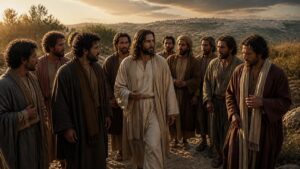
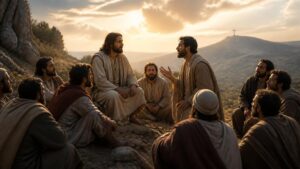
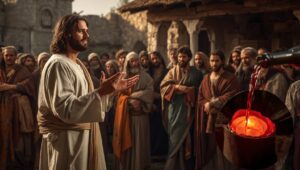
This failure of empty ritualism finds its fulfillment in the Gospel. The Pharisees question Jesus: Why do Your disciples not fast like John’s disciples or ours? Jesus answers with the vivid images of a wedding feast, a patched garment, and new wine. His presence is like the bridegroom at the wedding—a time for joy, not mourning. To impose the old disciplines of fasting upon this new reality of the Kingdom is like sewing a new patch on an old cloak or putting new wine into old wineskins. It will ruin both. Jesus is not condemning fasting; He is revealing that He Himself is the new reality. Mere external observance of the old ways cannot contain the new life He brings. The form must follow the substance, and the substance is Him.
The connection is profound. Saul clung to the form of sacrifice while rejecting the substance of obedience. The Pharisees clung to the form of fasting while rejecting the substance of the Bridegroom in their midst. Both mistakes stem from a heart that values the appearance of religion over a living, obedient relationship with God.
For us, the warning and the invitation are clear. We must examine our own hearts. Do we cling to certain prayers, devotions, or liturgical preferences while resisting the clear command of Christ to forgive, to love our enemy, or to care for the poor? Do we take comfort in the external practice of our faith while our hearts remain un-surrendered? As Pope Francis often warns, we must guard against a “self-referential” faith that focuses on rules over mercy.
The comfort today is that the Lord desires to make us new. He does not want to patch up our old, ragged ways of selfishness. He wants to give us a completely new garment of grace. He does not want our grudging, calculated sacrifices; He wants our joyful, obedient hearts. He is the Bridegroom, and His presence transforms obligation into celebration.
Let us pray for the grace of a humble and obedient heart—a heart that says “yes” to God’s will, not just “yes” to God’s rituals. For in that “yes,” we find the new wine of the Kingdom, and we become fitting vessels for His joy. Amen.
May God bless you all!