
Wednesday of the Third Week in Ordinary Time, January 28, 2026
The House of the Word: Receiving God’s Generous Promise
Voice over by Rose Khaing Mye Thu
2Sam 7:4-17, Psalm: 88, Mk 4:1-20
Memorial of Saint Thomas Aquinas, Priest and Doctor of the Church
My dear Sisters and Brothers in Christ,
On this Memorial of the great Saint Thomas Aquinas, a Doctor of the Church whose mind built a majestic house of understanding for our faith, the Scriptures reveal God’s desire to build a different kind of house—not one of stone, but of living hearts where His word can dwell and bear everlasting fruit.
In the Second Book of Samuel, King David, settled in his palace, desires to build a house for the Lord. But God turns the tables with a breathtaking promise. Through the prophet Nathan, He says, “Should you build me a house to dwell in?” Instead, the Lord promises to build a house for David—a dynastic house, a kingdom that will stand forever. “Your house and your kingdom shall endure forever before me; your throne shall stand firm forever.” This covenant points beyond David’s son Solomon to the eternal King, Jesus Christ, the Son of David. God’s work is always one of generous, initiating grace. He does not want a dwelling of cedar, but a dynasty of faithful hearts.
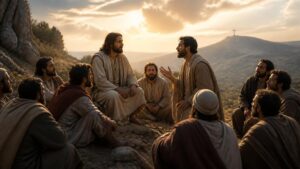
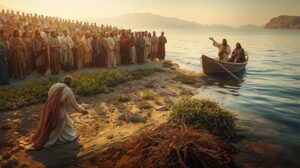
This shift from a stone temple to a living house of faith finds its perfect explanation in the Gospel. Jesus teaches the crowds the Parable of the Sower. The seed is the word of God, sown generously and abundantly. The various soils represent the human heart. The path, the rocky ground, the thorns—these are hearts where the word is snatched away, withers without root, or is choked by worldly anxiety and desire. But the rich soil is “those who hear the word and accept it and bear fruit thirty and sixty and a hundredfold.” God’s everlasting covenant, His word, must find a home in a heart that is open, deep, and receptive.
Here is where the life of Saint Thomas Aquinas shines as a brilliant example. He is known for his towering intellect, but that intellect was always placed at the service of receiving and understanding God’s word. He did not build a system of dry philosophy, but a Summa—a gathering of truth—to help the seeds of Scripture and tradition take root in the minds and hearts of the faithful. He cultivated the rich soil of his own soul through prayer, most especially before the Eucharist, the very Word made Flesh. His work was an act of making the soil of the Church more receptive to the seed of truth.
For us, the call is clear. God still wishes to build His lasting house, and it is built within the fertile soil of a believer’s heart. The eternal promise made to David is fulfilled in Christ and offered to us in His word.
We must ask ourselves: What is the condition of my soil? Is my heart a distracted path, where the word is forgotten amid daily noise? Is it shallow, where initial enthusiasm fades when faith demands sacrifice? Is it thorny, choked by material worry or the desire for pleasure? Or, by God’s grace, am I cultivating rich soil through prayer, the sacraments, and deliberate obedience?
As St. Thomas himself wrote, “Grant me, O Lord my God, a mind to know you, a heart to seek you, wisdom to find you….” Let this be our prayer. Let us ask his intercession today, that we may be diligent gardeners of our own souls, preparing the rich soil that receives the eternal word, bears fruit that lasts, and becomes a living stone in God’s everlasting house. Amen.
May God bless you all!