Wednesday of the Fourth Week in Ordinary Time, February 4, 2026
The Measure of the Heart: When God Defies Our Calculations
Voice over by Carol San San Lwin
2Sam 24:2.9-17, Psalm: 31, Mk 6:1-6
My dear Sisters and Brothers in Christ,
We live in an age of metrics. We measure success by numbers: profits, followers, accolades. We assess risk and make decisions based on what we can count and control. Today’s Scriptures present a stark spiritual warning against this very tendency. They reveal that the logic of Heaven often contradicts the calculus of earth, and that God’s power flows not through human strength or familiarity, but through humble, expectant faith.
In the Second Book of Samuel, King David, at the height of his power, makes a fatal error. He commands a census of Israel and Judah. On the surface, this seems like prudent administration—knowing the strength of your fighting men. But the sin, as his commander Joab instinctively understands, is one of pride and misplaced trust. David is measuring his strength not as a gift from God, but as a possession of his own kingdom. He is putting his faith in numbers, not in the Lord. When confronted with his sin, David cries out, “I have sinned greatly!” The consequence is a devastating plague. David’s story teaches us that before God, our most impressive human calculations are not only irrelevant—they can be an obstacle. God desires trust, not tallies.
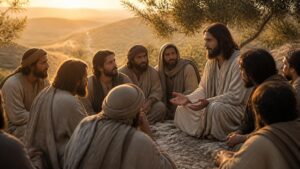
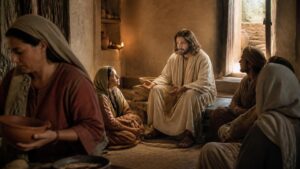
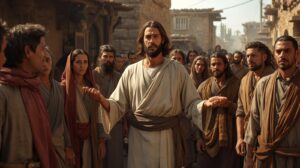
This theme of divine power defying human expectation finds a poignant echo in the Gospel. Jesus returns to His hometown of Nazareth. He teaches in the synagogue with a wisdom that amazes the people. But instead of faith, their reaction is calculation of a different kind: “Is he not the carpenter, the son of Mary?” They measure Him by their human categories—His family, His trade, His ordinary origins. Because they think they have Him figured out, “they took offense at him.” And the Gospel delivers a heartbreaking line: “He was not able to perform any mighty deed there… He was amazed at their lack of faith.” The omnipotent God was rendered powerless—not by demons or armies, but by the closed calculations of familiar hearts.
For us, the application is urgent. Where are we, like David, putting our trust in our own “numbers”—our savings, our plans, our social standing—rather than in God’s providence? And where are we, like the Nazarenes, missing God’s presence and power because it comes in a form we deem too ordinary? Perhaps in the monotony of daily duty, in the humble person we overlook, or in the sacraments we receive with routine indifference.
The comfort today is that God’s mercy is greater than our miscalculations. David repented, and the plague was halted at the threshing floor of Araunah—the future site of the Temple, a place of sacrifice and mercy. And Jesus, though rejected at Nazareth, continued His mission of healing for those who would receive Him with open hearts.
The Lord calls us to exchange our calculators for crucifixes. He asks us to trust in His unseen providence more than in our visible resources, and to look for His glory in the humble, the familiar, and the small. As St. Thérèse of Lisieux, the master of the “Little Way,” teaches us: “Holiness consists simply in doing God’s will, and being just what God wants us to be.”
Let us pray for the grace of a humble and trusting heart—a heart that does not count its own strength, but relies entirely on His, and that never fails to recognize the wonder of God present in our midst. Amen.
May God bless you all!