Saturday of the Fifth Week in Ordinary Time, February 14, 2026
The Bread We Choose: From False Altars to True Nourishment
Voice-over by Carol San San Lwin
1Kgs 12:26-32; 13:33-34, Psalm: 105, Mk 8:1-10
Memorial of Saints Cyril, Monk, and Methodius, Bishop, patron saints of Europe
My dear Sisters and Brothers in Christ,
On this Memorial of Saints Cyril and Methodius, the great evangelizers of the Slavic peoples and patrons of Europe, the Scriptures present us with a stark choice: Will we feed ourselves on the convenient substitutes we manufacture, or on the true, life-giving bread that only God can provide?
In the First Book of Kings, King Jeroboam, fearing the political consequences of his people worshiping in Jerusalem, makes a fateful decision. He creates his own religion for convenience: two golden calves, new altars, a counterfeit priesthood, and self-made festivals. He tells the people, “You have been going up to Jerusalem long enough. Here are your gods, O Israel!” It is a spirituality of expedience, designed to consolidate power rather than seek truth. The result, Scripture tells us, was a sin that led to the dynasty’s ruin. Jeroboam offered his people a substitute that could not nourish their souls.
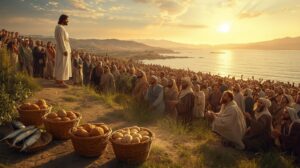
This tragic failure of human invention stands in radiant contrast to the scene in the Gospel. Jesus, moved with compassion for a hungry crowd that has been with Him for three days, says, “My heart is moved with pity for the crowd.” The disciples see only scarcity: “Where can anyone get enough bread to satisfy them here in this deserted place?” But Jesus takes the seven loaves they have, gives thanks, breaks them, and gives them to the disciples to distribute. All are satisfied, with baskets left over. Here is the true bread, multiplied not by human strategy, but by divine compassion and blessing.
Saints Cyril and Methodius stand as heirs of this miraculous sharing, not of mere bread, but of the Bread of Life. They did not impose a foreign culture on the Slavic peoples. Instead, like Jesus taking the existing loaves, they took the Slavic language, created an alphabet for it, and celebrated the liturgy in the people’s own tongue. They nourished a new people with the true faith, broken and shared in a way they could receive. They rejected the “Jeroboam model” of a one-size-fits-all, power-conscious evangelization. Their mission was one of incarnation, compassion, and true nourishment.
For us, the question is urgent: What are we feeding on? Are we, like Jeroboam’s Israel, settling for spiritual substitutes—golden calves of materialism, altars to our own ego, festivals of distraction—because they are convenient and keep us in control? Or are we bringing our humble, seemingly insufficient loaves—our time, our talents, our hunger—to Jesus, trusting Him to bless, break, and multiply them for the good of others?
Pope Saint John Paul II, in honoring Cyril and Methodius, called them “apostles of unity,” who built bridges by respecting culture while proclaiming the unifying truth of Christ. They show us that evangelization is not conquest, but compassionate sharing.
Let us ask their intercession today. May they help us to reject every false altar, and to place our trust in Christ alone. May we, nourished by the true Bread of the Eucharist, become instruments of His compassion, breaking and sharing the faith in a way that truly satisfies the hungry hearts of our world. Amen.
May God bless you all!