
Monday of the Third Week of Lent, March 9, 2026

The Unbounded Mercy of God
Voice over by Eliz
2Kgs 5:1-15, Psalm: 41, Lk 4:24-30
Dear Sisters and Brothers in Christ,
Today, the Word of God presents us with a challenging and beautiful truth: the Lord’s salvation is offered to all, but it often comes in ways that confound our expectations and humble our pride.
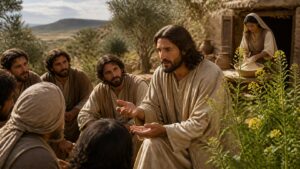
In the Second Book of Kings, we meet Naaman, a mighty Syrian general, afflicted with leprosy. His healing comes not through grand military might, but through the testimony of a lowly Israelite servant girl. He is sent to the prophet Elisha, who doesn’t even grant him an audience, but prescribes a simple, humiliating act: washing seven times in the modest Jordan River. Naaman is furious! He expected a spectacular, ritualistic healing on his own terms. It is his servants who gently reason with him: “If the prophet had told you to do something extraordinary, would you not have done it?” His healing arrives only when he surrenders his pride and obeys the simple command. He emerges from the waters cleansed in body and spirit, confessing, “Now I know that there is no God in all the earth, except in Israel.”
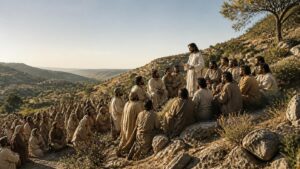
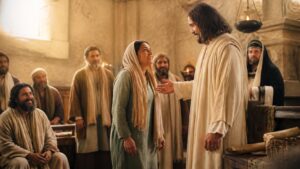
Centuries later, in the Gospel, Jesus stands in His own synagogue and recalls this very story. He highlights the stunning fact that in a time of many lepers in Israel, God’s healing was granted to a foreigner. In doing so, He unveils the scandalous breadth of God’s mercy. His message is clear: the grace of God is not a national patrimony or a reward for the presumptuous. It is a gift, freely offered to the open and humble of heart, even—and especially—to those outside the expected boundaries. This truth so enrages His hearers that they seek to hurl Him from the cliff. They reject the God whose mercy is wider than their own.
Here lies our Catholic teaching and our comfort. God’s plan of salvation in Christ is universal. The Church is the sacrament of this salvation for all. Yet, we can fall into the same trap as the people of Nazareth or Naaman’s first reaction: we can try to confine God’s grace to our own familiar patterns, our preferred people, or our sense of how things should be done. Pope Francis constantly calls us beyond this, saying, “The Lord has redeemed all of us… not just Catholics. Everyone!”
Where is our spiritual strength? It is in cultivating the humility of Naaman after his conversion—a humility that obeys God’s simple, often unspectacular means of grace: the sacraments, daily prayer, acts of charity. It is in embracing the “little way” of St. Thérèse of Lisieux, finding holiness not in great deeds but in small acts of love and surrender.
When we feel forgotten or when our prayers seem unanswered, do we, like Naaman, get angry because God isn’t acting according to our script? Or do we humbly accept the path He sets before us, trusting in the healing power of obedience? When we encounter someone we deem “outside” the bounds of God’s favor, do we react with the closed fury of the Nazarenes, or with the joyful awe that God’s mercy has found another soul?
Let us pray for the grace to have humble, open hearts. Let us approach the fountain of God’s mercy—especially in this Lenten season—not with a sense of entitlement, but with the trusting obedience of a child, ready to be washed clean. For our God is ever faithful, and His saving love knows no bounds. Amen.
May God bless you all!