
Thursday of the Fourth Week of Easter, April 30, 2026
The Servant and the One Who Sends
Voice over by Gracie Aye Chan May
Acts 13:13-25, Psalm: 88, Jn 13:16-20
My dear Sisters and Brothers in Christ,
In the economy of God’s kingdom, the path to greatness runs through the lowliest of places. Today, the Scriptures confront us with a radical reversal: the one who is least among us is the one who stands closest to the King. Through the testimony of Paul and the teaching of Jesus, we learn that to receive the servant is to receive the Lord, and to serve is to stand where the Messiah Himself has stood.
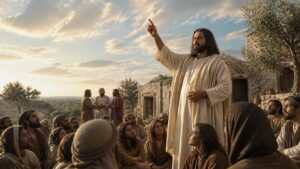
In the Acts of the Apostles, Paul stands in the synagogue at Pisidian Antioch and delivers a sweeping history of salvation. He traces the story from the exodus to the judges, from Samuel to Saul, and then to David, “a man after God’s own heart.” From David’s descendants, God brought forth a savior, Jesus. But before Jesus appeared, John the Baptist came, “preaching a baptism of repentance to all the people of Israel.” As John was completing his course, he said, “What do you suppose that I am? I am not he. Behold, one is coming after me; I am not worthy to unfasten the sandals of his feet.”
John the Baptist is the model servant. He points away from himself to the One who is to come. He does not grasp at glory; he stands in the posture of the unworthy sandal-bearer. His greatness is measured by his humility. His mission is fulfilled when he decreases so that Christ may increase.
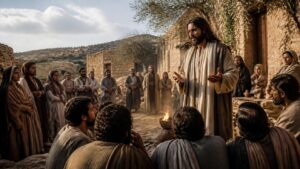
In the Gospel of John, Jesus speaks to His disciples after washing their feet. He has just performed the task of the lowliest servant. Now He draws out the meaning: “Amen, amen, I say to you, no slave is greater than his master nor any messenger greater than the one who sent him.” Then He makes the connection explicit: “If you understand this, blessed are you if you do it.” And finally, He links their reception of Him to the Father: “Whoever receives the one I send receives me, and whoever receives me receives the one who sent me.”
Here is the chain of divine love. The Father sends the Son. The Son sends the apostles. The apostles sent the Church. And at every link, the servant stands in the place of the One who sends. To receive the messenger is to receive the Master. To serve as the messenger is to share in the Master’s mission.
Pope Benedict XVI reflected on this chain: “The Church is not an end in herself; she is sent. She is the servant of the Word.” St. Augustine, contemplating the foot washing, wrote, “The Lord washed the feet of His disciples. He, the Master, became the servant. He, the Head, served the members. He shows us the way: we must wash one another’s feet.”
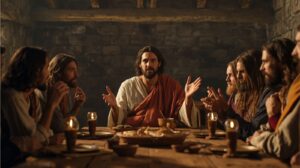
For us today, the message is both a comfort and a commission. When we feel unworthy to serve—like John the Baptist, like the disciples at the Last Supper—we are in good company. The Master Himself took the towel. And when we receive the servants God sends to us—the priest, the catechist, the neighbor who speaks a word of truth—we receive the One who sent them.
This Easter season, let us embrace the humility of John the Baptist. Let us take up the towel of Jesus. And let us know that in serving, we stand where the Master stood, and in receiving, we welcome the One who sent Him. Amen.
May God bless you all!