
Friday of the Seventh Week of Easter, May 22, 2026

Love That Leads to Glory: The Courage of the Shepherd
Voice over by Bro. Paschal
Acts 25:13-21, Psalm: 102, Jn 21:15-19
My dear Sisters and Brothers in Christ,
As we near the great feast of Pentecost, the Church presents us with two scenes of witness. One is a Roman governor puzzled by a dispute about “a dead man named Jesus who Paul claimed was alive.” The other is the Risen Lord commissioning a repentant fisherman to feed His sheep. Both readings speak to the same truth: love for Christ is the only foundation for courageous witness, and that love leads where we would rather not go—but always to glory.
In the Acts of the Apostles, Paul stands before Governor Festus and King Agrippa. Festus explains the case: the Jews had accusations against Paul, but they were not about crimes worthy of death or imprisonment. “They had certain issues with him about their own religion and about a certain Jesus who had died but who Paul claimed was alive.” Festus, a pragmatic Roman, cannot comprehend why anyone would risk everything for a dispute about a resurrection. Yet Paul is willing to go to chains, to prison, to the very gates of death—because he knows that Jesus is not dead. He is alive. And that living Lord has called him to witness.
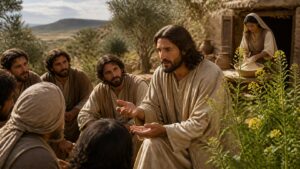
In the Gospel of John, the Risen Lord appears to Peter by the Sea of Tiberias. Three times Jesus asks, “Simon, son of John, do you love me?” Three times Peter answers, “Yes, Lord, you know that I love you.” And each time, Jesus gives him a command: “Feed my lambs. Tend my sheep. Feed my sheep.” Then Jesus predicts the manner of Peter’s death: “When you are old, you will stretch out your hands, and someone else will dress you and lead you where you do not want to go.” The Gospel explains, “He said this signifying by what kind of death he would glorify God.” Then Jesus commands, “Follow me.”
Here is the pattern. Love for Christ leads to mission. Mission leads to suffering. Suffering leads to glory. Festus could not understand why Paul would risk so much for a claim about a risen man. But Paul understood. He had met the Risen Lord on the road to Damascus, and that encounter made every earthly loss gain. Peter understood. He had denied Jesus three times, and now three times he declared his love. That love would carry him to a cross—tradition tells us he was crucified upside down—and that death would glorify God.
Pope Francis, reflecting on this Gospel, said, “To love Jesus means to serve His flock. And to serve His flock often means to go where we do not want to go, to accept the cross, to give our lives.” Saint Augustine, commenting on Peter’s restoration, wrote, “Peter denied the Lord once, but he confessed his love three times. Love erased the sin, and the confession restored the office.”
For us today, the question is the same: Do you love me? Not, “Do you have the right theology?” Not, “Are you successful in ministry?” Not, “Have you avoided failure?” But, “Do you love me?” And if we answer yes, then the command follows: Feed my sheep. Tend my flock. Serve the ones I entrust to you. And that service may lead us where we would rather not go—into difficult conversations, into patient suffering, into self-giving that costs something.
This Easter season, let us answer the Lord’s question with Peter: “Lord, you know everything; you know that I love you.” And let us follow Him, wherever He leads, trusting that the love which carried Him to the cross and the grave will carry us, through every trial, to the glory of the Resurrection. Amen.
May God bless you all!