Wednesday of the Tenth Week in Ordinary Time, June 10, 2026
The Fire That Consumes: Fulfilling the Law of Love
1Kgs 18:20-39; Psalm: 15; Mt 5:17-19
My dear Sisters and brothers in Christ,
On Mount Carmel, a lone prophet stands against four hundred and fifty prophets of Baal. The challenge is simple: prepare a sacrifice and call upon your god. The one who answers with fire is God. The prophets of Baal dance and shout and cut themselves from morning until noon. No fire comes. Then Elijah rebuilds the altar of the Lord, digs a trench, douses the sacrifice with water, and prays: “Answer me, Lord, that this people may know that you, Lord, are God.” Fire falls from heaven and consumes the sacrifice, the wood, the stones, the dust, and even the water in the trench. The people fall prostrate and cry, “The Lord is God!”
In the Gospel of Matthew, Jesus declares, “Do not think that I have come to abolish the law or the prophets. I have come not to abolish but to fulfill.” The law of Moses was a preparation, a guardian until Christ (Gal 3:24). The prophets were voices crying in the wilderness, pointing to the One who was to come. On Mount Carmel, Elijah’s fire was a sign of God’s power, a call to repentance, a demonstration that the Lord alone is God. But that fire was a shadow of the fire that Jesus would bring: the Holy Spirit, poured out at Pentecost, who writes the law not on tablets of stone but on hearts of flesh.
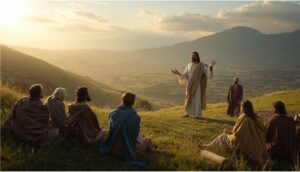
Jesus fulfills the law by perfecting it. He does not abolish the commandments; He reveals their deepest meaning. The law says, “Do not kill.” Jesus says, “Do not even be angry.” The law says, “Do not commit adultery.” Jesus says, “Do not even lust.” The law is a minimum; Jesus demands the maximum: love of God with all one’s heart, and love of neighbor as oneself. This is the fire that purifies and consumes.
Pope Benedict XVI reflected: “Jesus’ fulfillment of the law is not a mere external observance; it is the transformation of the law into love.” Saint Augustine wrote, “Love, and do what you will. When you love, you will not will to do anything that would displease the Beloved.”
Elijah’s fire burned wood and stone. Christ’s fire burns away sin and selfishness. Elijah’s miracle led to a temporary conversion; Christ’s fulfillment leads to eternal life. The prophets of Baal called on a false god who could not answer. We call on the true God, who answered in the fire of the Resurrection, the fire of the Eucharist, the fire of the Holy Spirit dwelling in us.
What does this mean for us? We are not called to build altars on mountaintops or challenge false prophets in public spectacle. We are called to live the fulfilled law in the ordinary: to forgive when offended, to give when we have little, to speak truth with love, to choose purity in a world of indulgence. This is the fire of Christ consuming our selfishness. This is the law of love written on our hearts. This is how we proclaim, with Elijah, “The Lord is God!” Not with dramatic signs, but with the quiet, faithful, daily offering of our lives.
Let us pray for the fire of the Holy Spirit to consume our doubts, our attachments, our fears. May we fulfill the law not as slaves, but as sons and daughters of the God who answers with fire—the fire of love that never dies. Amen.
May God bless you all!