
Wednesday of the Fifteenth Week in Ordinary Time, July 15, 2026
The Foolishness of Pride and the Wisdom of the Childlike
Isa 10:5-7.13-16, Psalm: 93, Mt 11:25-27
Memorial of Saint Bonaventure, Bishop and Doctor of the Church
My dear Sisters and Brothers in Christ,
On this Memorial of Saint Bonaventure, the Seraphic Doctor of the Church, the Word of God presents us with a stark contrast between two ways of knowing—and two ways of being. One is the prideful boast of a nation wielding power, drunk on its own accomplishments. The other is the quiet revelation of the Father to the little ones, hidden from the wise and the learned. The Assyrian king boasts, “By my own power I have done it, and by my wisdom, for I am shrewd.” And Jesus, in the quiet of prayer, exclaims, “I give praise to you, Father, Lord of heaven and earth, for although you have hidden these things from the wise and the learned you have revealed them to the childlike.”
The Assyrian king, in our first reading, is the epitome of human pride. He sees himself as the author of his own success, the lord of history, the measure of all things. But Isaiah reveals the truth: Assyria is merely the “rod” of God’s anger, an instrument in the hands of the Creator. The king does not realize that his power is borrowed, his wisdom derivative, his conquests permitted. God will humble him, not because he is mighty, but because he has forgotten that he is only a creature.
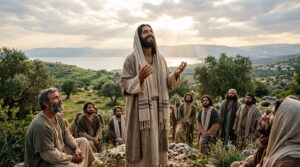
In the Gospel, Jesus turns the world’s logic on its head. The wise and learned—those who pride themselves on their intellect, their status, their achievements—miss the revelation of the Father. The Kingdom is not a prize for the proud; it is a gift to the humble. It is not discovered by intellectual conquest; it is received by childlike trust. The Father reveals the Son, and the Son reveals the Father, not to those who storm heaven with their own brilliance, but to those who open their hands and hearts like little children.
Saint Bonaventure, whose feast we celebrate, was one of the most brilliant minds of the medieval world. He was a master of theology, a philosopher of depth, a writer of soaring prose. Yet he wrote that “the only way to ascend to God is through the cross of Christ, who is the humility of God.” He knew that knowledge of God cannot be achieved by intellectual effort alone; it must be received as a gift, through love, through prayer, and through the humility that opens the soul to divine grace. He called this the “illumination of the Spirit,” a light that shines only on those who are humble of heart.
Pope Benedict XVI, reflecting on Bonaventure, said, “He was a man of profound thought, but even more, a man of deep prayer. He understood that faith is not an intellectual system but a personal encounter with the living God.” And Saint Bonaventure himself taught, “The soul is not led to God by the wings of reason alone, but by the fire of love, which is the gift of the Holy Spirit.”
What does this mean for us? We live in a world that exalts self-sufficiency, celebrates pride, and measures worth by achievement. We are tempted to approach God the way Assyria approached nations—with our own plans, our own merits, our own cleverness. We may even be tempted to think that our study of theology, our religious observance, or our good works earn us a place in His sight. But Jesus says, “No one knows the Father except the Son and anyone to whom the Son wishes to reveal him.” Knowledge of God is not a trophy for the proud; it is a gift for the humble.
This week, let us examine our hearts. Do we approach God with the pride of Assyria, confident in our own wisdom? Or do we come as little children, trusting that He will reveal Himself to us? Saint Bonaventure shows us that true learning leads to love, and true love leads to childlike wonder. Let us pray for the grace to set aside our pride, to become like little ones, and to receive the revelation of the Father in the Son, through the gift of the Holy Spirit. Amen.
May God bless you all!