Friday of the Fifteenth Week in Ordinary Time, July 17, 2026
The Mercy That Moves Backward
Isa 38:1-6.21-22.7-8, Psalm: Is 38, Mt 12:1-8
My dear Sisters and Brothers in Christ,
In the first reading, King Hezekiah is given a death sentence. The prophet Isaiah delivers the stark word: “Put your house in order, for you shall die.” Hezekiah does not argue; he weeps bitterly and prays with humble trust. God hears his cry and adds fifteen years to his life. As a sign, the Lord makes the shadow cast by the sun go back ten steps on the stairway of Ahaz. The shadow moves backward, a visible sign that God has power over time, over life, and over death.
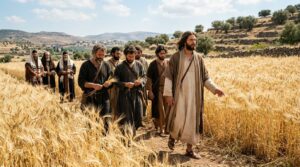
In the Gospel, the Pharisees confront Jesus because His disciples pluck grain on the Sabbath. They accuse them of breaking the law. Jesus responds by reminding them of David, who ate the bread of the Presence when he was hungry. Then He declares, “I desire mercy, not sacrifice.” And He adds, “The Son of Man is Lord of the Sabbath.”
Hezekiah’s shadow moving backward is a sign of God’s mercy. The law of the Sabbath was given for the benefit of humanity, not to be a burden. Jesus is the Lord of the Sabbath, the one who brings mercy to the hungry and healing to the dying. The Pharisees, focused on the letter of the law, missed the Spirit of the law—which is love, mercy, and compassion. Hezekiah, in his humility, received mercy from the Lord. The disciples, in their hunger, received mercy from the Lord of the Sabbath.
Pope Francis has said, “The Sabbath is a day of encounter with the Lord, a day of mercy, not a day of rules and regulations.” Saint John Paul II, in his apostolic letter Dies Domini, wrote, “The day of the Lord is a day of liberation, a day of solidarity with the poor.” And Saint Augustine, reflecting on the Sabbath, said, “Our Sabbath is Christ, and our rest is in Him.”
What does this mean for us? We live in a world that measures time by productivity, by success, by efficiency. We can become like the Pharisees, so focused on the rules that we forget the person. We can be so concerned with the “shadow” of our own plans that we miss the shadow of God’s mercy moving backward to heal us. The Sabbath is not a burden; it is a gift. It is a time to rest in the mercy of God, to be healed by His presence, and to remember that we are loved beyond measure.
This week, let us examine our own “Sabbaths.” Do we keep the Lord’s day as a time of rest and mercy, or as another day of obligation? Do we allow the shadow of God’s mercy to move backward into our past, forgiving our sins and healing our wounds? Do we trust that Jesus, the Lord of the Sabbath, is greater than our fears, greater than our illnesses, greater than our legalism?
Hezekiah was given fifteen more years. The disciples were given bread. We are given the Eucharist, the true Bread of Presence. Let us receive it with the trust that the Lord of the Sabbath is the Lord of mercy, and that His mercy is greater than any shadow of death. Amen.
May God bless you all!