
Feast of Saint John, Apostle and Evangelist, December 27, 2025

The Witness of the Beloved
Voice over by Angeline Chue Chue
1Jn 1:1-4; Psalm: 96; Jn 20:2-8
Dear Sisters and Brothers in Christ, on this third day of the Christmas Octave, we celebrate the Feast of Saint John, the Apostle and Evangelist. In the afterglow of the Nativity, the Church presents us not with a martyr’s bloody witness, but with the testimony of one who leaned on the Lord’s breast—a witness of intimate love that begets unshakable faith. His feast reveals that the deepest response to the mystery of the Incarnation is not only adoration, but a personal, transformative encounter with the Word of life.
The first reading from the First Letter of John is a profound declaration of firsthand experience. John does not speak of abstract ideas or distant legends. He begins with what is tangible and real: “What was from the beginning, what we have heard, what we have seen with our eyes, what we looked upon and touched with our hands concerns the Word of life.” This is the testimony of an eyewitness to the Incarnation. He has heard Jesus’ voice, seen His miracles, gazed upon His transfigured glory, and touched His resurrected body. The Child of Bethlehem is the eternal Word made palpable. John’s purpose in writing is pastoral and joyful: “so that you too may have fellowship with us… that our joy may be complete.” He invites us into the same communion he enjoyed with the Father and His Son, Jesus Christ.
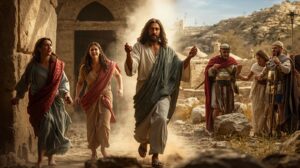
This theme of personal, believing encounter finds its dramatic expression in the Gospel. On Easter morning, Mary Magdalene runs to Peter and John with the shocking news that the tomb is empty. The two disciples race to the site. John, the younger, arrives first. He peers in and sees the burial cloths, but he waits for Peter. When Peter enters, he sees the cloths lying there, and the cloth that had covered Jesus’ head, not thrown aside but neatly rolled up in a separate place. Then the crucial moment arrives: John enters the tomb. The text simply says, “He saw and believed.” He saw not a resuscitated body, but the evidence of a transformed one. The orderly arrangement of the cloths indicated no grave robbery or hasty flight. In that moment, the truth of all Jesus had said—that He would rise again—flooded his soul. The beloved disciple, who had leaned on Jesus’ heart at the Last Supper, now understood with his heart the meaning of the empty tomb.
Saint John’s feast teaches us that true faith is born from a personal encounter with the person of Jesus Christ. It is not merely an intellectual assent to doctrines, but a relationship of love and trust that transforms us. As Pope Benedict XVI expressed, “Being Christian is not the result of an ethical choice or a lofty idea, but the encounter with an event, a person, which gives life a new horizon and a decisive direction.” John is the model for this. He witnessed the Word made flesh at the crib, followed Him to the Cross, where he received Mary as his mother, and he was the first to believe in the risen Lord at the empty tomb.
The comfort for us is immense. The same Jesus, whom John heard, saw, and touched, makes Himself tangibly present to us today. We encounter Him in the Scriptures, the living Word. We see Him in the faces of the poor and marginalized. Most profoundly, we touch Him in the Sacraments, especially in the Eucharist, where the Word becomes flesh for us under the appearances of bread and wine. As St. John Paul II wrote, “The Eucharist is the sacrament of the presence of Christ, who gives Himself to us because He loves us.”
The challenge is to cultivate the intimacy and attentiveness of the beloved disciple. Do we approach the Lord with the reverence of one who seeks to hear His voice, see His actions, and touch His presence in our daily lives? Or do we keep a safe, intellectual distance?
On this feast of Saint John, let us ask for the grace of a believing heart. May we, like him, run to the tomb of our own doubts and fears, and there, encountering the signs of the Lord’s presence, come to believe more deeply. For we are called to be not merely servants, but friends and beloved disciples, who can proclaim with conviction: “We have seen and testify that the Father sent his Son as savior of the world.” Amen.