Friday after Epiphany, January 9, 2026
The Witness Within: Faith that Heals and Testifies
Voice over by Carol San San Lwin
1Jn 5:5-13, Psalm: 147, Lk 5:12-16
My dear Sisters and Brothers in Christ,
Our faith rests on a testimony. It is not a vague feeling or a private philosophy, but a response to a truth that has entered human history. Today, the Scriptures reveal a powerful convergence of testimonies—the external witness of God’s works and the internal witness of the believer’s heart—culminating in a faith that dares to approach Jesus with expectant surrender.
Saint John, in his first letter, presents a courtroom scene. He speaks of the testimony that confirms Jesus as the Son of God. This testimony is not singular but threefold: the Spirit, the water (of Baptism), and the blood (of the Eucharist and the Cross). Together, they form the divine witness. But then John makes it personal: “Whoever believes in the Son of God has this testimony within himself.” To believe is to internalize this divine truth; it becomes the very foundation of our spiritual life. This faith, John says, is what “conquers the world.” It is not a passive belief, but an active, overcoming trust in the One who gives us eternal life as a present reality: “God gave us eternal life, and this life is in his Son.”
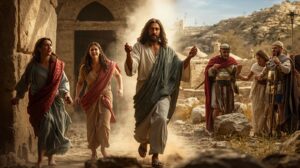
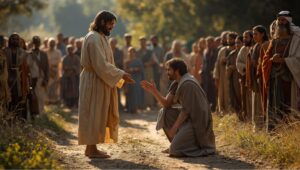
This internal testimony of faith is perfectly illustrated in the Gospel’s encounter between Jesus and the man “full of leprosy.” This man embodies the outcast, the one ritually and socially “unclean.” Yet, when he sees Jesus, he does something extraordinary. He does not merely ask for healing. He prostrates himself, a gesture of utter humility and worship, and speaks words of stunning, theological clarity: “Lord, if you wish, you can make me clean.” His faith recognizes two things: Jesus’ sovereign power (“you can”) and His divine will (“if you wish”). This is the “faith that conquers.” It is a trust that submits completely to the authority and goodness of Christ.
Moved with pity, Jesus does the unthinkable. He stretches out His hand and touches the untouchable. “I do will it. Be made clean.” In this moment, the external testimony of God’s power—the healing—meets the man’s internal testimony of faith. The leper is restored, body and soul. Jesus then instructs him to show himself to the priest and offer the sacrifice prescribed by Moses. This is a “testimony to them,” a public witness that the God of Israel is at work in Jesus.
Yet, even as His fame spreads, Jesus withdraws to deserted places to pray. He remains rooted in the source of His power and identity—His communion with the Father. This is the model for our own witness: action flowing from prayer, public ministry nourished by private intimacy with God.
For us, the application is profound. We, too, bear areas of spiritual “leprosy”—habits of sin, wounds of shame, feelings of isolation. The Lord’s word to us is the same: “I do will it. Be made clean.” We access this cleansing through the Sacrament of Reconciliation, where we hear His healing word audibly.
Our call is twofold. First, to cultivate the internal testimony of John: to believe so deeply that God’s life within us becomes our conquering strength. Second, to imitate the leper’s active faith: to approach Jesus with humble confidence, trusting in His power and His goodwill for us. Then, healed and strengthened, we must give the public “testimony to them” by living as cleansed and joyful witnesses.
Let your restless heart find its rest in the One who wills your wholeness. Approach Him. Believe in His testimony. And then go, and testify. Amen.