Friday of the Fourth Week of Lent, March 20, 2026
The Witness That Disturbs the World
Voice over by Eliz
Wis 2:1a.12-22, Psalm: 33, Jn 7:1-2, 10, 25-30
Dear Sisters and Brothers in Christ,
Today’s readings lay bare a spiritual conflict as old as time: the clash between the worldly mind and the godly soul. The Book of Wisdom describes the logic of a world without eternity: “Let us beset the just one, because he is obnoxious to us; he sets himself against our doings.” The just person is a living reproach, a mirror held up to deceitful ways. This is more than mere dislike; it is a deep-seated resentment toward goodness that exposes evil.
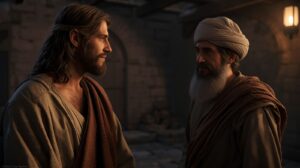
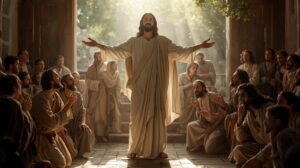
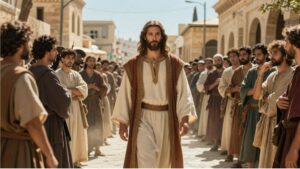
In the Gospel, we see this prophecy fulfilled in Jesus. He moves about in secret, for “the Jews were trying to kill him.” His very presence divides people. Some in the crowd whisper, “Could the authorities have realized that he is the Christ?” Yet, they remain baffled because they think they know his origins. Then, in the midst of this hostility, Jesus teaches openly in the Temple, proclaiming His divine mission: “You know me and also know where I am from. Yet I did not come on my own, but the one who sent me, whom you do not know, is true.” He identifies the core of the conflict: the world does not know the Father, and therefore cannot recognize the Son.
The Passion of Christ begins long before the Cross. It begins with the daily, grinding opposition to His truth and love. The “just one” in Wisdom prefigures Christ—and by extension, every baptized person called to live justly in an unjust world. As Pope Francis reminds us, “The Gospel always brings a spirit of unrest… a healthy unrest that keeps us from becoming drowsy and lazy.” Our faithfulness should, in a gentle but real way, unsettle a culture of complacency, selfishness, and falsehood.
Where is our comfort? It is in the unwavering truth of Christ’s identity and, therefore, our own. “I know him,” Jesus says of the Father, “because I am from him, and he sent me.” We belong to Him. Our worth is not determined by the world’s approval.
Our spiritual strength comes from knowing this tension is not a sign of failure, but of fidelity. When we face criticism for upholding the dignity of life, for practicing chastity, for prioritizing Sunday Mass over convenience, for forgiving an enemy—we stand in the line of the “just one.” Saint Teresa of Calcutta framed it perfectly: “We are not called to be successful, but faithful.”
Therefore, let us not fear the silent judgment or the active opposition that may come from living our faith with integrity. Instead, let us pray for the courage of Christ, who spoke truth even when it was dangerous. In our families, workplaces, and communities, let our quiet acts of justice, mercy, and love be that gentle, unsettling witness. For in persevering, we testify to the Father whom we know, and the Son who sends us. Amen.
May God bless you all!