
Friday of the Seventeenth Week in Ordinary Time, August 1, 2025

God’s Rhythms of Grace and the Scandal of the Familiar
Lev 23:1.4-11.15-16.27.34b-37, Psalm: 80, Mt 13:54-58
Dear Sisters and Brothers in Christ, today we will reflect on the divine rhythms of grace that God has woven into the fabric of our lives, as well as confront the troubling reality of familiarity that can blind us to His presence. We turn first to Leviticus 23, where we discover God’s liturgical calendar—a sacred invitation to encounter Him through a rhythm of remembrance.
In Leviticus 23, we find that each feast is not merely a ritual; it is a “holy convocation” (v. 4). It is an invitation from God Himself to return to Him, to remember His mighty acts, and to celebrate His abiding presence among us. Let us consider the rhythm of these feasts:
1. **Passover/Unleavened Bread**: This feast recalls our liberation from Egypt—a powerful reminder that God frees us from the bondage of sin. As we celebrate the Eucharist, we live into this liberation anew (cf. Luke 22:15–20).
2. Firstfruits: We offer our best to God, an act that prefigures Christ’s Resurrection (1 Cor 15:20). In our offerings, we acknowledge His goodness and abundance in our lives.
3. Pentecost (Weeks): We commemorate the giving of the Law at Sinai and the descent of the Holy Spirit at Pentecost. Each moment is a call to depth and renewal in our faith (Ex 19; Acts 2).
4. Atonement (Yom Kippur): This solemn occasion calls us to repentance and purification (v. 27). In the sacrament of Confession, we are invited to experience God’s healing grace.
5. Tabernacles: Finally, as we recall God dwelling with Israel in the wilderness (v. 34–43), we celebrate the Incarnation—God with us (John 1:14). These sacred moments remind us that “in the liturgical year, Christ’s mysteries are made present in time” (CCC 1164).
As St. Augustine wisely noted, “The New Testament lies hidden in the Old; the Old is unveiled in the New.” Jesus is the fulfillment of each feast. Our Passover becomes the Eucharist; Pentecost births the Church; Atonement finds its completion in our confession; and Tabernacles finds its ultimate expression in the Incarnation. Each feast is a divine echo, inviting us to deeper faith and commitment.
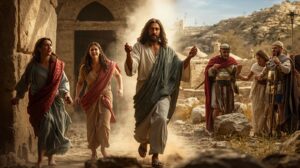
Yet, even amidst these sacred rhythms, we encounter the painful truth portrayed in Matthew 13:54–58. Nazareth, familiar with Jesus, dismisses Him due to their preconceptions about His ordinary life. They allowed the scandal of the familiar to blind them to His divinity.
As the Catechism reminds us, “Christ’s humanity is the ‘sacrament’ of His divinity—but familiarity breeds contempt” (CCC 572). Pope Benedict XVI challenges us to surrender our preconceptions and allow faith to break open new horizons.
Dear Sisters and Brothers in Christ, how do we apply this understanding to our daily lives, especially when our faith feels routine or when we face rejection?
1. Reclaiming Sacred Rhythms: In moments of spiritual dryness, let us reclaim the sacred rhythms of our faith. Attend monthly Eucharistic Adoration, go to Confession quarterly, and create a dedicated prayer space at home.
2. Seeking Wonder Amidst Rejection: When we face scorn, we can unite ourselves with Christ in Nazareth. Pray, “Lord, remind me: ‘They hated Me first’” (John 15:18). Seek the courage of the Holy Spirit, just as the early Church did after Pentecost.
3. Sanctifying Time in a Secular World: Embrace the feast calendar by celebrating “liturgical living.” Bake festive treats for the feasts and renew your reverence in the presence of God, deepening our engagement through gestures like genuflecting before the Tabernacle.
Dear Sisters and Brothers in Christ, let us embrace the rhythms of grace that God offers us. May we reject the scandal of the familiar that blinds us to His divine presence. Instead, let us open our hearts to the mystery of His love that transforms every moment into a sacred encounter. Amen.
St. Thérèse of Lisieux on Nazareth’s rejection:
“When others scorn you, rejoice! You share Christ’s lot. His ‘hidden life’ in Nazareth sanctifies our ordinary days.”
Pope Francis on familiarity:
“Do not reduce Jesus to ‘the carpenter’s son’! Let Him shock you—or your faith grows stale” (Angelus, 2018).
St. Teresa of Ávila:
“Christ’s greatest miracles occur in souls that welcome Him as God, not as a mere teacher.”