

Friday of the Twenty-second Week in Ordinary Time, September 5, 2025
The Primacy of Christ and the New Wine of Charity
Col 1:15-20, Psalm: 99, Lk 5:33-39
St. Teresa of Calcutta, religious
My dear Sisters and Brothers in Christ,
On this feast of Saint Teresa of Calcutta, the Church presents us with two profound readings that, at first glance, might seem disconnected. Yet, together, they paint a magnificent icon of who Christ is and how we are called to follow Him—a calling embodied so heroically by the saint we honor today.
From the Letter to the Colossians, we are given a soaring hymn to the primacy of Christ. He is the “image of the invisible God,” the firstborn of all creation. In Him, through Him, and for Him, all things were created. He is before all things, and in Him, all things hold together. Most profoundly, He is the head of the Body, the Church, and through the blood of His Cross, He has reconciled all things to Himself, making peace. This is the cosmic Christ, the eternal Word through whom the universe was spun into being. This is the foundation of our faith: everything—every law, every tradition, every action—finds its ultimate meaning, order, and purpose in Him.
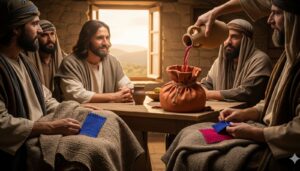
The Gospel from Luke then presents a practical challenge to this truth. The Pharisees question why Jesus’ disciples do not fast according to the old customs. Jesus responds with a crucial teaching: you cannot patch an old cloak with new fabric, and you cannot put new wine into old wineskins. The new wine of the Gospel—the radical, overflowing grace of God’s presence in Jesus—is too powerful for the old containers of mere ritual observance. It requires new wineskins: hearts that are flexible, humble, and open to being stretched and transformed by the Spirit.
This is where the feast of Saint Teresa of Calcutta provides the perfect living homily. She understood the primacy of Christ better than most. She did not just serve the poor; she saw the “image of the invisible God” in the “distressing disguise of the poorest of the poor.” Her every action was rooted in the truth that she was ministering to Christ Himself. The cosmic Lord of Colossians was simultaneously the dying man in the streets of Calcutta. Her mission was one of reconciliation, of restoring the dignity that belongs to every person because they are created in and for Christ.
The new wine of divine charity filled her to the brim. She and her sisters became entirely new wineskins for this grace. They were not bound by the old question of “Who is my neighbor?” but were stretched by the new law of love to seek out the most forgotten and unwanted. This love was disruptive, just as Jesus’ ministry was disruptive. It didn’t always fit into societal expectations, but it was essential, vibrant, and life-giving.
Pope Francis, in canonizing her, held her up as a “model of holiness” and a “tireless worker of mercy.” She comforts us because her life proves that this profound, Christ-centered love is not a beautiful ideal for a few, but a calling for all the baptized. She found her spiritual strength not in her own abilities, but by adhering absolutely to the Head, Christ, from whom the whole Body, as Colossians says, is nourished and held together.
So what is our application today? We are called to:
- Adhere to Christ: In our decisions, worries, and joys, we must return to the truth of Colossians. Is Christ the center, the firstborn of every aspect of my life?
- Become New Wineskins: We must ask the Holy Spirit to stretch our hearts. Are we clinging to old, rigid ways of thinking, or are we open to being transformed by the new wine of the Gospel? This means loving beyond our comfort zone.
- See Christ in the Poor: Like St. Teresa, we are called to recognize the dignity of every person we meet, especially the difficult, the annoying, and the marginalized.
Saint Teresa once said, “We can do no great things, only small things with great love.” My friends, this is the fruit of a life anchored in the primacy of Christ. It is the new wine of love, poured into our humble lives, transforming us and the world, one small act of great love at a time. Amen.