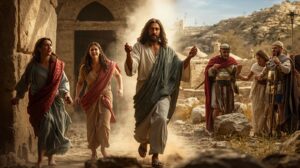

Memorial of Saint Barnabas, Apostle, June 11, 2025

St. Barnabas, the Apostle of Encouragement
Acts 11:21-26; 13:1-3; Psalm: 98; Mt 10:7-13
Dear brothers and sisters in Christ, today we celebrate the memorial of St. Barnabas, the Apostle, and will reflect on the remarkable life of Barnabas, the Apostle of Encouragement. In a world full of uncertainty and doubt, Barnabas stands as a beacon of hope, a testament to the unseen architect of the early church. His legacy teaches us that encouragement is not a passive act but a powerful force that builds communities and transforms lives.
In today’s first reading, we see Barnabas stepping onto the stage of the early church at a crucial moment. The scripture tells us that a great number of people turned to the Lord. Barnabas, filled with the Holy Spirit, was the encourager who built bridges between the new believers and the established church. He went to Antioch, where he saw the grace of God at work, and his heart swelled with joy. He didn’t just see the potential in others; he actively nurtured it. Barnabas reminds us that encouragement starts with a vision. He saw what others could not and inspired them to rise to their calling.
In today’s first reading, we see Barnabas not only as an encourager but also as a discerner who sent forth. The church in Antioch was praying and fasting when the Holy Spirit instructed them to set apart Barnabas and Saul for the work to which He had called them. What a profound moment of obedience! Barnabas understood that encouragement often involves taking risks. He recognized the importance of sending others into the mission field, knowing that God’s call is not limited to a select few. Here, we learn that encouragement means believing in the divine potential of others and facilitating their journey into service.
In today’s Gospel, we hear the instruction of Jesus to His disciples as He sends them out to preach the good news. Here, Barnabas exemplifies the missionary who traveled light. He embraced a life of simplicity, relying on God’s provision and the support of the community. He did not carry burdens that would weigh him down but rather the burden of love for the souls he sought to reach. This is a challenge for us today. Are we willing to let go of our own burdens and travel light, trusting God to provide as we share His message?
As we reflect on Barnabas, we find timeless wisdom in his life. Firstly, Barnabas cultivated communion. He built relationships that fostered growth and unity. In a time of division and uncertainty, he reminds us of the power of connection and community. Secondly, he embraced obscurity. Barnabas was never seeking the limelight. He found joy in lifting others up, believing that their success was a testament to his own. In a world that often values fame and recognition, let us remember the beauty of humble service. Lastly, Barnabas persevered through failure. He faced challenges and setbacks but never lost sight of the mission. His story reminds us that encouragement is not just about success; it is also about resilience in the face of adversity.
As we leave this place today, let us carry the spirit of Barnabas within us. Let us be encouragers who build bridges, discern God’s calling in others, travel light, cultivate communion, embrace obscurity, and persevere through failures. Together, let us be sent to build the church and share the love of Christ with a world in need. Amen.
- Pope Benedict XVI reflected:
“Barnabas teaches us to seek God’s grace even where we least expect it. He saw Antioch not as a threat, but as a harvest.” (General Audience, 2007)
- St. John Chrysostom praised:
“He was a kind man, of great virtue, who freed souls from all envy. His name [‘Encouragement’] reveals his heart.” (Homilies on Acts)
- St. Teresa of Calcutta embodied this:
“Give yourself fully to God. He will use you to accomplish great things—if you trust more in His love than in your weakness.”
- Pope St. John Paul II taught:
“Mission demands simplicity—not as poverty of means, but as freedom from attachments that hinder the Gospel.” (Redemptoris Missio, 88)