
Monday of the Fifth Week of Lent, March 23, 2026

The God Who Sees and Saves
Voice over by Eliz
Dan 13,1-9.15-17.19-30.33-62, Psalm: 23, Jn 8:1-11
Dear Sisters and Brothers in Christ,
Today’s Scriptures present a striking contrast between two forms of judgment: the corrupted judgment of men and the saving judgment of God.
In the beautiful story of Susanna, we witness a grave injustice. A virtuous woman is trapped by the lies and lust of two wicked elders, who use their authority to condemn her to death. She is utterly helpless before their false witness. Yet, in her terror, she places her trust entirely in the Lord, “the eternal God who knows all that is hidden.” God stirs the spirit of young Daniel, who intervenes with wisdom, exposing the lies and delivering the innocent. Here, God is revealed as the defender of the powerless, the one who sees the truth and acts to save.
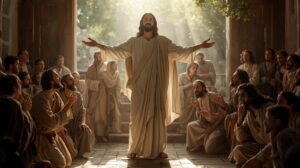
In the Gospel, another woman stands condemned, this time legitimately under the Law. The scribes and Pharisees, like the elders of old, use her not out of zeal for justice, but as a trap for Jesus. Theirs is a hardened, hypocritical heart, blind to their own sin. Jesus’ response is revolutionary. He does not deny the reality of sin, but He reveals its universal scope: “Let the one among you who is without sin be the first to throw a stone.” One by one, the accusers depart, convicted by their own conscience. Jesus, the only sinless one, remains. He alone has the right to judge, and His judgment is mercy: “Neither do I condemn you. Go, and from now on do not sin any more.”
Christ is the fulfillment of Daniel’s just intervention. He is the eternal God who sees the hidden truth of every heart. In Him, justice and mercy meet. He exposes the hypocrisy of the self-righteous and offers liberating pardon to the repentant sinner. As Pope Francis teaches, “God’s justice is His mercy given to everyone as a grace that flows from the death and resurrection of Jesus Christ.”
Where is our comfort? In knowing that when we are falsely accused or shamed, God sees the truth. When we stand guilty, Christ alone is our judge, and His word to us is forgiveness, not condemnation. Our spiritual strength comes from this twofold grace: the courage to defend the innocent (to be a Daniel), and the humility to receive mercy (to be the woman).
St. Augustine, reflecting on this Gospel, saw the accusers convicted by their own conscience: “They departed one by one, beginning with the elders, leaving the woman alone in the presence of Mercy.”
This week, let us examine our own gaze. Do we look upon others with the accusatory zeal of the elders, or with the truthful compassion of Christ? Let us also bring our own failings into the light of His merciful presence, hearing His liberating word: “I do not condemn you. Go in peace, sin no more.” For our Lord is the God who sees, and who came not to condemn, but to save. Amen.
May God bless you all!