
Monday of the Fourteenth Week in Ordinary Time, July 7, 2025
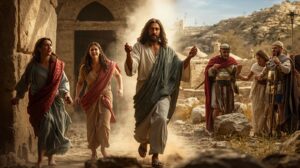
Divine Encounter in Desolation and Desperate Faith
Gen 28:10-22a; Psalm: 90; Mt 9:18-26
Dear Sisters and Brothers in Christ, we often find ourselves in moments of desolation, navigating through valleys of despair. Yet, it is in these very moments, in the wilderness of our lives, that we encounter the divine. Let us turn our hearts to Genesis chapter 28, where Jacob, weary and alone, finds himself in a desolate place. As he lays his head upon a stone, God meets him in his vulnerability. Here we see the divine initiative in desolation. God does not wait for us to be strong or self-sufficient. Instead, He reaches out to us in our weakness. Jacob experiences a covenant renewal, a reminder that the promises of God are not just for the distant past but are alive and active in our present. The dream of a ladder reaching to heaven illustrates the connection between earth and heaven, reminding us that God is always bridging the gap. In this sacred encounter, we also find sacramental foreshadowing. Jacob pours oil on the stone, marking it as a holy place, a Bethel, where heaven touches earth. In our lives, we too can create our own Bethels, sacred moments where we acknowledge God’s presence amidst our struggles. When we feel lost and abandoned, let us remember that God is right there beside us, offering comfort and assurance.
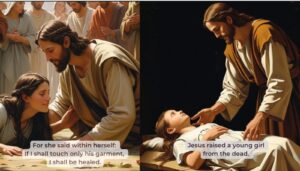
Now let us turn to the Gospel of Matthew, where we witness a beautiful illustration of faith that breaks barriers. In the story of Jairus and the hemorrhaging woman, we see two individuals desperate for healing. Jairus, a ruler, falls at the feet of Jesus, humbly pleading for his daughter. And the woman, suffering for twelve long years, reaches out in audacious faith, believing that just a touch of Jesus’ garment could restore her. Here we see Jesus as the life-giver, breaking through societal norms and expectations. He acknowledges both the ruler and the woman, affirming their worth and desperation. This twofold healing reminds us that faith is not merely a mental ascent but a trustful surrender. It is in our desolation that we recognize our need for a Savior. In Christ, we find the bridge that connects our despair with divine hope. He is the life that transforms our darkest moments into opportunities for resurrection.
So, how do we apply these truths in our daily lives? First, seek God in your Bethels. Create spaces where you can encounter Him amidst your struggles. Invite Him into your moments of despair and allow Him to reveal His promises to you. Second, imitate the audacious faith of the woman. Do not be afraid to reach out to Jesus, even when the odds seem insurmountable. Your faith can break barriers, just as it did for her. Third, embrace the humility of Jairus. Approach God with a heart that recognizes your utter dependence on Him. This humility opens the door for divine intervention. Finally, let us strive to become living Bethels. As we encounter God’s grace in our lives, let us share that grace with others. Let us be vessels of hope, reflecting the light of Christ to those around us. In our moments of desolation, remember that God is ever-present, waiting to meet you with open arms. Trust in Him, for He is the bridge that connects your pain to His promise. Amen.
St. Ambrose on the woman’s faith: “She touched the hem of His garment—the Word Incarnate—and drew healing from the Fountain of Life.”
St. John Chrysostom on Jairus: “A ruler of the synagogue forgot his rank, remembering only he was a father.”
Pope St. John Paul II: “Faith transforms despair into hope. The hemorrhaging woman teaches us to fight isolation with trust in Christ’s nearness.” (Angelus, 2003)
St. Faustina Kowalska: “In every wound, physical or spiritual, Jesus whispers: ‘I am here. Your faith has saved you.’” (Diary, 1507)