Monday of the Twenty-eighth Week in Ordinary Time, October 13, 2025
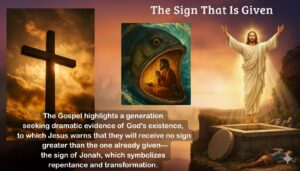
The Sign That Is Given
Rom 1:1-7, Psalm: 97, Lk 11:29-32
My dear Sisters and Brothers in Christ,
In an age that clamors for proof, for spectacular signs, and for undeniable evidence, the Word of God today presents us with a striking and challenging truth. The greatest sign of God’s love has already been given. The problem is not a lack of evidence, but a hardness of heart that refuses to see it.
In the Gospel, Jesus confronts a generation that is demanding a sign from heaven. They want a divine spectacle that will force them to believe. But Jesus responds with a sobering judgment: “This generation is an evil generation; it seeks a sign, but no sign will be given it, except the sign of Jonah.” He then explains what this means: “Just as Jonah became a sign to the Ninevites, so will the Son of Man be to this generation.”
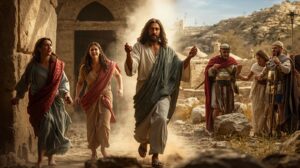
What was the sign of Jonah? It was the sign of a prophet emerging alive after three days in the belly of a great fish, preaching a message of repentance that moved an entire pagan city to conversion. Jesus points to a greater reality: His own Death and Resurrection. The ultimate, definitive sign of God’s love for humanity is the Paschal Mystery—the Son of God laying down His life for our salvation and rising victorious over sin and death. This is the sign that towers over all others. The Queen of the South traveled far to hear Solomon’s wisdom, and the Ninevites repented at Jonah’s preaching. Yet, here is one greater than Solomon and Jonah, and He is met with skepticism and demand for more.
This is why the introduction of St. Paul’s Letter to the Romans is such a powerful counterpoint. Paul does not begin by presenting clever arguments or spectacular miracles. He begins by proclaiming the sign of Jonah fulfilled: the Gospel of God “about his Son, descended from David according to the flesh, but established as Son of God in power according to the Spirit of holiness through resurrection from the dead, Jesus Christ our Lord.” For Paul, the Resurrection is the central, undeniable fact that changes everything. It is the source of his apostleship and the heart of his message.
This message, Paul says, is for the “obedience of faith.” This is a key phrase. Faith is not merely intellectual assent to a fact; it is the obedient surrender of our entire selves to the God who has revealed Himself in this ultimate sign of love. We are among those “called to belong to Jesus Christ,” and our vocation is one of holiness.
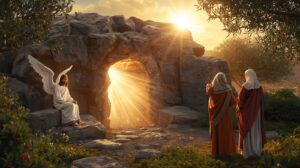
What does this mean for us? We can often be like that generation, subtly demanding new signs from God. We might think, “If only God would clearly fix this problem, or dramatically reveal His will, then I would have stronger faith.” But Jesus directs our gaze back to the one sign that matters: the Cross and the Empty Tomb. This is the wellspring of our comfort and our strength.
When we are tempted to doubt, we are not called to seek new wonders, but to contemplate the wonder that has already been given. As Pope Benedict XVI wrote, “Being Christian is not the result of an ethical choice or a lofty idea, but the encounter with an event, a person, which gives life a new horizon and a decisive direction.” That event is the Resurrection; that person is Jesus Christ.
St. Thérèse of Lisieux understood this, choosing not the path of great signs, but the “little way” of absolute trust in the love of God revealed on the Cross.
Let us, then, cease seeking the spectacular. Instead, let us embrace the obedience of faith. Let us turn our hearts to the sign we have already been given: the love of Christ who died and rose for us. In this sign, we will find the grace, the strength, and the salvation we seek. Amen.