
Saturday of the Twenty-sixth Week in Ordinary Time, October 4, 2025
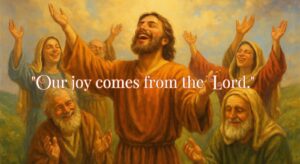
From Mourning to Joy: The True Source of Our Strength
Bar 4:5-12.27-29, Psalm: 68, Lk 10:17-24
My dear Sisters and Brothers in Christ,
In the spiritual life, we can often feel like exiles. We experience the weight of our own failings, the pain of a world turned from God, and the sorrow that comes from the consequences of sin. Yet, in the midst of this, God’s Word today offers a stunning journey—from the depths of a mother’s lament to the heights of heavenly joy, revealing where our true strength lies.
The poignant reading from Baruch presents Jerusalem as a grieving mother. She speaks to her children, who have been led into exile, and her words are filled with a holy sorrow. “You have been sold to the nations,” she cries, “not for your destruction,” but because “you provoked God who created you.” This is a crucial distinction. Their suffering is a consequence of their choices, not the desire of a vengeful God. Yet, even in her lament, the motherly heart of God’s people holds onto hope. She urges her children, “Take courage!” and gives the key to their restoration: “Return with tenfold zeal to seek God.” The path home begins with a deliberate turning, a seeking of the Lord with all their heart.
This movement from exile to return, from mourning to seeking, finds its ultimate fulfillment in the Gospel. The seventy-two disciples return from their mission with exuberant joy, proclaiming, “Lord, even the demons are subject to us because of your name!” They have experienced a foretaste of the Kingdom’s power. But Jesus, while rejoicing with them, redirects their focus. “Do not rejoice because the spirits are subject to you,” He says, “but rejoice because your names are written in heaven.”
This is the heart of the homily today. The greatest cause of our joy is not our successful ministry, our spiritual victories, or any external accomplishment. The greatest, most unshakable joy is our relationship with the Father, secured for us by the Son. Jesus Himself erupts in a prayer of praise: “I give you praise, Father, Lord of heaven and earth, for although you have hidden these things from the wise and the learned, you have revealed them to the childlike.” True knowledge of God is not an intellectual achievement; it is a gift of revelation received by those who are humble enough to accept it.
So, what does this mean for us? When we feel like exiles—burdened by sin, discouraged by failures, or overwhelmed by the world’s darkness—we are called to imitate the children of Baruch. We are to “take courage” and “return with zeal to seek God.” This is the work of prayer, the Sacrament of Reconciliation, and a humble return to the basics of our faith.
And when we experience joy in our spiritual lives—a moment of consolation, a successful act of service, a sense of God’s presence—we must remember the Lord’s correction. We are not to rejoice primarily in the gift, but in the Giver. Our names are written in heaven! This is our identity and our eternal hope. As St. Augustine prayed, “You have made us for yourself, O Lord, and our heart is restless until it rests in you.” Our joy is found in resting in Him.
St. Thérèse of Lisieux, the master of spiritual childhood, shows us the way. She wrote, “Jesus does not demand great actions from us but simply surrender and gratitude.” She understood that the “childlike” are those who, in the midst of their own spiritual exile and aridity, simply keep seeking God with trust, rejoicing not in their own strength but in their status as a beloved child of the Father.
Let us go forth today, then, with the courage of the exile seeking home and the joy of the child whose name is known by God. May our mourning be turned into dancing, not because our circumstances have necessarily changed, but because we have rediscovered the one thing that matters: we belong to Him, and our eternal home is secure. Amen.