
Third Sunday of Advent (A), December 14, 2025
The Unshakable Joy of the Longing Heart
Voice over by Carol San San Lwin
Isa 35:1-6a.10; Psalm: 145; Jas 5;7-10; Mt 11:2-11
Dear Sisters and Brothers in Christ, on this Third Sunday of Advent, Gaudete Sunday, the rose-colored candle on our wreath and the rose vestments call our hearts to a profound and paradoxical Christian reality: the joy of holy longing. We are called to rejoice not because our journey is over, but precisely because we are on the way, because the One for whom we long is so glorious that the very act of waiting for Him transforms us.
The Prophet Isaiah paints a breathtaking picture of this transformation. The desert, a place of barrenness and death, will burst into bloom, he says. It will “rejoice with joyful song.” The feeble hands and weak knees of a discouraged people will be strengthened. Why? Because “Here is your God… he comes to save you.” The signs of His coming are the reversal of all that is broken: the eyes of the blind are opened, the ears of the deaf cleared, and the lame leap like a stag. This is not mere poetry; it is God’s irrevocable promise to redeem and restore His entire creation. The result is an unassailable joy: “They will meet with joy and gladness, sorrow and mourning will flee.”
Yet, in the time between the promise and its fulfillment, we live. This is the space that the Apostle James addresses. He speaks to a community enduring hardship and waiting for the Lord’s return. His instruction is disarmingly simple and demanding: “Be patient, brothers and sisters, until the coming of the Lord.” He points to the farmer who waits for the precious fruit of the earth, and to the prophets who spoke in the name of the Lord with patient endurance. Patience, here, is not passive resignation. It is the active, steadfast fortitude of a heart that trusts in the promise, even when the evidence is not yet visible. It is the work of preparing the soil of our souls to receive the “early and late rains” of God’s grace.
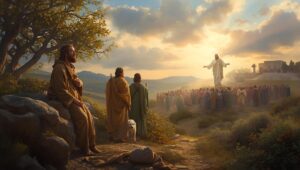
This tension between the glorious promise and the patient, often perplexing wait, comes to a head in the Gospel. John the Baptist, the very voice in the wilderness preparing the way, now sits in the darkness of a prison cell. His circumstances do not match the prophecy. Doubt creeps in, and he sends his disciples to ask Jesus, “Are you the one who is to come, or should we look for another?” Jesus does not answer with a simple “yes.” Instead, He points to the evidence: “The blind regain their sight, the lame walk, lepers are cleansed… the poor have the good news proclaimed to them.” In other words, He tells John to look at the works Isaiah foretold. The promises are being fulfilled, but in a way that requires patient discernment. The Kingdom was breaking in, not with the political firestorm John may have expected, but with the quiet, powerful works of mercy and healing.
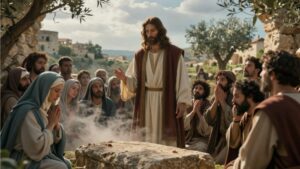
Then Jesus turns to the crowd and offers one of the greatest tributes in Scripture: “Amen, I say to you, among those born of women there has been none greater than John the Baptist.” He validates John’s struggle, honoring his pivotal role. Yet, He adds, “the least in the Kingdom of heaven is greater than he.” John stood at the threshold, pointing to the Messiah. Through Baptism, we have entered into the Kingdom he could only proclaim. We possess a dignity and an intimacy with God that even the greatest prophets yearned to see.
This is the source of our Gaudete joy. Our patient waiting is not in vain. The God who promised to make the desert bloom is the same God who, in Christ, has opened the eyes of the blind and proclaimed good news to the poor. He is at work, even when we sit in our own prisons of doubt or suffering. As Pope Benedict XVI wrote, “The one who has hope lives differently.”
So how do we live this patient, joyful hope? We must, like the farmer, tend to the daily tasks of prayer, charity, and forgiveness, trusting that God is bringing about a harvest we cannot yet see. We must, like John, bring our doubts to Jesus and let Him redirect our gaze to the works of mercy happening around us. And we must embrace our dignity as the “least in the Kingdom,” who, by grace, possess the very presence of Christ within us.
This Advent, let your heart rejoice. Not because all is perfect, but because our God is faithful. He has come, He comes to us now in Word and Sacrament, and He will come again in glory. Let our patients’ lives be a testament to this unshakable hope. Amen.