
Thursday after Epiphany, January 8, 2026
Love in Deed and Truth: The Mission We Are Given
Voice over by Carol San San Lwin
1Jn 4:19—5:4, Psalm: 71, Lk 4:14-22
My dear Sisters and Brothers in Christ,
“We love because God first loved us.” With this simple, revolutionary truth, Saint John captures the entire dynamic of the Christian life. Love is never our own invention; it is always our response to a gift we have received.
Saint John, with his characteristic clarity, makes love the non-negotiable test of our faith. If we claim to love God, whom we cannot see, but fail to love our brother or sister, whom we can see, we are liars. True love for God must express itself in practical, tangible love for others. This is love, “not in word or speech but in deed and truth.” John then reveals the beautiful freedom this love brings: “For the love of God is this, that we keep his commandments. And his commandments are not burdensome.” When love is the motive, obedience is not a weight but a joy. Loving others becomes the natural fruit of being loved by God, and it is the victory that conquers the world’s selfishness.
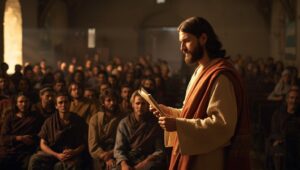
This love, which is our victory, finds its source and model in the mission of Jesus, revealed in today’s Gospel. In the synagogue at Nazareth, Jesus unrolls the scroll of Isaiah and reads the prophecy that defines His purpose: “The Spirit of the Lord is upon me, because he has anointed me to bring glad tidings to the poor. He has sent me to proclaim liberty to captives and recovery of sight to the blind, to let the oppressed go free…” Then, with every eye fixed on Him, He declares, “Today this Scripture passage is fulfilled in your hearing.”
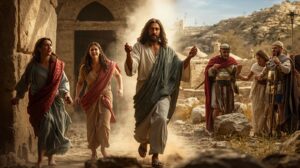
This is the mission of divine love incarnate. Jesus is God’s “deed and truth.” He is Love walking among us, directed first and preferentially to the poor, the captive, the blind, and the oppressed. His mission is one of liberation and healing. And by His life, death, and resurrection, He makes this mission our mission. We, the Church, are now His Body, called to be the continuing fulfillment of that prophecy in history.
We are loved first. That love, received in prayer and the Eucharist, must become active. Who are the “poor” in our sphere—those lacking material goods, emotional support, or spiritual hope? Who are the “captives” bound by addiction, despair, or ignorance? Our love, in imitation of Christ, must seek them out. As Pope Francis constantly reminds us, we must be a Church that goes to the peripheries.
Let us ask for God’s help to move from loving in word to loving in deed, so that through our hands and hearts, the Scripture may be fulfilled once more: good news for the poor, liberty for captives, and God’s love made visible for all to see. Amen.