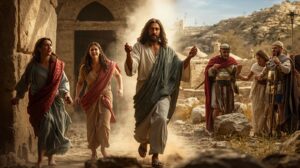

Thursday of the Fifteenth Week in Ordinary Time, July 17, 2025
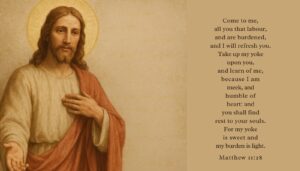
The God Who Is With Us—Finding Rest in the Fire
Exod 3:13-20; Psalm: 104; Mt 11:28-30
Dear Sisters and Brothers in Christ, today, we will reflect on The God Who Is With Us—Finding Rest in the Fire. In a world that often feels chaotic, it is essential to remind ourselves of God’s unwavering presence and His promise of rest, even in times of struggle.
Let us begin by exploring the heart of God revealed in Exodus 3, verses 13 to 20. Here we find Moses, standing before the burning bush, trembling at the sight of the divine. God introduces Himself with a name that changes everything. He says, “I AM WHO AM.” This powerful declaration, YHWH, reveals a God who is not distant or disinterested. He is the ever-present One who sees our struggles and hears our cries. This is the promise of liberation. God tells Moses that He will lead His people out of Egypt, out of oppression, and into a land flowing with milk and honey. This is not just a historical account; it is a promise for us today. No matter what “Egypt” we find ourselves in, God is with us, ready to deliver us.
Now let us turn to the Gospel of Matthew, chapter 11, verses 28 to 30. Here, Jesus invites us with open arms when He says, “Come to Me, all you who are weary and burdened, and I will give you rest.” This is the rest that restores us, not just a momentary pause but a deep, soul-filling peace. The Greek word for rest is anapausis, which means a recovery of breath, a Sabbath for the spirit. In times of trial, we can find that rest in Jesus. He offers us an easy yoke, a gentle burden that lightens our load when life becomes overwhelming.
As we navigate the challenges of our world, we must recognize where Scripture meets struggle. We are living in a time where natural disasters, such as floods and fires, seem to be increasing. We see the heartbreak of pandemics and the devastation they bring. We also encounter manmade tragedies like war, injustice, and poverty that weigh heavily on our hearts. And let us not forget our personal burdens—grief, anxiety, and burnout that can feel suffocating. In the midst of all this, we are reminded that God is with us, providing rest and healing.
So, how do we apply this divine promise in our daily lives? First, we must name our “Egypt.” What is it that is holding you captive? What burdens do you carry? Once we identify them, we can invite God into those spaces, allowing His presence to bring liberation. Next, we need to wear Christ’s yoke daily. This means accepting His guidance and support, trusting that He carries our burdens alongside us. We are also called to be a burning bush for others. Just as God spoke through the bush to Moses, we can be vessels of His love and truth to those around us. Finally, let us embrace rest as rebellion. St. John Paul II once stated that Sunday rest defends human dignity against exploitation. Choosing to rest in a world that demands constant productivity is an act of faith in God’s provision.
In closing, let us hold onto the truth that The God Who Is With Us invites us to find rest in the fire. He is present in our struggles and promises liberation. May we come to Him, wear His yoke, and be a source of light and hope for others. Embrace the rest that is available to you today. Amen.
St. Padre Pio amid war:
“Pray, hope, don’t worry. Anxiety is useless; God is merciful and hears your cries.”
St. Thérèse of Lisieux on suffering:
“Everything is grace. Even disasters are hands through which God caresses the world.”
St. John Paul II on Exodus 3:14:
“When evil seems triumphant, remember: God is. No darkness extinguishes His presence.”
St. John of the Cross (amid spiritual darkness): “In trials, cling to ‘I AM.’ His name is the rock when all else fails.”
Pope Francis: “God does not abandon us in the storm. He may not calm the sea, but He will calm your heart.” (Homily, 2020)
St. Thérèse of Lisieux: “Jesus’ yoke is love. Carry it by doing small things with great trust—even in disaster.”
St. Augustine: “Our hearts are restless until they rest in You.” (Confessions, I.1)