
Thursday of the Thirty-third Week in Ordinary Time, November 20, 2025
The Tears of the Lord and the Choice of the Faithful
Voice over by Angeline Chue Chue
1Macc 2:15-29; Psalm: 49; Lk 19:41-44
Dear Sisters and Brothers in Christ, the Word of God today presents us with two profound and sorrowful scenes. In one, a faithful man weeps for the corruption of his people; in the other, the Lord Himself weeps for the spiritual blindness of a city. Both reveal a timeless truth: there comes a moment when we must choose between comfortable compromise and costly fidelity.
In the First Book of Maccabees, we witness the birth of a resistance movement. The officers of the king arrive to enforce idolatry, and many in the town of Modein acquiesce out of fear. But Mattathias, a priest, is filled with righteous zeal. Seeing a fellow Jew about to offer a pagan sacrifice, he is moved not by anger, but by a profound grief for the desecration of God’s law. His cry—“Woe is me! Why was I born to see the ruin of my people?”—echoes with divine sorrow. In that critical moment, he makes a definitive choice. He refuses the king’s favor, kills the apostate Jew, and tears down the altar. His action is a public declaration: “Let everyone who is zealous for the law and who stands by the covenant follow me!” He chooses to stand with God, even if it means becoming a fugitive.
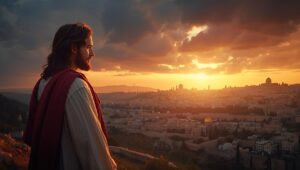
This theme of a decisive choice finds its ultimate expression in the Gospel. As Jesus approaches Jerusalem, He does not see a triumphant capital, but a city blind to its own salvation. He weeps over it, lamenting, “If this day you only knew what makes for peace—but now it is hidden from your eyes.” Jerusalem’s sin was not merely its future rejection of Him, but its present inability to recognize “the time of your visitation.” They saw a prophet from Nazareth; they did not see the Lord their God coming to them. Their peace was hidden because their hearts were closed to the very source of peace.
Mattathias recognized the “time of visitation” as a moment of crisis demanding a choice for the Covenant. Jerusalem failed to recognize its visitation in the person of Jesus. The Church teaches that Christ continues to visit us—in the Scriptures, in the Sacraments, and in the face of the poor. Do we recognize Him?
As Pope Francis reminds us, “We must not be afraid to leave our ‘enclosed’ spaces to reach out to others.” This is the choice Mattathias made, leaving his town to stand for truth.
The comfort for us is that our God is not distant. He weeps for us when we stray. His tears are a sign of His passionate love, a love that desires our freedom and our peace. The challenge is to examine our own lives. Where are we, like the people of Modein, tempted to compromise our faith for social acceptance or temporary peace? Where are we, like Jerusalem, failing to recognize the Lord’s visitation in our daily circumstances, in the cry of the needy, or in the quiet of prayer?
Let us ask for the intercession of saints like St. John Vianney, who said, “The soul can only repose in the possession of God.” May we have the clarity of Mattathias to choose God above all else, and the perceptive faith to recognize the Lord who visits us, so that we may never hear the sorrowful words, “it is hidden from your eyes,” but rather the joyful welcome, “you recognized the time of your visitation.” Amen.
May the souls of the faithful departed, through the mercy of God, rest in peace. Amen.