Tuesday of Holy Week, March 31, 2026
Called in Our Weakness
Voice over by Eliz
Isa 49:1-6, Psalm: 70, Jn 13:21-33.36-38
Dear Sisters and Brothers in Christ,
On this solemn evening, the Word of God presents us with a profound contrast: the eternal, faithful call of God, and the fragile, faltering response of humanity.
The prophet Isaiah gives us the voice of the Servant, called by the Lord from his very birth: “You are my servant, through whom I show my glory.” This Servant’s mission, though feeling at times like toil in vain, is destined for breathtaking universality: “I will make you a light to the nations, that my salvation may reach to the ends of the earth.” This is God’s unwavering plan for His chosen one.
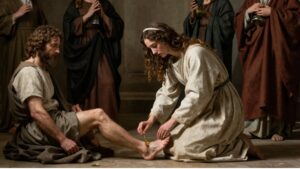
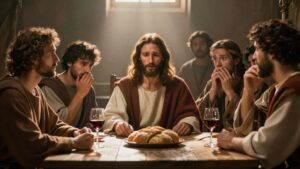
In the Gospel, we see this chosen one, Jesus, at the most intimate moment of His mission. At the Last Supper, He is “deeply troubled” and announces the betrayal of one among them. He shares His very self—the morsel of bread—with Judas, an act of final, heartbreaking love even for His betrayer. Simultaneously, He speaks to Simon Peter’s bold promise of loyalty with a devastating prediction: “The cock will not crow before you deny me three times.” Here, in the same room, we see betrayal and denial. The ones called to be pillars are revealed in their human fragility.
Jesus is the ultimate Servant of Isaiah, the light to the nations. His saving mission advances through and despite human failure. The Eucharist instituted at this very Supper is the ongoing sign of His covenant faithfulness, even when we are unfaithful. As Pope Francis teaches, “The Lord never tires of forgiving. It is we who tire of asking for forgiveness.” In that Upper Room, Christ’s love established the remedy for the very sin that was about to unfold.
Where is our comfort? It is in knowing that our calling, like that of the Servant and the Apostles, does not depend on our perfect strength. God knows our weakness better than we do and calls us anyway. Our spiritual strength is not found in an illusion of self-sufficiency, but in returning, like Peter, to the gaze of a merciful Christ after we have fallen.
St. Augustine, reflecting on his own failures, found solace in this truth: “The God who created us without our help will not save us without our consent.” Our consent is often flawed, but His saving love is constant.
This week, let us acknowledge our own moments of betrayal and denial—the times we choose darkness over His light, silence over testimony, self over service. Let us bring these failures to the foot of the Cross, the ultimate act of the Suffering Servant. And let us hear again our baptismal call to be a light to the nations, not because we are strong, but because He who called us is faithful. He makes a way for His salvation through our redeemed weakness. Amen.
May God bless you all!