
Tuesday of the Second Week in Ordinary Time, January 20, 2026
The Lord Looks Upon the Heart
Voice over by Eliz
1Sam 16:1-13, Psalm: 88, Mk 2:23-28
My dear Sisters and Brothers in Christ,
How easy it is for us to judge by appearances. We size up situations, people, and even our own worth by what is visible, measurable, and immediate. Yet today, the Word of God invites us into a deeper vision—the way God Himself sees. Through the anointing of David and the teaching of Christ, we are reminded that true greatness and true freedom are found not in external conformity, but in the interior disposition of a heart surrendered to God.
The story of David’s anointing is a masterpiece of divine irony. The prophet Samuel, grieving over Saul, is sent to Bethlehem to anoint a new king from among the sons of Jesse. One by one, the impressive, strong, elder sons pass before him. Each time, Samuel thinks, “Surely this is the Lord’s anointed.” But God corrects him: “Do not judge from his appearance or from his lofty stature… Not as man sees does God see, because man sees the appearance, but the Lord looks into the heart.” Finally, the youngest son, David—the shepherd boy considered so insignificant he wasn’t even brought in from the fields—is summoned. The Lord commands, “There—anoint him, for this is the one!” David is chosen not for his stature, but for the quality of his heart. God’s favor rests where human eyes might overlook.
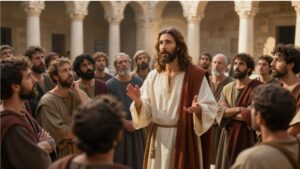
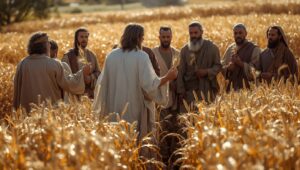
This divine perspective is echoed powerfully in the Gospel. The Pharisees accuse Jesus’ disciples of breaking the Sabbath because they pluck grain as they walk through a field. They see only an infraction of a law. Jesus, looking into the heart of the matter, recalls how David and his men ate the sacred bread when they were in need. Then He declares the revolutionary principle: “The Sabbath was made for man, not man for the Sabbath.” The law, like Samuel’s initial judgment, must yield to a deeper reality: human need and the primacy of love. Jesus concludes, “The Son of Man is lord even of the Sabbath.” He is the true Davidic king, the one with authority to interpret the law according to God’s original, merciful intent.
What is the message for us? We are called to cultivate the heart that God sees and to embrace the freedom that Christ gives.
First, we must examine our own vision. Do we judge ourselves harshly, feeling God could not use us because of our weaknesses, our lack of credentials, or our past? Remember David in the field. God specializes in choosing the unlikely. Do we judge others by externals—their status, their piety, their mistakes? We are called to look with the eyes of Christ, seeking the heart.
Second, we must embrace the spirit of the law over the letter. This does not mean license, but loving discernment. Are we using our religious practice as a measure to condemn others, like the Pharisees? Or does our practice lead us to greater mercy, kindness, and attentiveness to human need? As Pope Francis teaches, “Jesus wants us to see the law not as a cold and dead norm, but as an expression of the Father’s will, a path to freedom.”
St. Thérèse of Lisieux, who became a Doctor of the Church from the obscurity of her Carmel, understood this perfectly. Her “little way” is the path of the heart—trusting that God sees and values our small, hidden acts of love more than grand external displays.
Let us pray for the grace to see as God sees. May we find peace in knowing He looks upon our hearts with love. And may we, as followers of the Lord of the Sabbath, use our freedom not for ourselves, but to serve and lift up the human person, reflecting the merciful heart of our King. Amen.
May God bless you all!