
Tuesday of the Third Week in Ordinary Time, January 27, 2026
The Family of Obedience and Joy
Voice over by Angeline Chue Chue
2Sam 6:12b-15.17-19, Psalm: 23, Mk 3:31-35
My dear Sisters and Brothers in Christ,
What does true devotion to God look like? Is it found in solemn ritual, or in something more personal, more exuberant, more fundamental to our identity? Today’s readings present us with two defining images: one of uncontainable joy in God’s presence, and another of radical redefinition of what it means to belong to God’s family. Together, they reveal that at the heart of authentic faith is a worship that is both joyful and obedient.
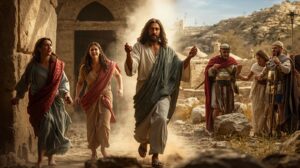
In the Second Book of Samuel, King David brings the Ark of the Covenant—the visible sign of God’s presence among His people—into Jerusalem. This is no somber procession. David, stripped of his royal robes, dances “with all his might” before the Lord. He offers sacrifices, blesses the people, and distributes food to all. His worship is physical, exuberant, and generous. It flows from a heart overflowing with gratitude for God’s faithfulness. He is not concerned with royal dignity, but with honoring the majesty of the God who dwells with him. This is worship as joyful, self-forgetful celebration of God’s nearness.
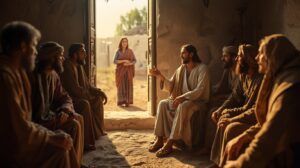
This profound intimacy with God establishes the context for Jesus’ startling words in the Gospel. When told that His mother and brothers are outside asking for Him, He looks at the crowd seated around Him and declares, “Here are my mother and my brothers. For whoever does the will of God is my brother and sister and mother.” At first, this might seem to diminish His family. But in the light of Catholic teaching, we see its true depth. Jesus is not rejecting His holy Mother; He is revealing her most profound identity. Mary is first and foremost the one who said, “Behold, I am the handmaid of the Lord; let it be to me according to your word” (Lk 1:38). She is the perfect hearer and doer of God’s will. Jesus is expanding the family of God to include all who, like Mary, listen to God’s word and obey it. This is the deeper kinship of grace.
The connection is powerful. David’s joyful dance was an act of obedience to the call to honor God’s presence. The true family of Jesus is formed not by blood alone, but by the same obedient surrender to the Father’s will. Our relationship with God is not a passive inheritance; it is an active, living bond forged through daily fiat—our “yes” to His will.
For us, this means two things. First, our worship must be infused with the joyful gratitude of David. Do we come to Mass, do we pray, with a sense of awe and celebration that God dwells among us? Or has our faith become routine, distant, or merely dutiful?
Second, we must embrace our place in the family of God. This is a comfort to anyone who feels alone or unloved. In Christ, you have a home. But it is also a challenge: membership in this family is proven by our obedience. As St. Augustine said, “Mary was more blessed in receiving the faith of Christ than in conceiving the flesh of Christ.” Our blessedness, our family resemblance, comes from hearing God’s word and putting it into practice.
Let us ask for the grace to worship with David’s joyful abandon and to belong to Christ’s family with Mary’s obedient heart. For in doing the will of our Father, we find our true home, our deepest joy, and our eternal family. Amen.
May God bless you all!