Tuesday of the Third Week of Advent, December 16, 2025

The Humility of the Second Chance
Voice over by Carol San San Lwin
Zeph 3:1-2.9-13; Psalm: 33; Mt 21:28-32
Dear Sisters and Brothers in Christ, the Word of God today cuts through our illusions and reveals a truth that is both uncomfortable and liberating: God is not as interested in our initial, pious words as He is in our final, repentant actions. He looks past the polished “yes” of the self-assured and seeks the humble, stumbling “yes” of the sinner who turns back to Him.
The Prophet Zephaniah delivers a searing indictment against the rebellious, tyrannical city that “hears no voice, accepts no correction,” and does not trust in the Lord. This is a portrait of spiritual pride, a hardened heart that refuses to bend. Yet, in His boundless mercy, God proclaims a future purification. He will “change and purify the lips of the peoples,” so they may call upon His name with sincerity. He will leave in their midst “a people humble and lowly,” a remnant that seeks refuge in the name of the Lord. The path to salvation, it turns out, is not through self-sufficient strength, but through humble dependence.
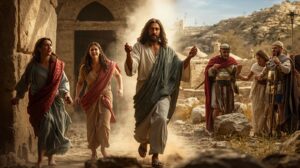
This theme finds its perfect illustration in the Gospel parable. A father asks his two sons to work in the vineyard. The first son impulsively says “no,” but later, “changed his mind and went.” The second son gives a quick, polite “yes,” but never lifts a finger. Jesus asks the religious leaders, “Which of the two did his father’s will?” The answer is undeniable: the first. His initial refusal was overcome by a subsequent, obedient action—the action of repentance. Jesus then drives the point home: tax collectors and prostitutes, who initially said “no” to God’s law, are entering the Kingdom ahead of the chief priests and elders because they “changed their minds” and believed in John the Baptist’s call to repentance. Their humble “yes,” born of conversion, is more powerful than a lifelong but empty “yes” of religious observance.
God’s grace specializes in second chances. He can work with our honest failures and stubborn “no’s,” but He cannot work with the self-deception of a hollow “yes.” As Saint Augustine, who himself gave God a resounding “no” before his glorious conversion, prayed, “Late have I loved you!” God waits for that moment when we “change our minds.”
The comfort for us is immense. We all have moments where we have said “no” to God—through sin, through neglect, through fear. This World assures us that it is never too late to “change our minds,” to get up and go to the vineyard. The Sacrament of Reconciliation is the divine machinery for this very purpose. The challenge is to examine our own lives. Are we the second son, professing faith with our lips while our hearts remain far from the hard work of love, forgiveness, and justice?
Let us ask for the grace of the first son—the humility to recognize our failures and the courage to act on our repentance. May we, the people of God, be that “humble and lowly” remnant Zephaniah foretold, who find our refuge not in our own righteousness, but in the merciful name of the Lord. For the one who said “I will not” but repented and went, finds more favor than the one whose “I go, sir” was but an empty echo. Amen.