
Wednesday of the Sixteenth Week in Ordinary Time, July 23, 2025
Divine Provision and the Courage to Sow
Exod 16:1-5.9-15; Psalm: 77; Mt 13:1-9
Dear Sisters and Brothers in Christ, today, we will reflect on Divine Provision with the courage to sow our seeds of hope and love in a world that often feels barren and desolate. We draw our inspiration from the miraculous encounters of God’s people in the wilderness and the profound parable of the sower as told by our Lord Jesus Christ.
Let us first turn to Exodus 16, where we witness God’s faithfulness in the wilderness. The Israelites found themselves wandering in a vast desert, weary and hungry. In their moment of despair, God provided manna, the bread of trust, a daily reminder that He is always with us, nourishing us in our need. This provision was not merely about physical sustenance. It was a testament to God’s unwavering faithfulness, teaching us that when we trust in Him, He will provide for all our needs. And then, at dusk, quail fell from the sky, a mercy for their weakness. In their hunger and weariness, God did not scold them; instead, He showered them with grace, reminding us that even in our moments of frailty, His love knows no bounds. Just as He provided for the Israelites, He extends His hand to us today, promising to fill our hearts with His goodness, even when we feel lost in the wilderness of our lives.
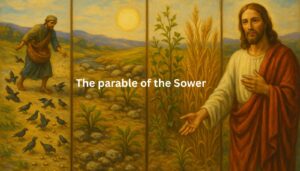
Now, let us journey to the New Testament, where we find Jesus sharing the parable of the sower in Matthew 13. Here, we are introduced to the reckless sower, a figure who scatters seeds indiscriminately—on paths, rocks, thorns, and good soil alike. This act of sowing reflects God’s abundant grace, His desire to reach every heart, regardless of its current condition. As Pope Francis beautifully stated, “God sows hope even in barren hearts. Why? Because love always risks rejection.” This parable invites us to consider the nature of our own hearts and the soil in which we cultivate our faith. Are we hardened paths, resistant to growth? Are we rocky, easily swayed? Or are we the good soil, softened by repentance and yearning for holiness? St. John Chrysostom reminds us that the good soil is the soul yielding holiness beyond measure.
Therefore, we must ask ourselves, how can we become this good soil in our lives and in our communities? In times of natural disasters, such as famine and drought, in the face of manmade crises like poverty and injustice, and even in our personal deserts of burnout and anxiety, we are called to be both manna and seed. We are called to become God’s daily provision for each other, to sow recklessly in love and generosity, and to cultivate our soil through prayer, repentance, and acts of kindness.
Dear Sisters and Brothers in Christ, the courage to sow is not just about planting seeds. It is about believing that our efforts, however small, can lead to a bountiful harvest. Let us take inspiration from the abundant love that God has shown us and reflect that love to others. Let us be the bread of life and the seeds of hope in a world that desperately needs it. May we leave here emboldened to trust in God’s provision and equipped with the courage to sow His love into the lives of those around us. Amen.
St. Teresa Benedicta (Edith Stein): “In every Eucharist, manna becomes Flesh. Carry this mystery to a starved world.”
Pope St. John Paul II: “Do not fear the desert! God guides you by fire and feeds you with Himself.”
St. Francis de Sales: “Scatter the seeds of goodwill today; God will ripen them in His time.”
St. Gregory of Nyssa: “The quail signifies God’s condescension—He meets us where we are, even in our grumbling.”
St. Óscar Romero: “We are sowers, not calculators. God alone gives growth.”