The Solemnity of Our Lord Jesus Christ, King of the Universe (A), November 22, 2026
The King in the Alley: Why the Throne of Christ Is Found in the Least
Ezek 34:11-12.15-17, Psalm: 22, 1Cor 15:20-26.28, Mt 25:31-46
My dear Sisters and Brothers in Christ,
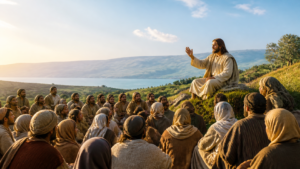
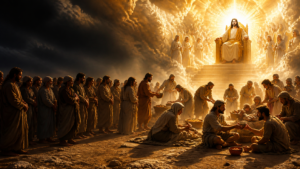
Imagine the scene. The Son of Man comes in glory, surrounded by angels, seated on a throne of majesty. Every eye is fixed on Him. The nations are gathered. The books are opened. And then—this is the shock—the King begins to speak about a cup of water, a piece of bread, a visit to a prison cell. Not about armies or empires. Not about crowns or conquests. About the hungry, the thirsty, the stranger, the naked, the sick, the imprisoned. And He says the most astonishing words in all of Scripture: “Whatever you did for one of these least brothers of mine, you did for me.”
This is the King we celebrate today. Not a distant monarch who demands our homage. A King who identifies Himself with the least. A King whose throne is not only in heaven, but in the alley, in the hospital bed, in the refugee tent, in the lonely apartment next door.
The prophet Ezekiel gives us the first portrait of this King. “I myself will look after and tend my sheep.” He is not a hireling who flees when the wolf comes. He is the Shepherd-King who searches for the lost, brings back the strayed, binds up the injured, and heals the sick. He promises to judge between sheep and sheep, between rams and goats—not to crush, but to defend the weak against the strong. This is the Kingship of God: personal, merciful, relentlessly seeking the good of the flock.
Saint Paul tells us how this Kingship is fulfilled. Christ has been raised from the dead, “the firstfruits of those who have fallen asleep.” He must reign until He has put all enemies under His feet. The last enemy is death. And when all things are subjected to Him, the Son Himself will be subjected to the Father, “so that God may be all in all.” The King’s goal is not to hoard power, but to hand over a restored creation to the Father. His reign is self-giving love.
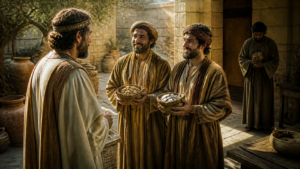
Then comes the judgment scene. The criterion is not how many prayers we said, how many rules we kept, how many titles we earned. The criterion is mercy. “I was hungry, and you gave me food.” The righteous are surprised. They did not know they were serving the King. They simply saw a need and responded. Their love was not calculated. It was instinctive. That is the love of the Kingdom.
Pope Francis has said, “The King of the universe is the one who washes feet. His kingdom is not about power but about service.” Saint John Paul II wrote that “Christ is King because He is Love, and His throne is the Cross.” Saint Teresa of Calcutta put it simply: “In the poor, we find Jesus in His most distressing disguise.”
What does this mean for us? It means that the reign of Christ is already among us. Every time we feed the hungry, welcome the stranger, forgive an enemy, we are acknowledging our King. Every time we fail to see Him in the least, we miss the Kingdom. But here is the comfort: the King who will judge us is the same King who died for us. He is not a harsh master; He is a loving Shepherd. His mercy is greater than our failure.
Today, let us look for the King. Let us serve Him in the hungry, the lonely, the forgotten. Let us let His reign begin in our hearts. For the King is coming, and He is already here—in the least of these. Amen. May God bless you all!