Feast of Saint Thomas, Apostle, July 3, 2026
The Wounded Cornerstone: From Doubt to the Foundation of Faith
Eph 2:19-22; Psalm: 116; Jn 20:24-29
My dear Sisters and Brothers in Christ,
On this Feast of Saint Thomas the Apostle, the Church holds up a man whose name has become synonymous with doubt. We call him “Doubting Thomas.” But perhaps we should call him “Believing Thomas.” For his story is not about the permanence of doubt, but about the mercy of the risen Lord who meets us in our unbelief and transforms it into the most profound confession of faith: “My Lord and my God!”
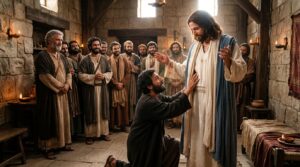
In the Gospel of John, Thomas is absent when Jesus first appears to the disciples. When they tell him, “We have seen the Lord,” he refuses to believe. His conditions are stark: “Unless I see the mark of the nails in his hands and put my finger into the nailmarks and put my hand into his side, I will not believe.” Eight days later, Jesus returns. He goes directly to Thomas. He does not scold him; He invites him. “Put your finger here and see my hands, and bring your hand and put it into my side, and do not be unbelieving, but believe.” Thomas’s response is the greatest confession in the Gospel: “My Lord and my God!” He sees the wounds, and he sees the divinity.
Saint Paul, in the Letter to the Ephesians, tells us that we are “fellow citizens with the holy ones and members of the household of God, built upon the foundation of the apostles and prophets, with Christ Jesus himself as the capstone.” Thomas is one of those foundation stones. He was not chosen because he was perfect; he was chosen because, despite his doubts, he stayed with the community. He did not leave the Church when he could not believe. He remained with the other apostles. And in that community, he encountered the risen Lord.
The cornerstone is Christ—wounded, risen, and now the source of all unity. The wounds that Thomas touched are not scars of defeat; they are the eternal signs of love’s victory. They are the foundation of our hope. A building without a cornerstone collapses. A faith without the wounds of Christ becomes a mere philosophy. Thomas teaches us that it is okay to doubt, as long as we do not abandon the community. It is okay to ask for signs, as long as we keep seeking. And when we encounter the Lord, we must fall down and worship.
Pope Benedict XVI reflected on Thomas: “The Apostle’s doubt did not arise from a lack of faith, but from a desire for a true, personal encounter with the risen Lord.” Pope Francis has said, “The Church is not a fortress for the perfect, but a field hospital for the wounded. Thomas needed to touch the wounds because we all need to know that God’s mercy is real.” Saint Gregory the Great wrote, “The doubt of Thomas is more profitable to our faith than the belief of the other disciples, because it leads us to a deeper certainty.”
What does this mean for us? We may not see the wounds of Christ with our physical eyes, but we touch them in the Eucharist, in the face of the poor, in the forgiveness of the Sacrament of Reconciliation, in the wounds of our own suffering united to His. When we doubt, we must not flee. We must stay with the Church, the household of God built on the apostles. And we must cry out with Thomas: “My Lord and my God!”
This feast assures us that our doubts are not the end of faith. They can be the beginning of a deeper encounter. Jesus does not reject Thomas; He invites him. He invites us. Come, touch. Come, believe. Come, be built into the living temple of God. For the cornerstone is wounded, and those wounds are our salvation. Amen.
May God bless you all!