
Monday of the Fourteenth Week in Ordinary Time, July 6, 2026
The Touch That Restores: From Betrayal to Betrothal
Hos 2:16.17b-18.21-22, Psalm: 144, Mt 9:18-26
My dear Sisters and Brothers in Christ,
The prophet Hosea speaks of a God who refuses to give up on His unfaithful people. Israel has played the harlot, chasing after false gods, yet the Lord declares, “I will allure her; I will lead her into the desert and speak to her heart.” He promises to transform the Valley of Achor—the place of trouble and judgment—into a door of hope. He will betroth Israel to Himself forever in justice, love, mercy, and faithfulness. This is the heart of God: not a distant judge, but a spurned lover who still pursues, still promises, still heals.
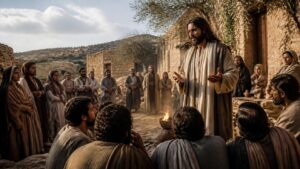
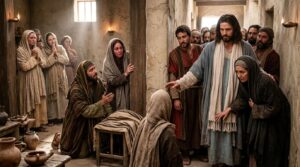
In the Gospel, two desperate people seek the same healing touch. An official falls at Jesus’ feet, begging for his daughter’s life. A woman who has suffered hemorrhages for twelve years—rendered unclean, isolated, and impoverished—approaches from behind, thinking, “If I only touch his cloak, I shall be cured.” Both are desperate. Both are excluded in different ways—the daughter by death, the woman by ritual impurity. Both reach out to Jesus. And both receive restoration.
The official’s request is public, urgent, and direct. The woman’s is silent, furtive, and born of faith. Jesus notices her touch. He feels the power go out from Him. He does not rebuke her; He calls her “Daughter” and says, “Courage, your faith has saved you.” Her twelve-year bleeding, a living death, is ended by her faith. Then Jesus enters the official’s house, takes the dead girl’s hand, and says, “Talitha koum,” “Little girl, I say to you, arise.” She rises. The mourners are sent away. Life conquers death.
These two healings are one message. The same touch that healed the woman raises the child. The same mercy that restores the outcast restores the dead to life. And this is the touch of the Bridegroom described by Hosea. God does not merely forgive; He restores. He does not merely pardon; He betroths. He takes the Valley of Trouble and makes it a door of hope.
Pope Francis has said, “God’s love is not a generic love; it is a personal, passionate love for each one of us.” Saint Augustine, reflecting on this Gospel, wrote, “The woman touched the hem of His garment; the girl was raised by His hand. Both were healed by the same power. The touch of faith is what matters.” And Saint Thérèse of Lisieux, who understood the intimacy of God’s love, prayed, “I will seek a way to get to heaven by a little way—very short and very straight, a little way that is quite new.”
What does this mean for us? We are the unfaithful Israel of Hosea, wandering after idols of comfort, success, and self-sufficiency. We are the woman with the hemorrhage, bleeding out our energy and hope, afraid to approach. We are the dead child, lifeless in our sins. But the Bridegroom comes to us in the desert of our loneliness. He speaks to our hearts. He says, “Courage, your faith has saved you.” He takes our hand and says, “Arise.”
This week, let us not be afraid to touch Him—in the Eucharist, in the Sacrament of Reconciliation, in the quiet of prayer. Let us be like the woman, reaching out in the crowd, thinking only, “If I touch Him, I will be healed.” For He is the faithful Bridegroom who transforms our Valley of Achor into a door of hope. And He is the one who raises us from the death of sin to the life of grace. Amen.
May God bless you all!