Fourteenth Sunday in Ordinary Time (A), July 5, 2026
The Gentle King and the Rest of the Humble
Zech 9:9-10; Psalm: 144; Rom 8:9.11-13; Mt 11:25-30
My dear Sisters and Brothers in Christ,
The prophet Zechariah paints a picture that must have shocked his listeners. He announces the coming of a king, but not a warrior on a charging steed. “See, your king shall come to you; a just savior is he, meek, and riding on a donkey.” In the ancient world, a donkey was the mount of peace, not war. This king would banish chariots and warhorses; he would speak peace to the nations. His reign would not be established by force, but by humility. This prophecy, fulfilled when Jesus entered Jerusalem on Palm Sunday, reveals the very heart of God: power made perfect in gentleness.
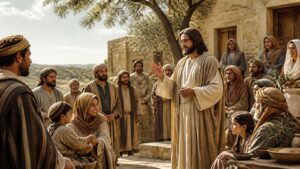
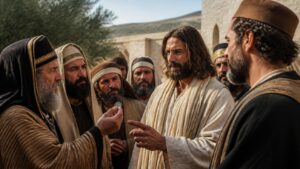
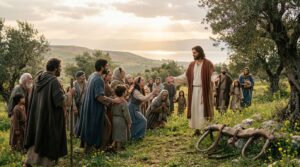
In the Gospel of Matthew, Jesus prays, “I give praise to you, Father, Lord of heaven and earth, for although you have hidden these things from the wise and the learned you have revealed them to the childlike.” The proud and the self-sufficient cannot receive the Kingdom because they are already full of themselves. But the childlike—the humble, the poor in spirit, those who know their need—are given the revelation of the Father. Then Jesus speaks words that have consoled millions: “Come to me, all you who labor and are burdened, and I will give you rest. Take my yoke upon you and learn from me, for I am meek and humble of heart; and you will find rest for yourselves.”
What is this rest? It is not the absence of work or struggle. A yoke is for pulling a plow. Jesus’ yoke is the commitment to follow Him, to love as He loved, to forgive as He forgave. But His yoke is “easy” and His burden “light” because He carries it with us. The world’s yokes—the pursuit of wealth, status, control—are heavy and exhausting. Christ’s yoke is the gentle service of love. To learn from Him means to learn meekness: power under control, strength expressed as tenderness.
Saint Paul, in the Letter to the Romans, connects this rest with the life of the Spirit. “You are not in the flesh; on the contrary, you are in the spirit, if only the Spirit of God dwells in you.” The flesh is the old self, driven by pride, fear, and selfish desire. The Spirit is the gift of the risen Lord, poured into our hearts. If we live according to the flesh, we will die; but if by the Spirit we put to death the deeds of the body, we will live. This is the rest Jesus promises: not a passive sleep, but the active peace of a soul surrendered to the Spirit. To be meek and humble of heart is to cease fighting for our own way and to trust the way of the Father.
Pope Benedict XVI reflected: “The meekness of Christ is not weakness; it is the strength of one who trusts completely in the Father.” Pope Francis often says, “The Christian is not a grumbler. He or she has the joy of the Spirit, a joy that comes from meekness and humility.” Saint Thérèse of Lisieux understood this “little way” perfectly: “To remain little, to be like a child, to recognize one’s nothingness and expect everything from God.”
What does this mean for us today? We are burdened. We carry the weight of deadlines, disappointments, strained relationships, and the memory of our sins. The world tells us to fight harder, to climb higher, to prove ourselves. Jesus says, “Come to me.” He does not say, “Clean yourself up first.” He says, “Come as you are, weary and heavy-laden, and I will give you rest.” His rest is the peace of forgiveness, the lightness of a conscience washed clean, the freedom of knowing that we are loved unconditionally.
This week, let us lay down the heavy yokes we have made for ourselves. Let us take up the yoke of Christ: to forgive as we have been forgiven, to serve as He served, to trust as He trusted. It is a yoke that does not chafe because He is meek and humble of heart. And in His heart, we find our rest. Amen.
May God bless you all!