
Monday of the Fifteenth Week in Ordinary Time, July 13, 2026
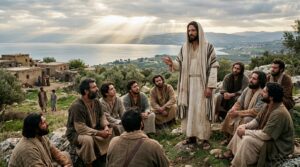
The Fire and the River: Choosing the Hard Path of Justice
Isa 1,10-17, Psalm: 49, Mt 10:34—11:1
My dear Sisters and Brothers in Christ,
The prophet Isaiah speaks with the urgency of a prosecutor. “Hear the word of the Lord, you rulers of Sodom! Listen to the instruction of our God, you people of Gomorrah!” The leaders of Israel are condemned, not for lack of worship, but for empty worship. They offer countless sacrifices, but their hands are full of blood. The Lord declares, “Wash yourselves clean! Put away your misdeeds from before my eyes; cease doing evil; learn to do good. Make justice your aim: redress the wronged, hear the orphan’s plea, defend the widow.”
In the Gospel, Jesus speaks words that seem to divide rather than unite. “Do not think that I have come to bring peace upon the earth. I have come to bring not peace but the sword.” He warns that family will be divided: son against father, daughter against mother. A man’s enemies will be those of his own household. And He lays down the cost of discipleship: “Whoever loves father or mother more than me is not worthy of me… whoever does not take up his cross and follow me is not worthy of me.”
These two readings are one message. Isaiah condemns a religion of empty ritual. Jesus demands a love that puts Him first—a love that may bring conflict, not superficial peace. The “sword” Jesus speaks of is not a weapon of violence, but the divisive power of truth. When we choose justice, we challenge the systems of injustice. When we follow Christ, we may alienate those who do not share our commitment. The peace Jesus offers is not the absence of conflict, but the presence of His righteousness in the midst of a world that rejects it.
Pope Francis has said, “The Gospel is not a message of comfort for those who are already comfortable; it is a proclamation of liberation for those who are captive.” Saint John Paul II, in his encyclical Sollicitudo Rei Socialis, reminded us that “the Church cannot and must not remain on the sidelines in the fight for justice.”
What does this mean for us? We are called to move from empty ritual to active justice. It is not enough to come to Mass and then ignore the widow, the orphan, the immigrant, the poor. It is not enough to pray the Rosary and then participate in systems that oppress. We must “wash ourselves clean” by concrete acts of mercy and advocacy. And we must be prepared to face opposition—even from those closest to us—when we take a stand for the truth.
This week, ask yourself: Where is my faith merely ritual? Where am I avoiding the cost of discipleship? Where is God calling me to embrace the “sword” of truth rather than the comfort of silence? The path of justice is narrow, but it leads to the only peace that lasts—the peace of a heart fully given to Christ. Amen.
May God bless you all!