Yangon Archdiocese Holds Catechism on the Holy Eucharist to Deepen Understanding of the Mass
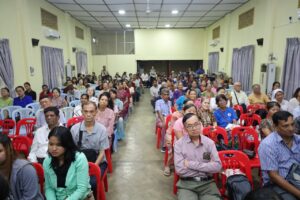
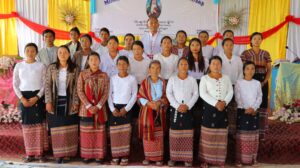
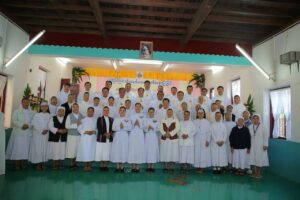
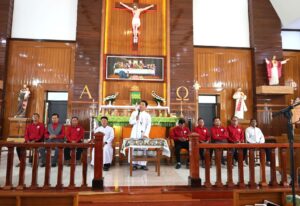
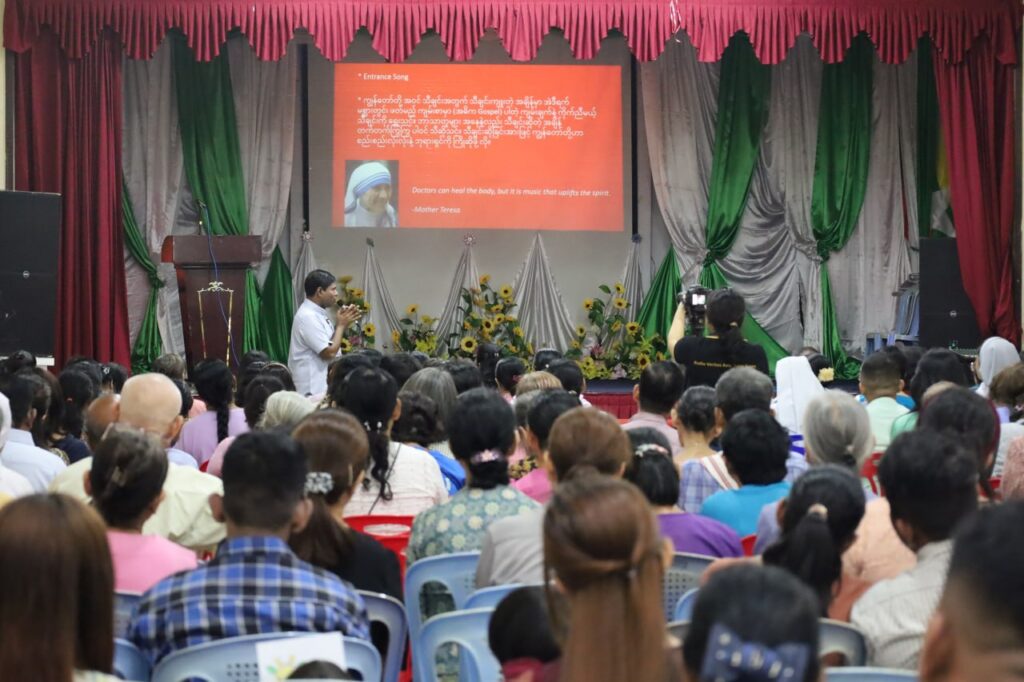
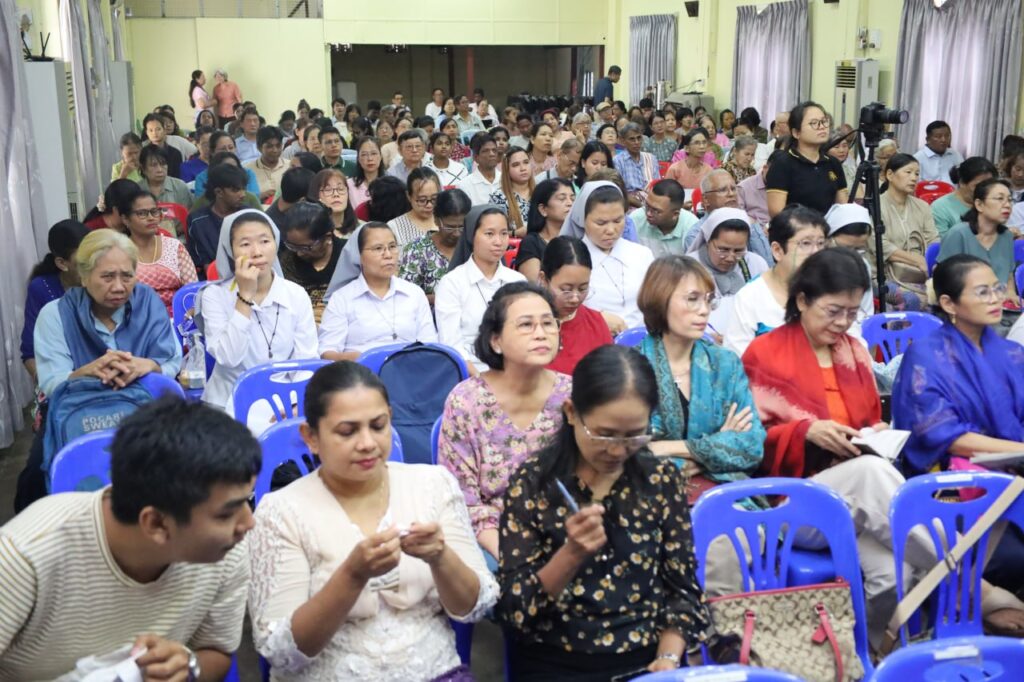
About 250 faithful from various parishes of the Yangon Archdiocese gathered at St. Mary’s Cathedral Parish Hall on July 4 for a one-day Catechism on the Holy Eucharist, conducted by Yangon Archdiocesan Liturgist Rev. Fr. Joseph Kyaw Thet.
The formation program was organized to help Catholics gain a deeper understanding of the Holy Eucharistic Celebration and participate in the Mass more consciously and actively.
Three Sessions on the Sacred Liturgy
The day-long catechetical program consisted of three sessions, including two morning lectures and one afternoon lecture. Each session concluded with a question-and-answer discussion, allowing participants to clarify liturgical practices and Church teachings.
In the first session, Fr. Joseph explained that the Eucharistic Celebration is never a private act but the public worship of the entire Church. Every baptized member has a unique role in the liturgy, and the faithful are called to participate fully, consciously, and actively. Quoting St. John Vianney, he reminded participants that “if we truly understood the Mass, we would die of joy.”
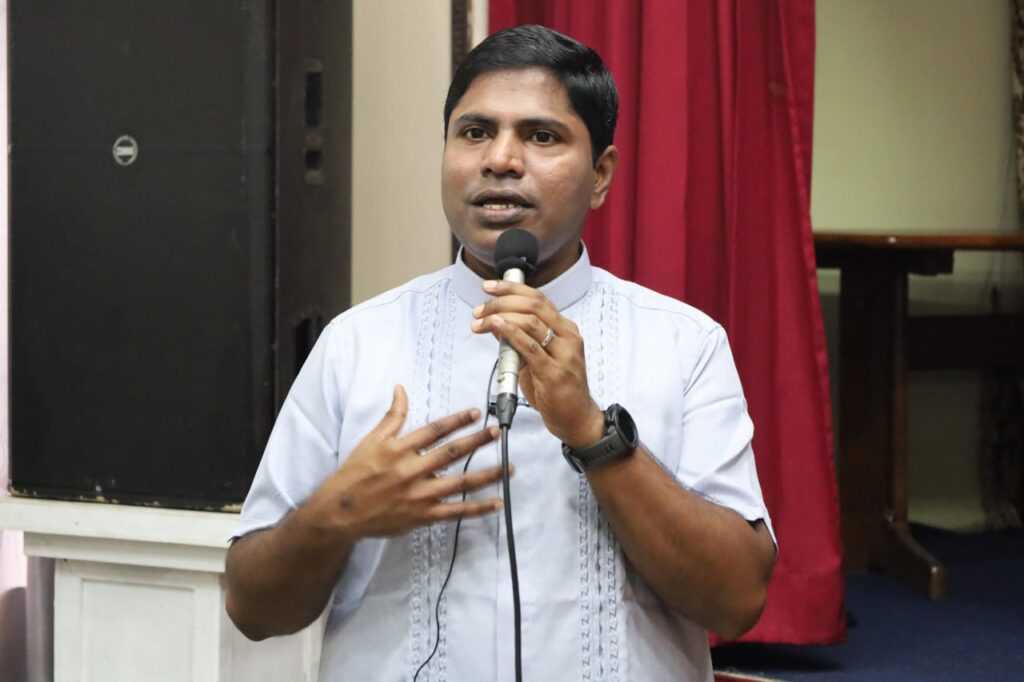
The priest highlighted the profound meaning of the altar as the center of the Eucharistic celebration, representing Christ Himself and making present the sacrifice of the Cross. He emphasized the importance of proper preparation before Mass through prayer, examination of conscience, sacramental confession when necessary, and one-hour fasting before receiving Holy Communion.
Fr. Joseph also explained the significance of each part of the Mass, stressing that Christ is truly present both in His Word and in the Eucharist. He encouraged the faithful to arrive on time and participate attentively throughout the celebration.
The Liturgy Belongs to the Universal Church
During the second session, the liturgist reflected on the Church’s official teachings regarding the sacred liturgy, drawing from the Second Vatican Council, the Catechism of the Catholic Church, the General Instruction of the Roman Missal, and papal documents. He reminded participants that the liturgy belongs to the universal Church and cannot be altered according to personal preference.
Quoting Sacrosanctum Concilium, he noted that the liturgy is “the summit toward which the activity of the Church is directed and the font from which all her power flows.” He also cited Redemptionis Sacramentum, emphasizing that the Mystery of the Eucharist is too sacred for anyone to modify on personal authority.
Fr. Joseph encouraged both clergy and faithful to faithfully observe the liturgical norms established by the Church and to recognize the distinct ministries exercised by bishops, priests, deacons, and lay faithful within the celebration.
Sacred Music and Reverent Celebration
In the final session, Fr. Joseph focused on sacred liturgical music and the reverent celebration of the Mass. He encouraged choirs to promote congregational participation and reminded ministers that the liturgy should be celebrated with dignity, simplicity, and fidelity to the Church’s prescribed texts. He also highlighted the importance of sacred silence, particularly after Holy Communion, allowing the faithful to remain in prayerful thanksgiving.
A Call to Deeper Participation
The catechetical program concluded with renewed encouragement for Catholics to deepen their understanding of the Holy Eucharist and to celebrate the Sacred Liturgy with greater faith, reverence, and unity with the universal Church. Participants left with a greater appreciation for the Mass and a stronger desire to participate fully in the Eucharistic celebration.
By RVA Sgaw Karen Service