
Yangon Archdiocese Equips Religious Sisters and Catechists in Conflict Transformation
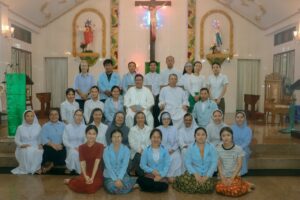
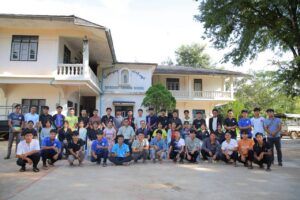
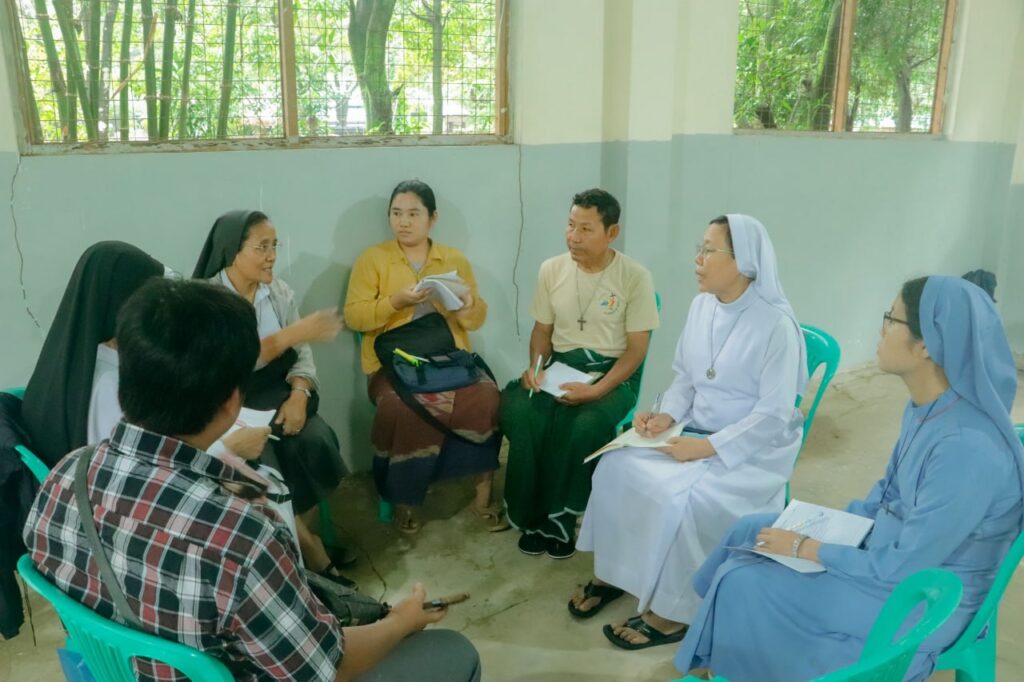
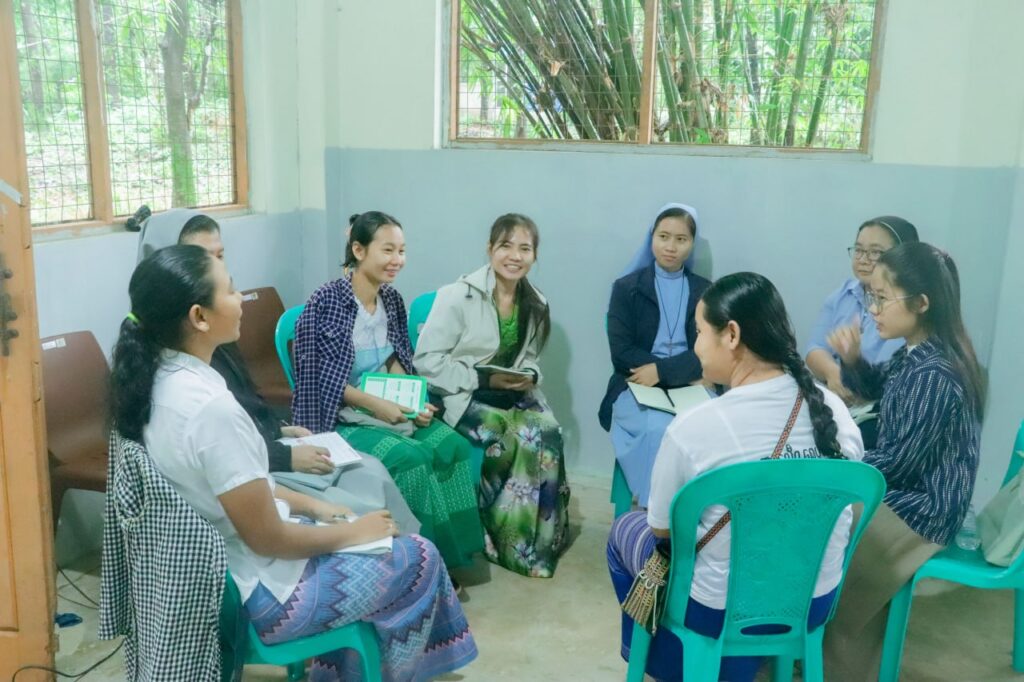
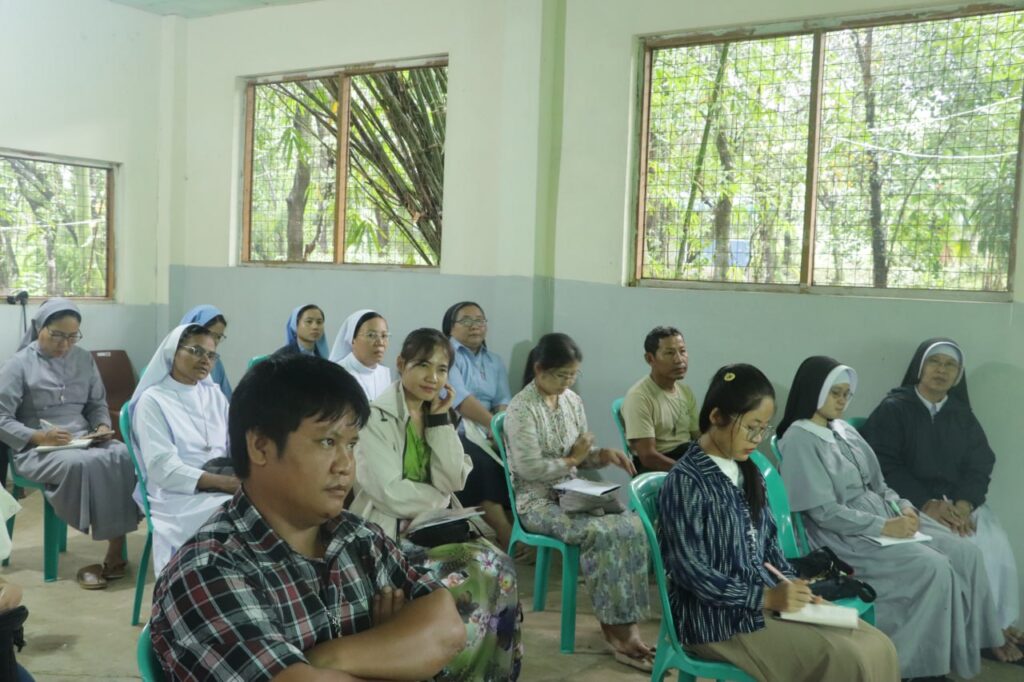
Twenty-five pastoral workers from the Yangon Archdiocese participated in a three-day training on “The Role of Religions in Conflict Transformation” held in Payathonesu Village of Yangon Archdiocese, from July 21 to 23, equipping catechists and religious sisters to respond prudently and compassionately to the challenges of ministering in conflict-affected communities.
The formation program brought together 13 catechists and 12 religious sisters from different congregations serving in various mission areas. The training was organized by Auxiliary Bishop Francis Than Htun of the Yangon Archdiocese.
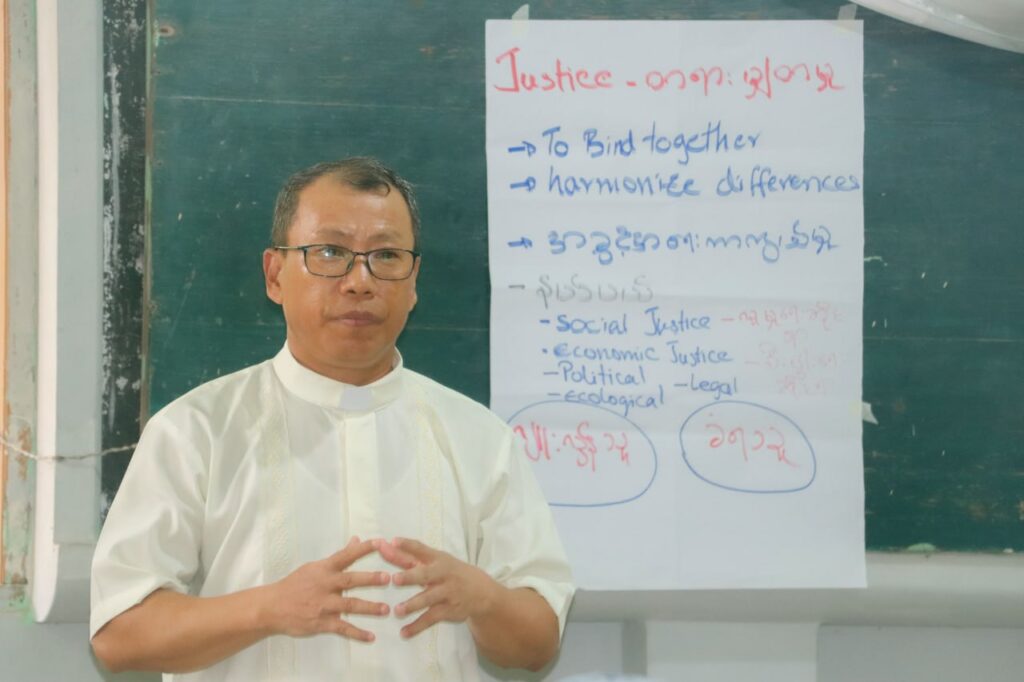
The resource person was Rev. Fr. Noel Naw Lat, National Director of the Justice and Peace Commission of Myanmar. Throughout the seminar, he guided participants in reflecting on the Church’s role in promoting justice, peace, and reconciliation amid ongoing conflicts.
A Biblical Foundation for Peacebuilding
On the first day, Fr. Noel explored conflicts recorded in the Old Testament, helping participants understand the biblical roots of human conflict and God’s call to reconciliation. The second day focused on different forms of violence and practical approaches to addressing them through nonviolent means. The final day examined the principles of justice and peace, emphasizing the Christian vocation to become agents of reconciliation.
Bishop Reflects on True Justice
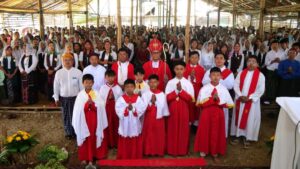
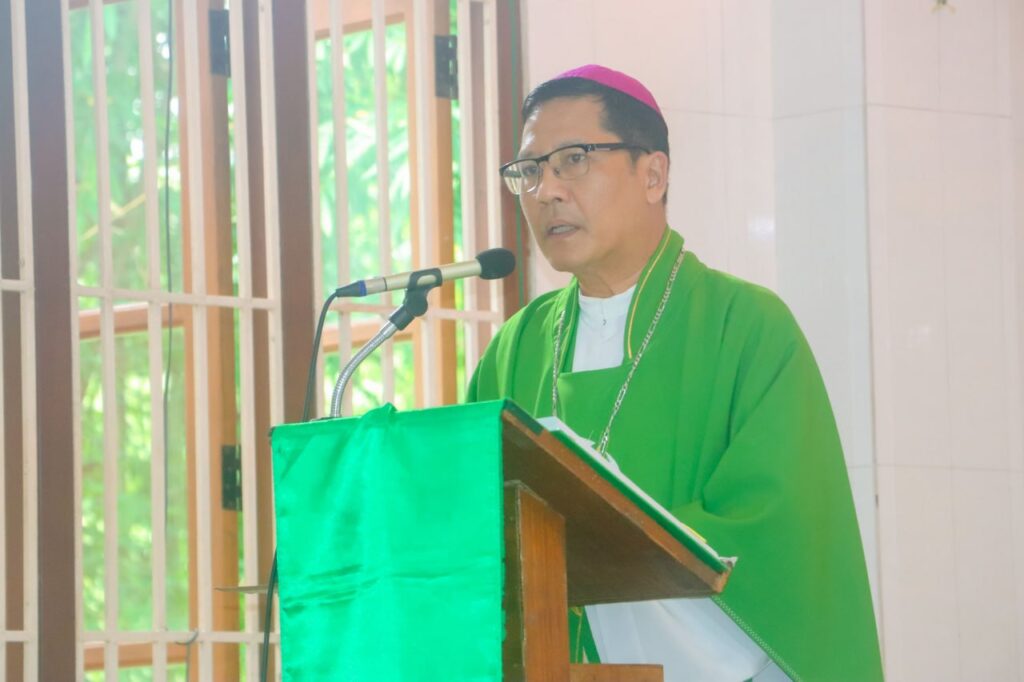
During the closing Eucharistic celebration, Bishop Francis Than Htun reflected on a renewed understanding of justice that he himself had received through the training. He said many people often think justice simply means ending war or restoring peace through victory over injustice. However, he explained that true justice is not the absence of problems but the willingness to seek justice while living amid conflict and suffering.
The bishop observed that people frequently believe armed struggle is the only path to defeating injustice. Yet, he noted that wars rarely produce true winners, while innocent civilians often bear the greatest burden of violence. Such realities, he said, invite Christians to seek different paths rooted in dialogue, forgiveness, and peace.
He also highlighted the importance of distributive justice, explaining that sharing one’s resources with those in need is itself an expression of justice.
A Personal Lesson in Compassion
Bishop Francis shared a deeply personal experience from his years as a hospital chaplain. He recalled visiting a patient who angrily shouted at him during their first encounter. Hurt and embarrassed, he considered never returning. However, encouraged by a nurse, he continued visiting the patient despite several unsuccessful attempts.
Eventually, the patient welcomed him warmly and shared the painful story of his life. Having lost his parents at a young age, the man endured years of neglect, hardship, migration, discrimination, drug addiction, homelessness, and ultimately hospitalization.
Listening to the patient’s life story transformed the bishop’s perspective. He realized that the man’s anger was not directed personally at him but was rooted in years of suffering and rejection.
“The Church must not take sides in armed conflicts,” Bishop Francis emphasized. “Instead, we are called to accompany people through dialogue, forgiveness, prayer, and service.”
Renewed Commitment to Serve
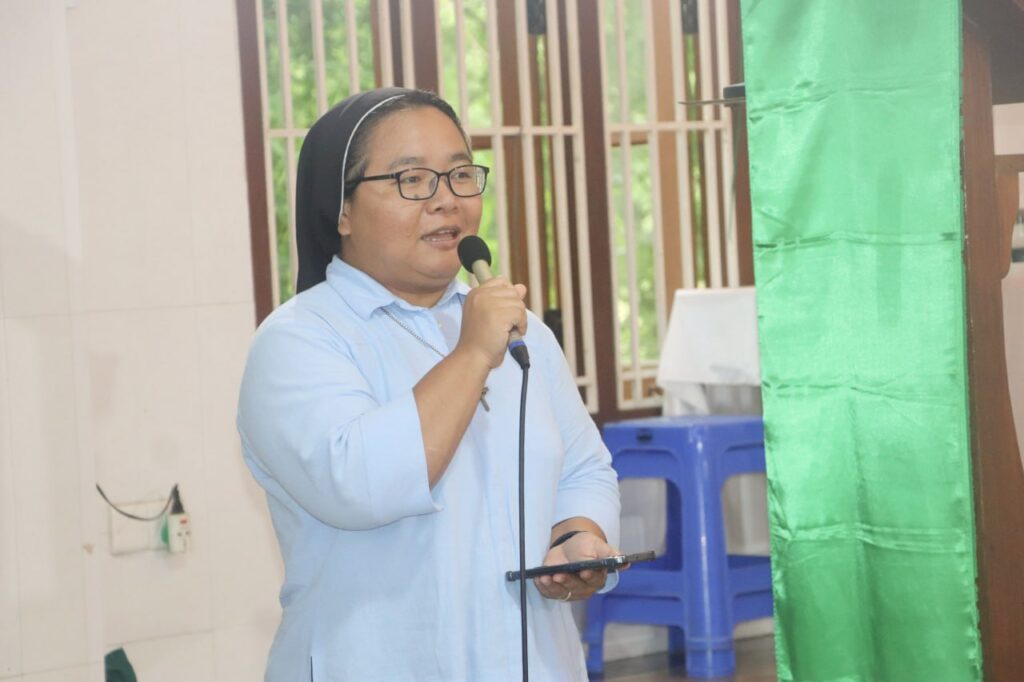
Speaking on behalf of the participants during the closing ceremony, Sr. Martina Cing Lam Lun of the Good Shepherd Congregation expressed gratitude to God, Bishop Francis, and Fr. Noel for organizing the formation. She said the participants gained a deeper understanding of biblical conflicts, peacebuilding, and various forms of justice. The training also helped them recognize that they are already contributing to peacebuilding through their ministries, while inspiring them to renew their commitment to serve with the heart of the Good Shepherd.
By RVA Sgaw Karen Service