
Saturday of the Twenty-second Week in Ordinary Time, September 5, 2026
The Fools for Christ and the Lord of the Sabbath: The Wisdom of Saint Teresa of Calcutta
1Cor 4:6b-15, Psalm: 144, Lk 6:1-5
Saint Teresa of Calcutta, religious (White)
My dear Sisters and Brothers in Christ,
On this Memorial of Saint Teresa of Calcutta, we celebrate a woman who embraced the “foolishness” of the cross and lived the radical freedom of the Gospel. She was a mother to the poorest of the poor, a witness to the love of Christ in the most desperate places on earth. She lived as Saint Paul describes—as a fool for Christ, and she understood the true meaning of the Sabbath rest.
In the First Letter to the Corinthians, Saint Paul writes, “We are fools on Christ’s account.” He describes the trials of the apostles: hunger, thirst, nakedness, homelessness, and persecution. Yet he does not complain. He rejoices in the weakness that allows Christ’s power to shine through him. He says, “To the present hour we hunger and thirst, we are poorly clothed and buffeted and homeless, and we labor, working with our own hands.” This is the life of a disciple—a life of sacrifice, of service, of complete dependence on God. The world does not understand it, but it is the wisdom of the cross.
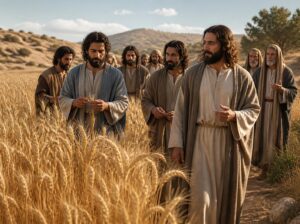
In the Gospel of Luke, the Pharisees accuse Jesus’ disciples of breaking the Sabbath by plucking grain. Jesus responds by reminding them of David, who ate the bread of the Presence when he was hungry. He declares, “The Son of Man is Lord of the Sabbath.” Jesus is not abolishing the Sabbath; He is revealing its deeper meaning. The Sabbath is not a burden; it is a gift. It is a day of rest, of mercy, of healing. It is a day to encounter the Lord, not to be enslaved by rules. The disciples were not violating the Sabbath; they were participating in the mercy of the Lord.
Saint Teresa of Calcutta lived this freedom. She worked tirelessly, often without food or rest, because she saw the face of Christ in the poorest of the poor. She did not observe the Sabbath as a day of inactivity; she observed it as a day of mercy. She cared for the dying, the abandoned, and the destitute, bringing them the healing presence of Christ. She was a fool for Christ, and the world called her mad. But she was wise in the ways of God.
Pope Francis, who canonized Mother Teresa, said, “She is a model of holiness for all of us. She shows us that holiness is not a privilege of the few; it is a gift for everyone.” Saint John Paul II, her great admirer, called her “a witness to the love of God and a sign of hope for the world.” And Mother Teresa herself said, “Not all of us can do great things. But we can do small things with great love.”
What does this mean for us? We are called to be fools for Christ—not in a literal sense, but in the sense of embracing the values of the Kingdom over the values of the world. We are called to give without counting the cost, to serve without seeking recognition, and to love without expecting return. We are called to find our rest in Christ, not in the approval of the world. And like Mother Teresa, we are called to do small things with great love.
This week, let us examine our hearts. Where are we clinging to worldly wisdom? Where are we bound by the letter of the law rather than the spirit of mercy? Let us ask for the grace to live as fools for Christ—radically, joyfully, and without reserve. And let us pray for the intercession of Saint Teresa of Calcutta, that we may see the face of Christ in the poorest and most forgotten among us. Amen.
May God bless you all!