
‘Your Diploma Is the Beginning of a Greater Responsibility’: 35 Graduates Celebrate Socio-Pastoral Studies, Milestone
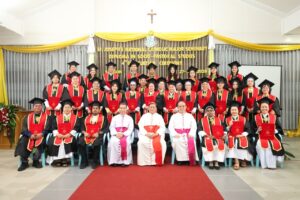
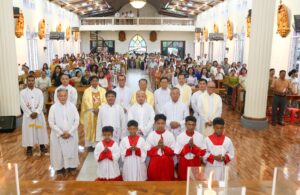
The fourth graduation ceremony of the Diploma in Socio-Pastoral Studies was held at St. Joseph’s National Catholic Major Seminary in Yangon on September 27, 2026, with 35 graduates completing the program.
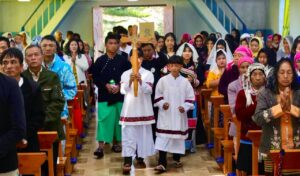
The graduates included four priests, 14 religious sisters, and 17 young people from different archdioceses and dioceses of Myanmar. The ceremony began with a procession into the ceremony hall led by His Eminence Cardinal Charles Bo, together with professors of the Diploma program and the graduating students.
‘A Sign of God’s Providence’
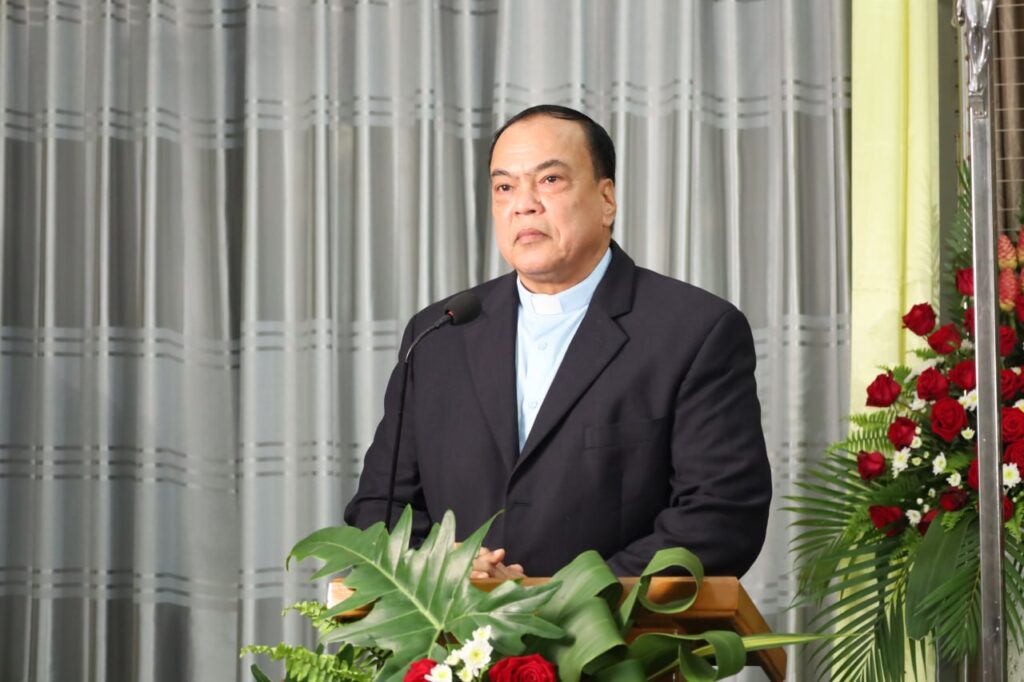
Welcoming the gathering, Rev. Fr. Cyprian Aung Win, Rector of St. Joseph’s National Catholic Major Seminary, expressed gratitude to God for the completion of the fourth graduation ceremony.
Recalling the beginnings of the program, Fr. Cyprian said that those involved initially did not know exactly how the program would develop. Through divine providence, however, qualified professors and people willing to offer their knowledge and service gradually came together. The proposal was presented to the Catholic Bishops’ Conference of Myanmar (CBCM) and received approval.
He described the continuation of the program as a sign of God’s providence and thanked those who had supported it through prayer and other contributions. Fr. Cyprian encouraged the graduates not to consider their certificates simply as academic achievements.
“Knowledge alone is not sufficient,” he emphasized, stressing that knowledge must reach the heart and lead to love for Christ, the Church, and the people of God.
‘Your Diploma Is Not the End of Your Journey’
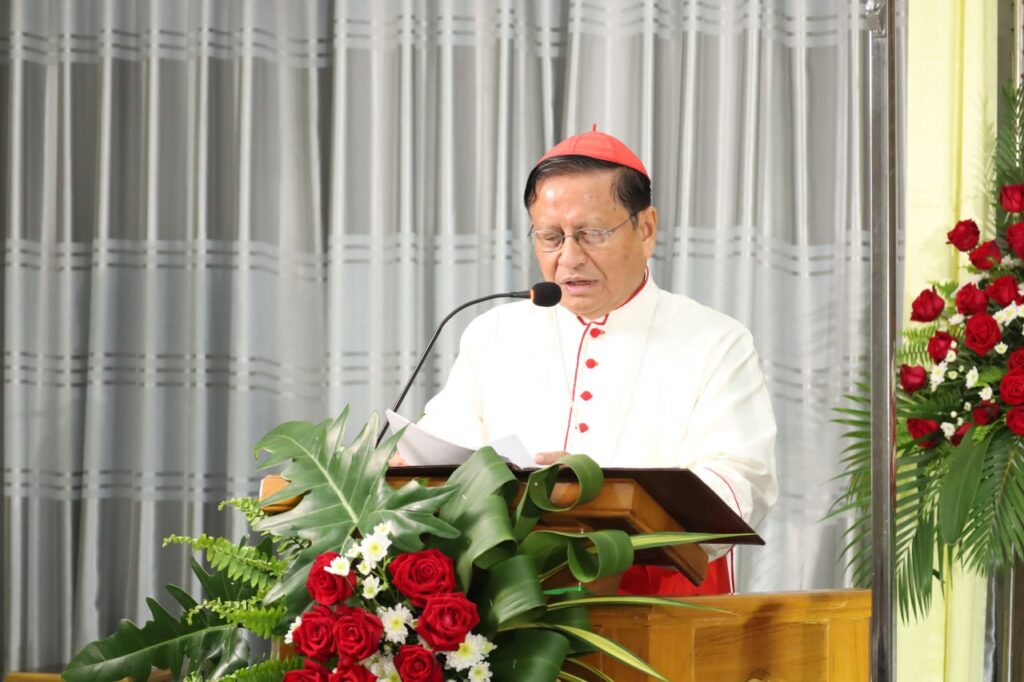
In his address, Cardinal Charles Bo congratulated the graduates and reflected on the theme “Serve the Lord with Gladness,” highlighting the importance of transforming knowledge into service in a time of multiple crises.
The Cardinal said that the diploma represents years of study, sacrifice, discipline, and perseverance, but emphasized that it should not be regarded as the end of the graduates’ journey.
“Your diploma is not the end of your journey. It is the beginning of a greater responsibility,” Cardinal Bo said.
He explained that the graduates had not studied simply to acquire knowledge but “in order to serve more.” Knowledge, he said, should become wisdom, wisdom should become compassion, and compassion should lead to concrete service.
Cardinal Bo noted that social pastoral studies help people understand issues such as poverty, inequality, displacement, trauma, conflict, migration, environmental destruction, unemployment, and the difficulties faced by families and young people.
“Let your knowledge take you closer to the people,” he urged, encouraging the graduates to allow their studies to open not only their eyes but also their hearts. He described the diploma as a bridge between the classroom and the community, knowledge and action, the Church and the people, and faith and life.
Social Pastoral Ministry in a Time of Multiple Crises
Addressing the situation in Myanmar, Cardinal Bo described the country as experiencing a “polycrisis,” with conflict and violence, displacement, poverty, economic hardship, difficulties in education and healthcare, migration, interrupted opportunities for young people, and deep divisions and mistrust.
He also drew attention to less visible wounds, including anxiety, grief, loneliness, anger, loss of hope, and the temptation to hatred.
“In such a situation, social pastoral ministry is not an optional extra. It is a necessity,” he said.
The Cardinal called on the Church to remain present where people are suffering, to listen to those who are crying, accompany those who feel abandoned, and build bridges where society has created divisions. He encouraged the graduates to ask not only, “What have I learned?” but also, “Whom can I serve?”
Called to Build Bridges and Serve Young People
Cardinal Bo encouraged the graduates to become instruments of reconciliation in a country of diverse ethnicities, languages, cultures, and traditions. He stressed that diversity is a gift, while warning that it can become dangerous when transformed into hatred.
At the same time, he emphasized that Christian reconciliation does not mean ignoring injustice or pretending that wrongdoing is acceptable.
“Forgiveness is not approval of wrongdoing. Peace is not merely the absence of violence,” he said, adding that genuine peace requires truth, justice, dignity, forgiveness, dialogue, and reconciliation.
The Cardinal also placed particular emphasis on young people, describing them as not merely victims of the present crisis but “bearers of tomorrow’s hope.”
‘Learn, Listen, Love, Serve, Hope’
Reflecting on the Christian meaning of service, Cardinal Bo reminded the graduates that Jesus came not to be served but to serve. He referred to Christ washing the feet of His disciples, welcoming sinners, touching the sick, feeding the hungry, forgiving those who wounded Him, and ultimately giving His life on the Cross.
“Leadership is service,” the Cardinal said, emphasizing that education, pastoral ministry, and social action must all become forms of service.
Concluding his address, he gave the graduates five words to remember: “Learn. Listen. Love. Serve. Hope.” He reminded them that their diploma is a responsibility, their knowledge is a trust, and their lives are a vocation to serve.
109 Graduates Since the Program Began
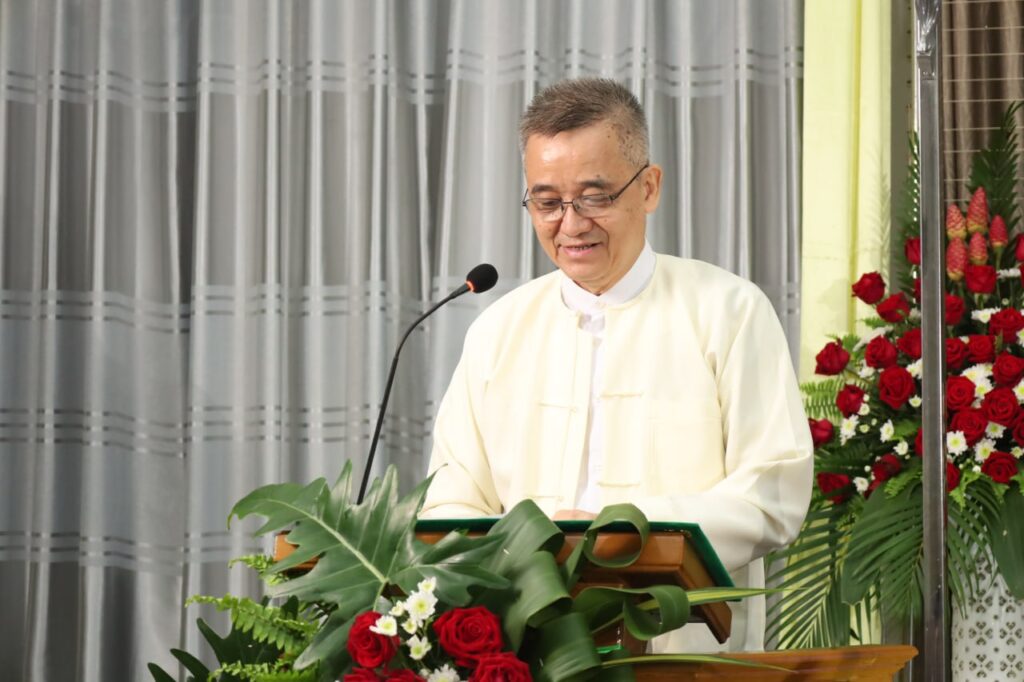
Dr. Richard Win Htun Kyi, Executive Coordinator of the Social Pastoral Coordination Unit (SPCU), also addressed the ceremony. He explained that the program began in 2019 through collaboration between the Catholic Bishops’ Conference of Myanmar (CBCM), St. Joseph’s National Catholic Major Seminary, and the social service ministry of KMSS.
According to Dr. Richard, the program has now produced 109 graduates, including 11 priests, 34 religious sisters, three religious brothers, 38 lay women, and 23 lay men. He expressed hope that the Socio-Pastoral Studies program would continue to be “a ray of light of hope” for the people of Myanmar amid the country’s difficulties.
The fourth graduation ceremony concluded with gratitude to God and encouragement for the graduates to bring their knowledge, faith, and formation into their respective pastoral and social ministries.
By RVA Sgaw Karen Service