
Friday of the Second Week of Easter, April 17, 2026
The Foolish Wisdom of God
Acts 5:34-42, Psalm: 26, Jn 6:1-15
My dear Sisters and Brothers in Christ,
In the readings today, we witness two contrasting responses to the work of God. One is the cautious wisdom of a respected Pharisee named Gamaliel. The other is the seemingly illogical multiplication of loaves by Jesus. Together, they teach us that God’s ways are not our ways—and that is our greatest hope.
In the Acts of the Apostles, the Sanhedrin is furious. The apostles have defied their orders and continue preaching in the name of Jesus. Some want them dead. But Gamaliel, a teacher of the law held in high esteem, offers a different perspective. He orders the apostles removed and then speaks words of stunning wisdom: “Fellow children of Israel, be careful what you are about to do to these men… If this endeavor or this activity is of human origin, it will destroy itself. But if it comes from God, you will not be able to destroy them; you may even find yourselves fighting against God.”
Gamaliel’s counsel is prudence itself. It is the wisdom of waiting, of not rushing to judgment, of allowing time to reveal the truth. The Sanhedrin accepts his advice. They have the apostles flogged, ordered them not to speak in the name of Jesus, and released them. And the apostles? They leave “rejoicing that they had been found worthy to suffer dishonor for the sake of the name.” They do not stop preaching. They cannot stop. They have seen something that human prudence cannot explain.
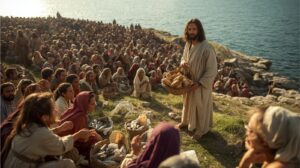
This brings us to the Gospel of John, where we witness the very work of God that Gamaliel warns about. Jesus sees a vast crowd and asks Philip, “Where can we buy enough food for them to eat?” Philip calculates: “Two hundred days’ wages worth of food would not be enough for each of them to have a little.” Andrew finds a boy with five barley loaves and two fish, but adds with human logic, “What good are these for so many?”
Human calculation says impossible. Human prudence says send them away. But Jesus takes what is offered, gives thanks, and distributes. The result is not just enough, but abundance. Twelve baskets of leftovers. The crowd is fed, and the sign points to something greater: Jesus is the bread of life, the one who satisfies every hunger.
Pope Francis reflects on this Gospel: “Jesus does not ask us to have everything, but to offer what we have, however small.” St. Augustine, commenting on the miracle, wrote, “The Lord took the loaves and multiplied them. In our hands, they are little; in His hands, they are abundant.”
For us today, the message is clear. We are often tempted to live by Gamaliel’s prudence alone—to calculate, to wait, to see if something is safe before committing. But the Risen Lord calls us to something more. He asks us to bring our small offerings—our limited time, our modest talents, our imperfect love—and trust that in His hands, they will become more than enough.
The apostles left the Sanhedrin rejoicing because they had discovered that suffering for the name was not defeat, but participation in Christ’s victory. This Easter season, let us offer our small loaves to the Lord. Let us trust His foolish wisdom over our cautious calculations. For in His hands, even our littleness becomes a miracle. Amen.
May God bless you all!