
On World Refugee Day, a Kachin Mass Where Corn, Bibles, and Notebooks Become Prayers
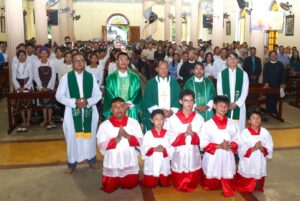
The sun had barely risen over the St. Columban Cathedral in Aungnan, Myitkyina, when the displaced began to arrive. They came carrying more than their own weight—they carried the weight of villages lost, farms abandoned, and dreams scattered like seeds in a storm.
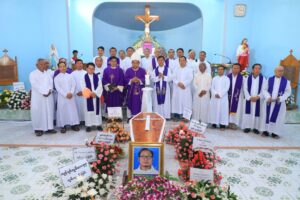
World Refugee Day fell on a Sunday this year, and the Church made sure it did not pass unnoticed. On the morning of June 21, 2026, IDPs from across Kachin State gathered for a Mass that was not merely a ceremony but a proclamation: You are seen. You are not forgotten.
Vicar General Msgr. Dr. Peter Hka Awng Tu led the celebration with the Diocese’s IDP assistance organizations—Jesuit Refugee Service, Justice and Peace Commission, Diocesan Commission for Education, and KMSS Myitkyina—working together to ensure the voices of the displaced were heard not as statistics, but as stories.
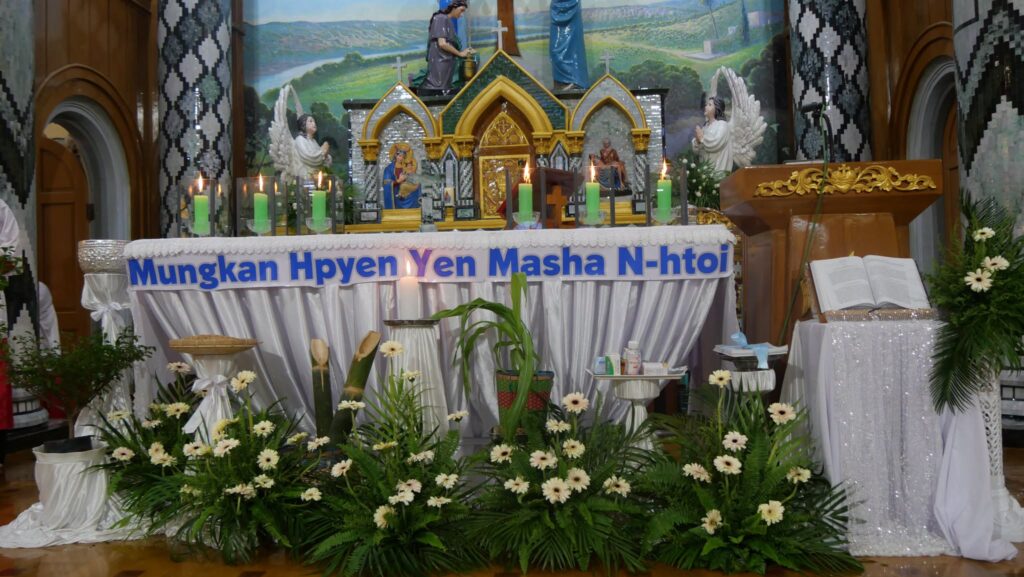
Offerings That Speak Louder Than Words
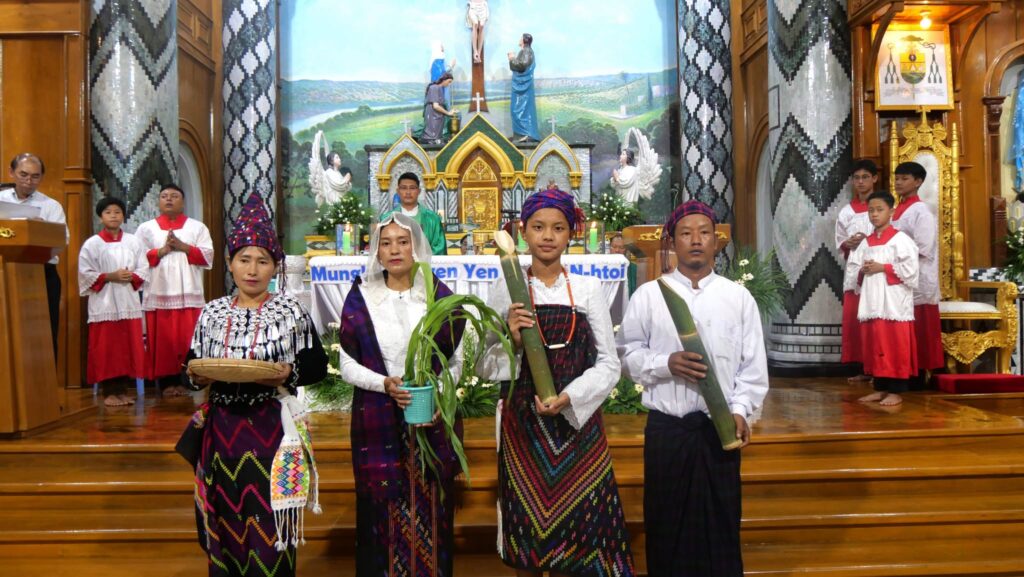
The Offertory that morning was unlike any other. There were no mere coins or bills placed on the altar—instead, the faithful brought symbols—each one a prayer in physical form.
A young mother stepped forward with hkai nu (popcorn), mam (rice), and a small bottle of water. These were offered for food security. In a land where conflict has stripped families of their farms, daily bread is no metaphor—it is a desperate daily struggle. “Give us this day our daily bread,” the Gospel of Matthew reminds us. For IDPs, that prayer is as real as the hunger in their children’s bellies.
Then came a Bible, held by weathered hands. It was offered for spiritual nourishment. In the chaos of displacement, when everything familiar has been upended, the Word of God becomes an anchor. “The Lord is my shepherd; I shall lack nothing,” from Psalm 23, is not just poetry for those who have lost everything—it is a lifeline.
A notebook followed, simple and unassuming, offered for education. In camps and temporary shelters, children still dream of classrooms. This symbol was a quiet declaration that learning continues even in exile. “My people are destroyed for lack of knowledge,” the prophet Hosea warned. The notebook was a refusal to let that destruction be final.
Medical supplies were brought forward for health care. Bandages, medicines, the bare essentials of healing—offered as a reminder that health is a human right, not a privilege. “I was sick, and you visited me,” Jesus said. For IDPs living in crowded, unsanitary conditions, that visitation is urgently needed.
A candle flickered in the procession, offered for justice and peace. It represented the burning hope that one day, families would return to their homeland. True peace, the faithful were reminded, is a gift from God and a responsibility we all share. “Happy are the peaceable, since they will be called sons of God,” from Matthew’s Beatitudes, was the verse that accompanied this offering.
A tree sapling was carried forward for environmental care. The survival of displaced people is tied to the land, rivers, and creation that sustains them. “The Lord God took the man and put him in the Garden of Eden to cultivate it and to keep it,” Genesis reminds us. Caring for creation, the offering declared, is caring for human dignity.
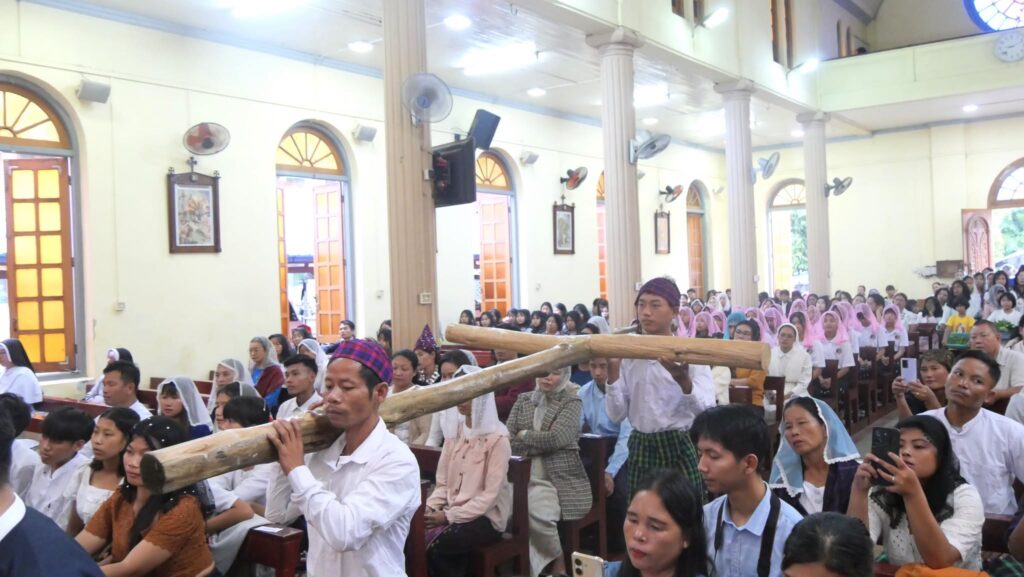
Finally, a cross from the Mali River was presented. It symbolized hope and endurance in the face of unspeakable difficulty. “God is for us a refuge and strength, a help that is readily found during distresses,” from Psalm 46, was the prayer that accompanied it.
The Church Walks With Them
Pope Leo XIV’s words echoed through the cathedral that morning: In a world plagued by war and injustice, refugees can become “witnesses of the Lord’s hope.” Their courage, he said, shows that hope remains even in the face of adversity.
The IDPs of Kachin State have lost their homes, their livestock, their farms—everything that once defined their lives. But they have not lost their faith. They have not lost their dreams of peace and a better future.
World Refugee Day, established by the United Nations to honor refugees globally, was here given a distinctly local and deeply spiritual meaning. It was not just a day of remembrance but a day of solidarity—a reminder that the Church does not stand apart from suffering but walks alongside it, listening to stories and sharing hopes.
As the Mass ended and the faithful dispersed, the symbols remained at the altar: corn, water, a Bible, a notebook, medicines, a candle, a sapling, a cross. They were humble offerings, but they carried the weight of a people who refuse to be forgotten.
By RVA Kachin Jinghpaw Service