
Saturday of the Second Week of Easter, April 18, 2026
From Waiting Tables to Walking on Water
Acts 6:1-7, Psalm: 32, Jn 6:16-21
My dear Sisters and Brothers in Christ,
The Easter season continues to reveal how the Risen Lord builds His Church. Today, we witness two seemingly different scenes: one about the practical organization of a growing community, the other about a terrifying storm on the sea. Yet both teach us the same lesson: where the Lord is present, no crisis—whether of logistics or of chaos—can overcome His people.
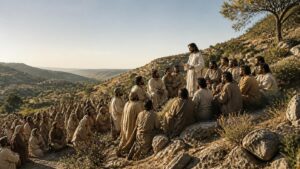
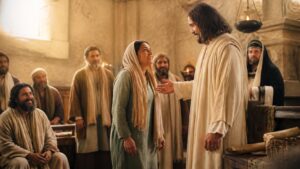
In the Acts of the Apostles, the early Church faces its first internal crisis. The Hellenist widows are being overlooked in the daily food distribution. This is not a small matter. It touches the heart of the Christian community: care for the vulnerable. The Twelve do not dismiss the complaint. They gather the community and propose a solution: “Select seven reputable men, filled with the Spirit and wisdom, whom we shall appoint to this task, whereas we shall devote ourselves to prayer and to the ministry of the word.”
This is the origin of the diaconate. The seven are not lesser ministers; they are chosen precisely because they are “filled with the Spirit and wisdom.” Their service of tables is a genuine ministry, essential to the life of the Church. The result is striking: “The word of God continued to spread, and the number of the disciples in Jerusalem increased greatly.” Even a group of priests becomes obedient to the faith. Order in charity becomes the soil for growth.
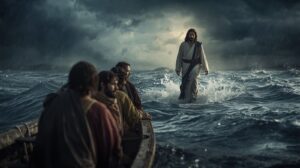
In the Gospel of John, we find the disciples in a very different crisis. They are on the sea, and darkness has fallen. A strong wind is blowing, and the waters are rough. They have rowed three or four miles when they see Jesus walking on the sea. They are terrified. But Jesus speaks the same words He always speaks to fear: “It is I. Do not be afraid.” The moment they welcome Him into the boat, they reach their destination.
The connection between these readings is profound. In Acts, the crisis is solved not by abandoning service, but by ordering it properly. In John, the crisis is solved not by the disciples’ rowing, but by the presence of Jesus. Both reveal that the Risen Lord is present in the practical and the miraculous, in the daily distribution of food and in the calming of storms.
Pope Francis, reflecting on the Acts reading, has said, “The Church cannot be a beautiful thing without taking care of the poor. Caring for the poor is not an option; it is the heart of the Gospel.” And St. Augustine, contemplating the Gospel, wrote, “Christ walked on the waves of the sea. He trampled down the swell of this world.”
For us today, the message is twofold. First, we are called to serve. The diaconate began with waiting tables, and every baptized Christian is called to some form of humble service. We must not romanticize ministry at the expense of practical love. Second, we are called to trust. The disciples rowed against the wind all night, but they reached their destination only when Jesus entered the boat. Our efforts are necessary, but His presence is decisive.
This Easter season, let us embrace both the practical and the miraculous. Let us serve the vulnerable with the Spirit and wisdom of the first deacons. And let us welcome Jesus into the boat of our lives, trusting that with Him, we will always reach the shore He intends for us. Amen.
May God bless you all!