
The Widow Who Kept the Faith: Maria Za Cer’s 30-Year Vigil in Aibur, Hakha Diocese
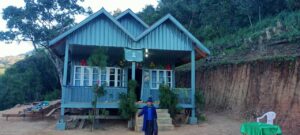
The fire that consumed Maria Za Cer’s house in 1996 took everything: her walls, her belongings, the fragile sense of security she had built as a young widow. But it could not take her faith.
Thirty-five years ago, when her husband from Surngen passed away, Maria returned to Aibur village, which belongs to Leitak Parish in the Diocese of Hakha, with six children to raise and no one to lean on. For nearly three decades, she was the only Catholic in the village—a solitary flame in a place where the Church had not yet taken root.
“I spent almost 30 years living mostly on my own,” she says quietly, her voice carrying the weight of those long years.
Today, at an age she does not dwell on, Maria looks back not with bitterness but with gratitude. “Because of your prayers, I am still alive and healthy,” she says, her eyes bright with a gentleness that seems untouched by hardship.
A Test of Faith
The fire was not just a loss of property; it was a test of her soul. In the aftermath, as she stood among the ashes, people from other Christian groups approached her. They offered help, but with a condition: leave the Catholic Church.
“They said Catholics would not support me in difficult times,” she recalls. “They promised to help me if I joined them.”
It would have been easy to accept. She was a widow, alone, with nothing. But the words of parish priests and the distant prayers of fellow Catholics she had never met reached across the miles and held her steady.
“Thanks to our priests and your prayers, I never left the Catholic faith,” she says. “I am still here today. Thank you for your prayers and support.”
Her faith, she explains, is simple but unshakeable. “If we keep our faith in God, He will always take care of us.”
A House That Became a Church
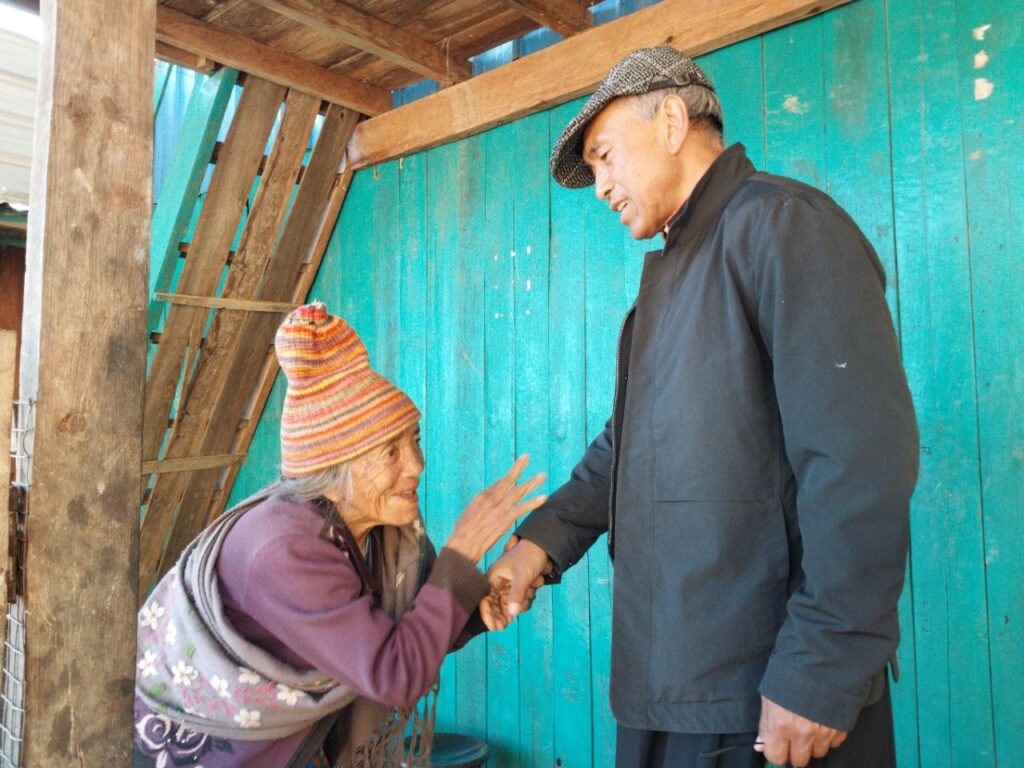
For years, Maria’s home was the only Catholic presence in Aibur. Parish priests would visit her regularly, traveling long distances to celebrate Mass in her humble dwelling. When her son came to stay five years ago, they built a two-story house together. The upper floor was reserved entirely for priests, religious sisters, catechists, and teachers whenever they visited.
It became more than a home. It became a sanctuary.
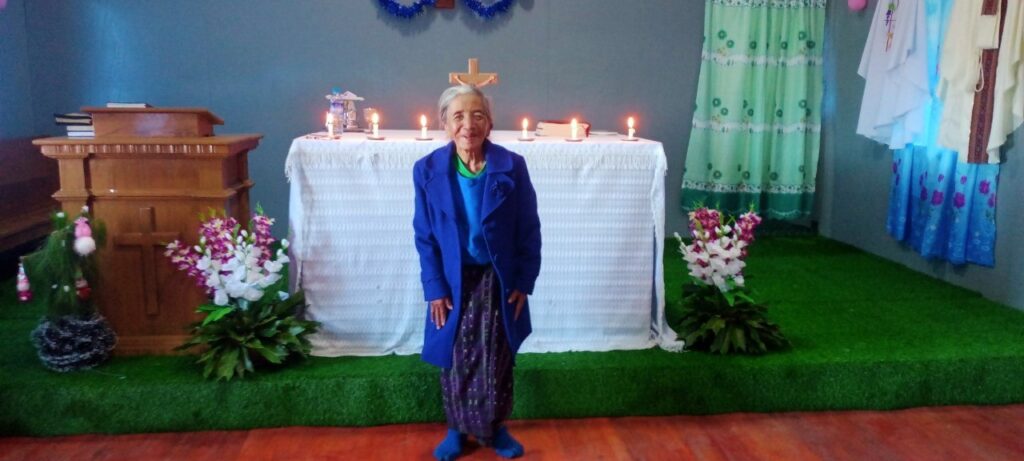
Catechist Andrew Bawi Thleng lived with her for three years, helping with daily tasks and supporting her in her later years. Together, they created a space where the Catholic community could gather—a small chapel that stands today as a testament to her perseverance.
A Heart for Hospitality
Maria’s generosity is legendary among those who know her. She shared whatever food and help she could offer, never turning away a visitor. She especially loved serving the priests and sisters who came to minister to the village.
She remembers first learning about the Catholic faith while living in Surngen. She heard about Fr. Flavian Hrang Hluan and learned that Catholic priests dedicate their lives completely to God.
“This is the faith I have been looking for,” she recalls saying.
What drew her most was the teaching of Jesus: “Heaven and earth will pass away, but my words will never pass away.” In those words, she found something permanent in a world of uncertainty.
A Dream for the Future
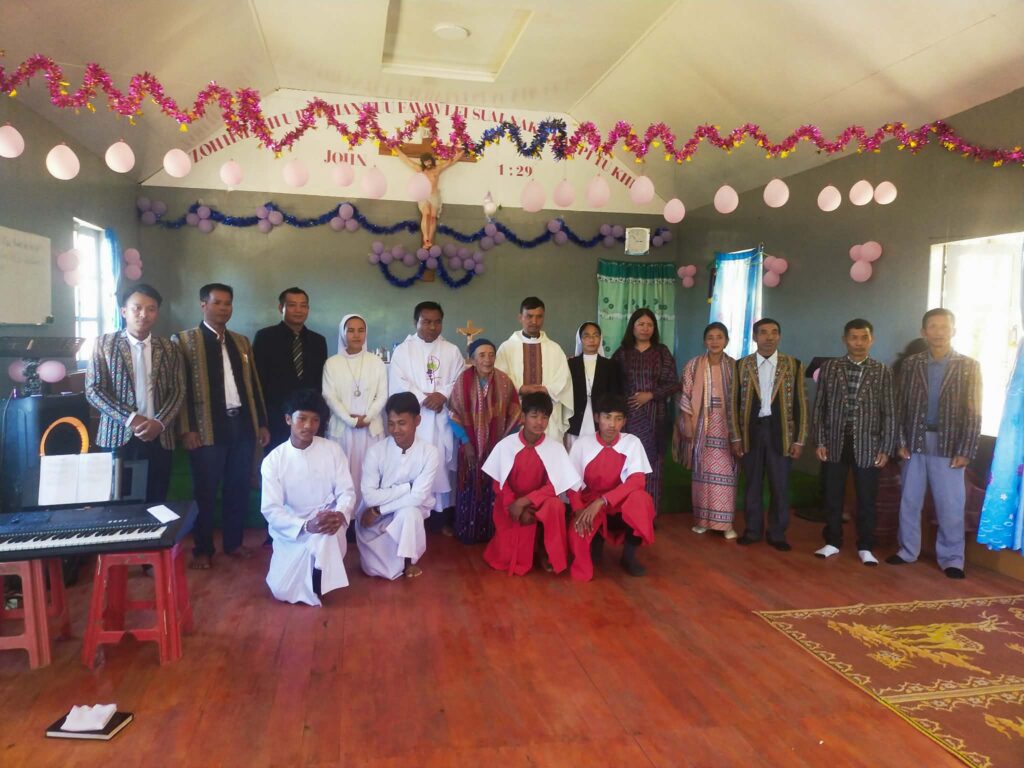
Even now, Maria’s hopes are not for herself but for her village. She dreams of building a residence in the church compound where visiting priests, catechists, and sisters can stay comfortably.
“I continue to pray to God for this,” she says.
Her greatest wish is to see the Catholic faith grow in Aibur. She hopes young people from the village will answer the call to become priests, religious sisters, and catechists.
“Please pray for us,” she says, her voice steady with conviction. “May the Catholic faith continue to grow in Aibur, and may God call people from our village to serve Him and lead others closer to Him.”
In a village where she once stood alone, Maria Za Cer has planted seeds that will outlast her. The chapel stands. The community grows. And the widow who refused to leave her faith has become, in her own quiet way, the foundation upon which something beautiful is being built.
By RVA Hakha Service