
Thursday of the Thirteenth Week in Ordinary Time, July 2, 2026
The Authority to Forgive and the Courage to Speak
Amos 7:10-17; Psalm: 18; Mt 9:1-8
My dear Sisters and Brothers in Christ,
Today, the Word of God places before us two men who spoke with authority—one a shepherd called from the fields, the other the Son of God healing a paralytic. Both faced opposition. Both were sustained by the certainty that God’s power is greater than any human institution. And both reveal to us the source of our own hope: the forgiveness of sins, freely given, and the call to speak the truth in love.
In the Book of Amos, the prophet stands before Amaziah, the priest of Bethel. Amaziah, comfortable in his royal shrine, tells Amos, “Go away, you seer; flee to the land of Judah; there earn your bread.” He wants a religion that does not disturb. But Amos replies, “I was no prophet, nor a prophet’s son; but I was a shepherd and a dresser of sycamores. The Lord took me from following the flock.” Amos did not choose his mission; God chose him. His authority did not come from priestly lineage or royal favor, but from the Word of the Lord that burned in his heart. He spoke judgment because he loved the people enough to warn them.
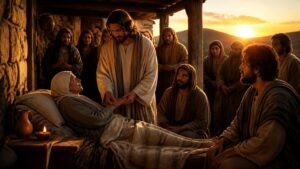
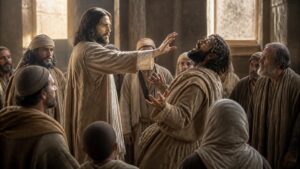
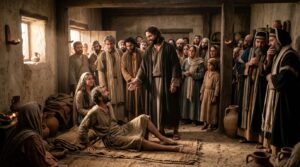
In the Gospel of Matthew, a paralytic is brought to Jesus. The faith of his friends moves the Lord. Jesus says, “Take heart, son; your sins are forgiven.” The scribes mutter, “This man is blaspheming.” They see only the outward—a man who speaks as if he were God. But Jesus reads their hearts and asks, “Which is easier, to say, ‘Your sins are forgiven,’ or to say, ‘Rise and walk’?” To prove that the Son of Man has authority on earth to forgive sins, He heals the paralytic. The man rises, takes his mat, and goes home. The crowds glorify God, “who had given such authority to men.”
Here is the heart of our faith. The same authority that forgave the paralytic has been entrusted to the Church. The same Jesus who read the scribes’ hearts hears our confessions through the ministry of priests. The same power that raised the paralytic raises us from the paralysis of sin. And the same courage that sustained Amos in the face of Amaziah sustains us when the world tells us to be silent.
Pope Francis often reminds us, “God never tires of forgiving; it is we who tire of asking for forgiveness.” Saint John Mary Vianney, the patron of parish priests, spent endless hours in the confessional because he knew that forgiveness heals the soul. Saint Augustine, who experienced the depths of God’s mercy, wrote, “There is no sin so great that the mercy of God cannot forgive it, if only we repent.”
What does this mean for us? We are called to be like Amos—to speak the truth, not in our own name, but in the name of the Lord. That truth may be uncomfortable: it may call for repentance, for justice, for mercy. But we speak it because we love. And we are called to be like the paralytic—to come to Jesus with faith, to trust that He has the power to forgive, and to rise and walk in newness of life.
This week, let us not be afraid of the confessional. Let us bring our paralysis—our sins, our shame, our weariness—to the feet of Jesus. And let us hear His voice: “Take heart, son; your sins are forgiven.” Then, forgiven and healed, let us go forth to speak the truth that sets the world free. Amen.
May God bless you all!