
Fifteenth Sunday in Ordinary Time (A), July 12, 2026
The Sower’s Promise: Hope in the Midst of Groaning
Isa 55:10-11, Psalm: 64, Rom 8:18-23, Mt 13:1-23
My dear Sisters and Brothers in Christ,
The Word of God today is a symphony of hope. It begins with the prophet Isaiah, who proclaims the invincible power of God’s word. It moves to Saint Paul, who speaks of creation’s groaning and our own longing for redemption. And it culminates in the parable of the sower, where Jesus reveals the secret of the Kingdom: the seed is sown abundantly, and despite the obstacles, the harvest is sure. These readings are the heartbeat of our faith: God’s word is working, even when we cannot see it. The present suffering is not the final word. And the harvest of eternal life is already planted in the soil of our hearts.
The prophet Isaiah gives us the foundation: “Just as from the heavens the rain and snow come down and do not return there till they have watered the earth… so shall my word be that goes forth from my mouth; it shall not return to me void, but shall do my will, achieving the end for which I sent it.” God’s word is not a suggestion; it is a creative power. It accomplishes what God intends. It may work in secret, like rain soaking into the soil, but it is never fruitless. This is the anchor of our hope: God’s word is at work in history, in the Church, and in our own souls, even when we feel barren or dry.
Saint Paul, in his Letter to the Romans, takes us deeper. He speaks of the “groaning” of all creation, which is subject to futility and decay, “waiting with eager expectation for the revelation of the children of God.” Paul applies this to us: “We ourselves, who have the firstfruits of the Spirit, groan inwardly as we wait for adoption, the redemption of our bodies.” The Christian life is lived in the tension between the “already” of the Spirit’s presence and the “not yet” of full redemption. We experience suffering, illness, disappointment, and death. But Paul insists that these present sufferings “are not worth comparing with the glory that is to be revealed to us.” The groaning of creation is not a lament of despair; it is the labor pain of a new world being born.
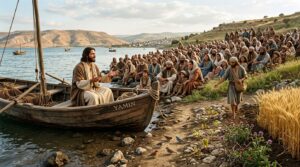
This brings us to the Gospel, where Jesus tells the parable of the sower. The seed is the word of the Kingdom. It is sown generously, without discrimination—on the path, on rocky ground, among thorns, and on rich soil. The obstacles are many: the evil one snatches the seed, tribulation and persecution wither it, and worldly anxiety and the lure of riches choke it. But some seed falls on good soil and bears fruit—”a hundred or sixty or thirtyfold.” Jesus does not promise that all seed will bear fruit, but He promises that the harvest will be abundant. The failures do not define the mission; the fruit defines it.
Pope Francis reflects on this parable: “The seed is the word of God, and it is sown in the heart of every person. The Lord sows generously, and He is not discouraged by the failures. He trusts in the power of His word.” Saint John Paul II, in his encyclical Redemptoris Missio, wrote, “The proclamation of the Gospel is the primary and irreplaceable mission of the Church.” And Saint Augustine, contemplating the groaning of creation, said, “Our hearts are restless until they rest in You, O Lord.”
What does this mean for us? We are called to be good soil—hearts that receive the word, ponder it, and bear fruit. But we are also called to be sowers, trusting that the word we share will not return void. We may see failure, opposition, or indifference. But the rain of God’s mercy continues to fall. The harvest is coming. The groaning of creation is the sound of hope.
This week, let us not be discouraged by the thorns or the rocky ground. Let us trust the Sower. He has planted His word in us. He will bring it to completion. And on the last day, we will see the harvest: a hundredfold, sixtyfold, thirtyfold—eternal life, where every tear will be wiped away, and the groaning of creation will become a song of glory. Amen.
May God bless you all!